Save STEM, Save the West
Algernon Sidney’s Lessons Against Arbitrary Authority
In this essay +

The STEM Movement is a struggle over who commands the tools that increasingly command society: citizens educated to question them, or technocratic systems eager to turn knowledge into control.
This distinction is crucial. The movement does not oppose expertise, evidence, innovation, or scientific authority properly understood. It opposes the corruption of those things into systems of control. Science, at its best, disciplines the mind toward truth; technocracy, at its worst, uses the language of science to place decisions beyond public judgment. STEM (science, technology, engineering and mathematics) education should form independent thinkers capable of inquiry, invention, measurement, and moral responsibility. Misused, however, STEM can be reduced to a managerial instrument: a way to sort students, standardize thought, centralize authority, harvest data, and justify decisions already made elsewhere.
STEM Education’s Lost Decade And Tenor
The STEM Movement is therefore mounting a resistance not against knowledge, but against the capture of knowledge by administrative power. Yet this resistance is not centralized, not fully organized, and not richly resourced. It often exists in scattered classrooms, small community efforts, concerned families, principled educators, independent professionals, and local institutions trying to preserve educational independence against systems far larger than themselves. That asymmetry matters. Technocracy arrives with funding streams, consulting language, policy frameworks, institutional prestige, and the appearance of inevitability. The STEM Movement, by contrast, often works with conviction before it has infrastructure. Its strength is moral clarity; its weakness is fragmentation. Its task is to become more coherent without becoming another machine.
Algernon Sidney and the Moral Duty to Resist Arbitrary Power
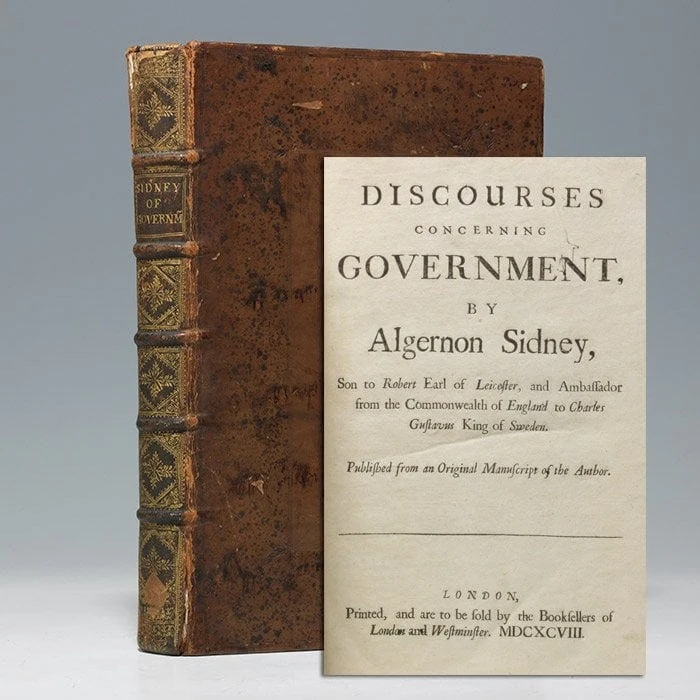
Algernon Sidney offers indispensable lessons for this struggle because he understood that resistance to arbitrary authority is not extremism, but stewardship. In Discourses Concerning Government, Sidney wrote against theories of absolute rule and divine-right authority, rejecting the idea that power becomes legitimate simply because it is inherited, institutionalized, or wrapped in elevated language. The Online Library of Liberty describes his work as a defense of republicanism and popular government against Sir Robert Filmer’s argument for royal absolutism, and the National Constitution Center emphasizes Sidney’s defense of popular sovereignty, consent, limited government, and the right of resistance against illegitimate power. Sidney’s teaching was not a celebration of disorder. It was a moral argument about trust. Authority exists for the good of those governed; when authority ceases to serve that good and instead demands submission for its own preservation, it becomes arbitrary. Sidney’s famous principle that “that which is not just, is not Law” goes to the heart of the matter: legitimacy is not created by procedure alone. A rule, mandate, policy, or institutional demand may possess formal power and still lack moral authority if it violates the purposes for which authority was entrusted in the first place. Applied to education, this means that schools, agencies, universities, corporations, and governments may have roles to play in STEM, but none has a rightful claim to turn STEM education into a closed system of obedience.
How Liberty Erodes Through Necessity, Expertise, and Efficiency
Sidney also understood that liberty rarely disappears dramatically. It erodes gradually beneath the language of necessity, expertise, efficiency, and benevolence. This insight matters enormously in modern STEM education because many threats to educational independence no longer arrive openly demanding obedience. They arrive as partnerships, mandates, funding incentives, strategic alignments, administrative harmonization, data modernization, workforce coordination, or “best practice” reforms that seem harmless, even helpful, when viewed in isolation. The danger is not that every partnership is corrupt or every mandate oppressive. The danger is that educational authority can migrate quietly away from teachers, families, local communities, and students toward distant systems that are difficult to question because they speak in the vocabulary of improvement. Sidney would have recognized the pattern. In his age, arbitrary power defended itself through monarchy, inheritance, and divine right. In ours, it may defend itself through credentials, analytics, compliance structures, and expert-managed consensus. The costume changes; the danger remains. Whenever people are told that they must yield judgment because the system is too complex for them to understand, Sidney’s warning becomes urgent again.
This is especially important because STEM carries unusual authority in modern society. A claim made in the name of science, data, safety, innovation, or economic competitiveness can silence opposition more effectively than a merely political demand. In a STEM classroom, this can appear when a “partnership” quietly transfers curricular influence to an outside funder; when a data system begins to define student potential more powerfully than a teacher’s judgment; or when career readiness is narrowed into compliance with a predetermined labor pipeline rather than preparation for free and capable citizenship. These are not spectacular forms of tyranny, and that is precisely why they matter. They do not look like oppression. They look like modernization. Yet Sidney’s deepest lesson is that free people must examine not only the stated purpose of power, but its structure: Who decides? By what authority? For whose benefit? With what accountability? Can those affected question it, revise it, refuse it, or replace it? When the answer is no, the issue is no longer merely administrative. It becomes civic.
Sidney’s thought also helps the STEM Movement avoid a dangerous misunderstanding. Resistance to technocracy must not become contempt for expertise. Sidney did not argue that all authority is illegitimate; he argued that legitimate authority must be accountable to the purposes that justify it. In the same way, the STEM Movement should not reject scientific standards, technical excellence, or rigorous institutions. It should defend them from misuse. A society needs experts, but experts must not become rulers by default. A school needs standards, but standards must not become instruments for flattening judgment. A student needs data, but data must not become destiny. A nation needs innovation, but innovation must not become an excuse for treating human beings as inputs in an economic machine. Eudaimonic STEM education forms people who can understand systems without surrendering to them. It teaches students to test claims, inspect assumptions, identify failure points, and revise conclusions in light of evidence. Those habits are not only scientific; they are civic. They are the habits of a free people.
Toward the Restoration of STEM
Sidney further teaches that liberty depends on renewal. The National Constitution Center’s excerpt from Discourses notes his view that human institutions are subject to corruption and must be restored to their first principles. That lesson applies directly to STEM education. It is not enough to defend STEM as a slogan, a funding category, or a career pathway. The first principles must be recovered: STEM exists to cultivate disciplined inquiry, practical competence, intellectual honesty, creativity under constraint, and service to the common good. When STEM is detached from those principles, it becomes vulnerable to capture. It can be used to decorate bureaucratic agendas, justify surveillance, automate inequality, or train students to operate systems they are never encouraged to question. Renewal means asking whether STEM education still serves the learner, the teacher, the community, and the republic, or whether it has been quietly reorganized to serve institutional convenience. It means refusing to let “efficiency” become a substitute for wisdom or “alignment” a substitute for consent.
The STEM Movement’s Resistance: Decentralized, Underfunded, but Necessary
The STEM Movement’s lack of centralization is both a weakness and a warning. It is a weakness because fragmented resistance struggles to confront coordinated systems. Large institutions can move through grants, mandates, procurement, accreditation, and policy language while local defenders of educational independence often lack the time, money, and organization to respond. But decentralization is also a warning against imitating the very technocracy the movement resists. The answer to centralized misuse of STEM cannot be another centralized command structure with different slogans. The movement must become organized enough to be effective, but principled enough to remain humane. It needs shared language, serious scholarship, public courage, legal and civic literacy, teacher leadership, and alliances across communities that understand STEM as a public trust rather than a managerial possession. Its purpose is not to seize control of STEM from one faction and hand it to another. Its purpose is to restore STEM to its proper owners: students seeking truth, teachers cultivating mastery, families defending formation, communities pursuing self-reliance, and a free society preparing citizens capable of reasoned judgment.

Saving STEM to Preserve the West’s Inheritance of Inquiry, Liberty, and Self-Government
This is why Sidney’s lesson is indispensable: resistance to arbitrary authority is not extremism when it protects the conditions of liberty. It is stewardship. In STEM education, stewardship means guarding the difference between expertise and rule by experts, between standards and standardization, between innovation and manipulation, between public service and institutional capture. It means recognizing that benevolent language can still conceal coercive structures, and that not every threat to freedom announces itself as hostile. Some arrive smiling, funded, credentialed, and administratively polished. The task of the STEM Movement is to see clearly before the erosion becomes irreversible.
To save STEM is not simply to prepare individuals for participation in a technical economy. It is to preserve the intellectual and civic conditions by which free people learn to investigate reality, build responsibly, challenge false authority, and govern powerful tools with moral judgment. That is not nostalgia. It is not paranoia. It is the work Sidney would have recognized as the burden of liberty: the duty to resist arbitrary power before it becomes ordinary.
“Liberty cannot be preserved, if the manners of the people are corrupted.” -Algernon Sidney
Andrew B. Raupp is the Founder / Executive Director @stemdotorg. “Resolutely preserving the rights and freedoms of the STEM education community through sound policy & practice…”
Keywords
First published May 30, 2026. Original publication