The STEM Odyssey
The Long Voyage from Local Discovery to a Global Defense of Inquiry
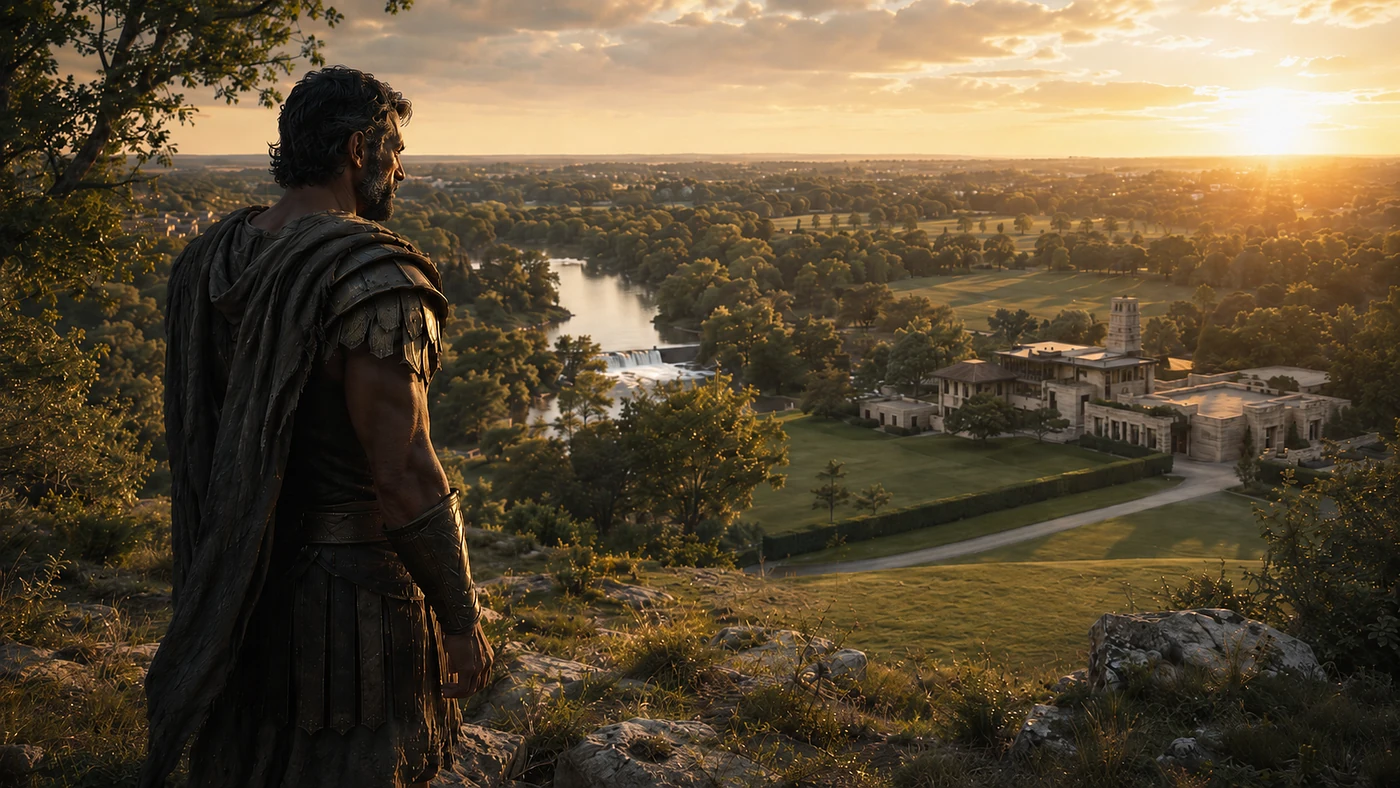
Every generation returns to Homer when ordinary maps become insufficient. The Odyssey endures because it understands that the hardest voyage is not movement across water, but the preservation of identity under pressure. Odysseus is not compelling because he wanders. He is compelling because he is tested by hunger, vanity, fear, seduction, exhaustion, grief, and power, yet he continues to carry within himself the memory of home. His genius is metis: practical intelligence, adaptive judgment, the cunning of a mind that does not confuse force with wisdom. That is why Homer’s magnificent work remains one of civilization’s great meditations on survival, self-command, and return. It is also why the story of STEM.org Educational Research, as it reaches its 25th anniversary, can be read as an odyssey of its own.
The Internet Classics Archive | The Odyssey by Homer
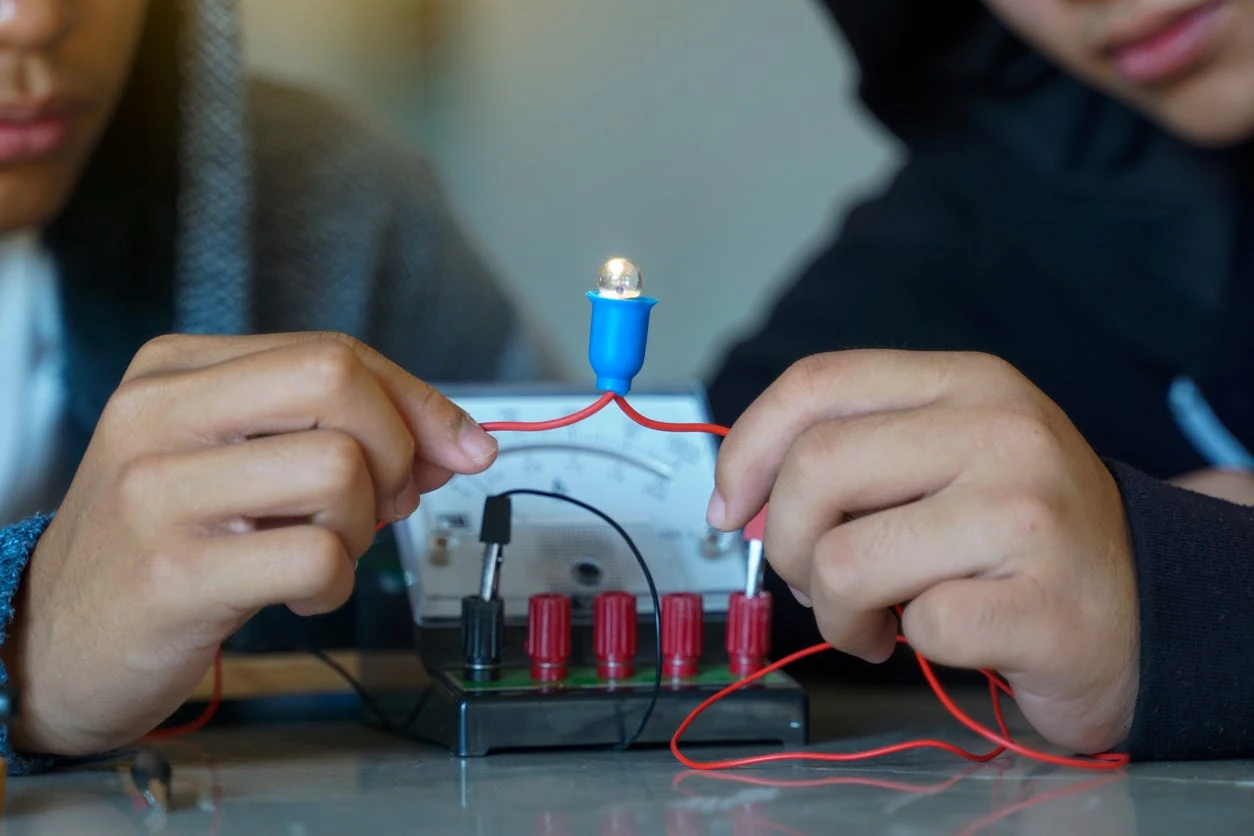
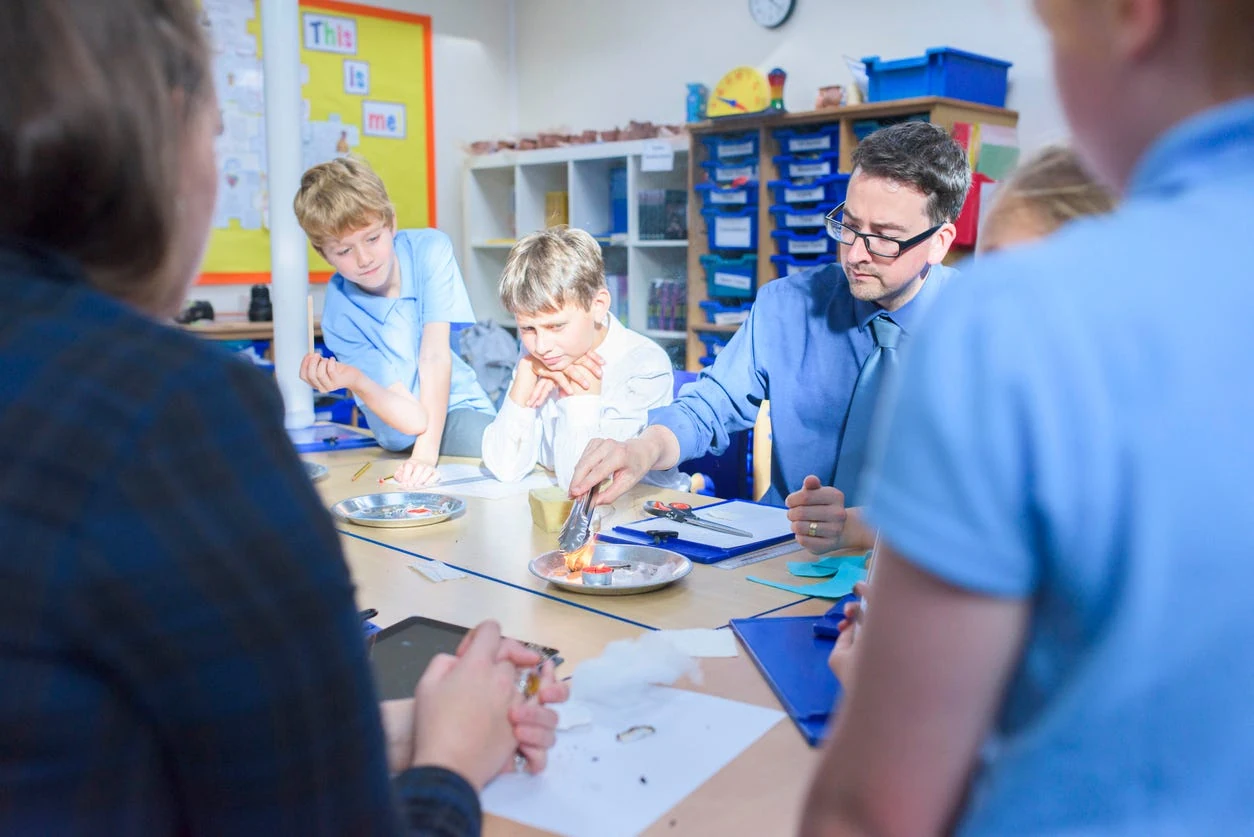
STEM.org did not begin as a global institution, a credentialing body, a research organization, or a defender of educational autonomy. It began with an invitation. Its earliest form was SOIL, Scientific Off-Site Interactive Learning, a field-trip experience that brought children from southwest Detroit to the Henry Ford Estate so they could encounter science not as abstraction, but as place, texture, movement, and possibility. The beginning was local, physical, and human. It involved students stepping into spaces they might not otherwise have entered, educators trying to awaken curiosity, and a belief that STEM was not something reserved for well-funded districts or already-privileged children. The first vessel was small. It did not sail from Troy. It departed from the soil.
That origin matters because an organization’s first act often reveals its permanent character. STEM.org’s first act was not to centralize authority, but to open a door. It was not to sell a system, but to create an encounter. The work grew through camps, afterschool programs, informal learning experiences, and community-based science opportunities that reflected a wider intellectual appetite. The people involved were drawn to the interdisciplinary sciences — astronomy, botany, microbiology and the lived wonder of the natural world. They reinvested money back into the community, and when they traveled, they did so not as escape, but as education. The world itself became a curriculum. To understand other places was to become better prepared to serve one’s own.
For roughly the first decade, the voyage moved through communities that rarely appear in glossy accounts of educational innovation unless someone else is narrating their struggle for institutional gain. Detroit, Flint, Pontiac, Toledo, Gary, the South Side of Chicago, and other Rust Belt communities became part of STEM.org’s formative geography. These were places shaped by population loss, shrinking school budgets, high turnover, reduced public confidence, and the long shadow of industrial decline. They were also places of intelligence, grit, improvisation, humor, and local pride. STEM.org learned there that excellence cannot be measured by the abundance of materials alone. A good educator with limited supplies, a crowded room, and a living question can sometimes produce more authentic STEM learning than a well-funded program designed mainly to impress visiting adults.
This is where the Odyssean comparison begins to deepen. Odysseus survives because he can read conditions accurately. He knows when to fight, when to hide, when to speak, when to wait, and when to invent a way through. STEM.org learned a similar discipline in classrooms, camps, and improvised learning spaces where the budget was not generous and the needs were not theoretical. Limited materials forced design discipline. High turnover forced teacher support. Dwindling enrollment forced efficiency. Underfunded schools forced humility. The organization discovered that quality STEM education could not depend solely on expensive kits, elaborate facilities, or institutional prestige. It had to be portable, intelligible, adaptable, and strong enough to work where conditions were difficult.
That lesson became one of STEM.org’s enduring contributions. It understood scarcity without romanticizing it. Scarcity is not noble when it is imposed on children. Poor communities should not be praised for surviving neglect while wealthier systems purchase abundance. Yet scarcity can teach a serious organization what is essential. It reveals which ideas are decorative and which ideas carry weight. STEM.org’s early work in under-resourced communities sharpened a practical philosophy: STEM education must be rigorous enough to matter, flexible enough to travel, and humane enough to honor the learners standing in front of the educator. The field trip, the camp, the afterschool session, and the limited-materials lesson all became early chapters in a longer study of educational resilience.
Then came the giants. In Homer, giants are not simply large beings. They represent the danger of power without proportion. The Cyclops sees through one eye, and that image remains disturbingly useful. Modern education has its own single-eyed giants: institutions that see only enrollment, only revenue, only compliance, only scale, only branding, only ideological alignment, or only market share. As STEM programming grew more visible, larger players began entering the space. Private equity noticed student programming. Colleges and universities discovered that summer STEM programs could function not only as outreach, but as revenue engines. Some programs served students well, and some were free, but the field also began attracting actors with advantages small educator-led organizations could not match: public money, prestigious names, institutional shields, marketing infrastructure, and the ability to charge families staggering amounts for access to the aura of science.

STEM.org encountered the old pattern by which ideas are often resisted when proposed by outsiders and later adopted when they can be absorbed by larger institutions. An early proposal known as Project AESOP, the Alumni-Based Educational Science Outreach Program, imagined alumni-powered science outreach before such approaches became fashionable within major institutional settings. Whether accepted or ignored, the experience taught a hard lesson about educational innovation: an idea may be ahead of its time, but it may also be ahead of the institution willing to recognize it. That is one of the quieter cruelties of the voyage. The sea does not reward the first sighting of land. It rewards the ship that can keep moving after being denied harbor.
The Sirens also appeared, as they always do. Homer’s Sirens are dangerous because they sing beautifully. Their song is knowledge, fame, recognition, and rest without arrival. In the STEM.org story, the Sirens were not mythological women on rocks. They were plausible futures that could have seemed sensible at the time. Keep running student programs forever. Build the obvious business. Chase the higher-margin camp model. Accept the gravitational pull of prestige. Let larger institutions define the vocabulary. Take outside money and call the resulting dependency growth. Scale until the work no longer resembles the reason it began. These temptations were real because they were not absurd. They were the respectable choices many organizations make when survival, ambition, and recognition begin to speak in the same voice.
The decision to move away from direct student programming was therefore not a retreat. It was a painful act of maturity. STEM.org loved student work; it began there. But the organization gradually recognized that remaining only in the programming lane would limit its ability to influence the larger field. The more strategic move was to help teachers, improve programs, establish quality assurance, support train-the-trainer models, conduct research, review curriculum, authenticate products, and build trustmarks that could raise the quality of STEM education beyond the rooms STEM.org could personally enter. The organization began turning some competitors into clients, not because competition had vanished, but because the mission had become larger than winning a local contest. This was Odyssean intelligence: the ability to stop trying to command every ship and instead begin charting safer waters for many.
Around 2012, STEM.org entered one of the most consequential and difficult passages of its history. It moved into quality assurance, and credentialing before much of the field understood why such mechanisms would become necessary. Those years were not easy. The organization was building a category while also trying to prove that the category deserved to exist. It accepted no private equity rescue and no outside investor script. It built from scratch, writing programs, creating solutions, responding to clients, and trying to make educational trust visible in a field that often confused popularity with quality. Homer gives Odysseus divine interference, both hostile and helpful. STEM.org had no Olympus descending to save it. It had educators, clients, invoices, prototypes, objections, standards, exhaustion, and belief.
This is where the organization’s underdog character becomes central to the paper. STEM.org has been educator-owned and operated while operating in a world increasingly shaped by some of the largest companies, institutions, universities, accrediting structures, and multilateral bodies on earth. The underdog theme should not be framed as complaint. It should be framed as evidence. When an organization with modest beginnings and no private-equity inheritance develops trustmarks, research methods, credentialing pathways, authentication structures, and later blockchain-secured credentials, the achievement is not scale alone. The achievement is independence under pressure. Large institutions often mistake size for seriousness. STEM.org’s voyage argues the opposite: seriousness is proven by whether the work holds up when no one is obligated to protect you.
The rise of decentralized technologies gave STEM.org a new language for an older conviction. Bitcoin and other emerging cryptocurrency projects suggested that trust did not always have to descend from a central priesthood. Verification, distributed records, consensus mechanisms, and decentralized governance offered metaphors and tools for rethinking how educational legitimacy might be preserved without surrendering control to a single authority. STEM.org did not need digital currency to teach it the value of decentralization; the ground beneath its earliest work had already done that. Yet blockchain and related governance models gave technical form to what the organization had learned through practice: a claim becomes stronger when it can be verified, a credential becomes more durable when it can outlive fragile institutions, and a standard becomes more legitimate when it is not simply imposed from above.
That movement eventually helped lead toward blockchain-secured credentialing and a broader philosophy of distributed trust. The significance of such credentials is not novelty for its own sake. Technology becomes serious only when it answers a human problem. In education, one of the oldest problems is trust: Can this claim be verified? Does this credential mean what it says? Who stands behind it? What happens if the issuing institution changes, disappears, is captured, or loses credibility? A blockchain-secured credential, properly understood, is not a decoration. It is a response to the fragility of memory and the politics of authority. It says that educational recognition should be durable, inspectable, and resistant to arbitrary erasure.
The pandemic then arrived as the storm no one could negotiate with. For an organization whose earliest life had involved face-to-face field trips, camps, afterschool work, facilitation, and direct student engagement, the sudden interruption of physical learning could have been devastating. The entire education world was forced into a strange descent, a kind of modern underworld where assumptions about schooling, access, legitimacy, and delivery had to be questioned. Homer sends Odysseus below the earth to consult the dead before he can continue home. The pandemic forced education to consult the ghosts of its own neglected questions: What is a classroom when the room disappears? What is quality when delivery changes? What is trust when parents, schools, publishers, vendors, and educators are all trying to determine what still works?
The answer, unexpectedly, strengthened STEM.org. Instead of receding, demand for its trustmarks and quality assurance grew. The field needed signals of credibility. Programs, products, schools, publishers, and educators required ways to demonstrate seriousness when old habits no longer applied. STEM.org expanded into a multinational organization serving more than 110 countries, a remarkable transformation for an entity that began with local experiential learning opportunities. This growth was not a contradiction of its beginnings. It was the proof of them. Because STEM.org had learned how to create meaningful STEM outcomes under constrained and shifting conditions, it was prepared for a world in which every educational institution suddenly discovered constraint.
The organization’s service arc now reads like a voyage log across the changing sea of STEM education. What began as SOIL field trips expanded into camps, afterschool programs, facilitation, and full-time teacher placement. It then matured into train-the-trainer support, online STEM certification for teachers, accreditation for schools, authentication for products, curriculum review, trustmarks, and blockchain-secured credentials. Each transformation required STEM.org to surrender a previous form without surrendering its purpose. That distinction is crucial. An organization without a center changes by drifting. An organization with a center changes by navigation. STEM.org’s center remained the same: expand access to meaningful STEM learning, defend quality, strengthen educators, protect inquiry, and resist the consolidation of educational authority into structures too distant from the people they claim to serve.
Homer gives us another image for this: Penelope’s loom. While Odysseus struggles across the sea, Penelope survives through patience, intelligence, and the strategic making and unmaking of cloth. She weaves by day and unweaves by night, preserving fidelity while buying time against those who would consume her house. Standards work has its own loom. Good standards must be woven carefully, tested, revised, strengthened, and sometimes unwoven when they no longer serve truth. The work is not glamorous. It is repetitive, exacting, and easily misunderstood by those who see only the finished fabric. STEM.org’s Dynamic Standards Consensus reflects this deeper logic: standards should be stable enough to earn trust, yet responsive enough to remain alive. They should not become frozen idols or disposable fashions. They should be governed with patience.

The next passage of the STEM.org Odyssey now involves decentralized governance, artificial intelligence, and socio-technical scoring methodology. This is dangerous water because every powerful tool carries within it the temptation to become an authority. AI can illuminate patterns, expose inconsistencies, reduce administrative burden, and help evaluate complex systems at a scale no human committee could manage alone. It can also become a new Cyclops: one-eyed, confident, data-rich, and morally thin. The question is not whether AI belongs in the future of educational evaluation. It already does. The question is whether it will serve human judgment or replace it; whether it will make evaluation more transparent or more occult; whether it will strengthen local educators or bury them beneath automated conclusions they cannot question.
STEM.org’s opportunity is to insist upon a higher standard for the use of technology in educational trust. Socio-technical scoring, properly conceived, recognizes that education is never purely technical and never purely social. It is the meeting place of evidence, context, design, culture, pedagogy, implementation, and human consequence. A score that ignores community reality is shallow. A framework that ignores evidence is sentiment. A credential that ignores both becomes theater. The future demands methods capable of holding quantitative rigor and human judgment together without allowing either to devour the other. This is where STEM.org’s odyssey moves beyond survival into authorship: the organization can help write the rules by which new technologies serve educational freedom rather than govern it.
The metaphor of Ithaca must also be handled carefully. For STEM.org, Ithaca is not a headquarters, a market position, a credentialing system, or a public anniversary. Ithaca is fidelity to the original reason the ship launched. The children from southwest Detroit walking into the Henry Ford Estate were Ithaca. The underfunded classroom where a teacher needed a practical STEM lesson was Ithaca. The school fighting turnover and population loss was Ithaca. The camp that helped a child see science as something alive was Ithaca. The educator who needed training rather than judgment was Ithaca. The community that deserved quality without having to purchase prestige was Ithaca. STEM.org sailed outward so it could defend the conditions that make those invitations possible everywhere.
That is why the underdog theme should remain in the foreground. The world does not lack large institutions eager to speak for education. It lacks enough independent organizations willing to protect the spaces where teachers, students, parents, schools, and communities can still act with agency. STEM.org’s story matters because it did not rise by becoming the thing it originally resisted. It did not take the easy route of surrendering its judgment to investors, bureaucratic fashions, or institutional approval. It became larger while trying to remain answerable to the work itself. That is harder than growth. Growth is often simple appetite. Integrity is disciplined memory.
No single person should be made the solitary hero of this odyssey. Homer names Odysseus, but even a named captain needs a crew, a ship, a language, a set of skills, and people willing to row through black water when speeches are useless. STEM.org’s 25-year ascent belongs to the educators, researchers, clients, reviewers, advisors, builders, staff, partners, and communities who helped shape the organization across its many forms. The story is collective because STEM itself is collective. Science advances through argument. Engineering advances through iteration. Mathematics advances through proof. Technology advances through design, failure, revision, and use. An organization devoted to STEM should resist the temptation to narrate itself as a lone statue. It is better understood as a vessel built and rebuilt by many hands.
Near the end of The Odyssey, Odysseus returns home disguised before he is recognized. The recognition comes not through declaration, but through proof. He must show that he knows the bed rooted in the living olive tree. He must string the bow that others cannot bend. Identity is verified through intimate knowledge and earned capacity. STEM.org’s own test is similar. Its identity cannot be proven by anniversary language or global reach alone. It must be proven by whether its standards remain trustworthy, whether its credentials remain meaningful, whether its technologies remain subordinate to human flourishing, whether its governance remains decentralized in spirit as well as name, and whether its work continues to protect inquiry from capture.
This is the proper conclusion for a STEM Odyssey: arrival is not the end. Homer does not give us a simple homecoming. Ithaca must be restored. The house must be put in order. The suitors who consumed what they did not build must be confronted. Peace must be negotiated. Memory must become governance. For STEM.org, the 25th anniversary should not be treated as a finish line. It should be treated as the moment when the organization recognizes the full meaning of its own voyage. From SOIL to blockchain-secured credentials, from local field trips to more than 110 countries, from student camps to decentralized trust, the organization has been sailing toward the same destination all along: a STEM education movement free enough to question, rigorous enough to trust, local enough to matter, and durable enough to survive the storms gathering around it.
Homer’s genius was to understand that the voyage outward and the return home are not opposites. The outward voyage teaches the traveler what home requires. STEM.org’s ascent has done the same. Its local beginnings taught it that STEM must serve real children in real communities. Its Rust Belt work taught it that scarcity demands ingenuity. Its encounters with larger institutions taught it that independence must be defended before it is lost. Its shift into quality assurance taught it that one organization can serve more learners by strengthening those who teach and build. Its trust marks taught it that credibility must be earned. Its blockchain-secured credentials taught it that verification can be a form of liberty. Its pandemic growth taught it that preparation often looks like hardship until the storm arrives. Its work with AI and socio-technical scoring now asks whether the next generation of educational tools will deepen inquiry or discipline it into obedience.
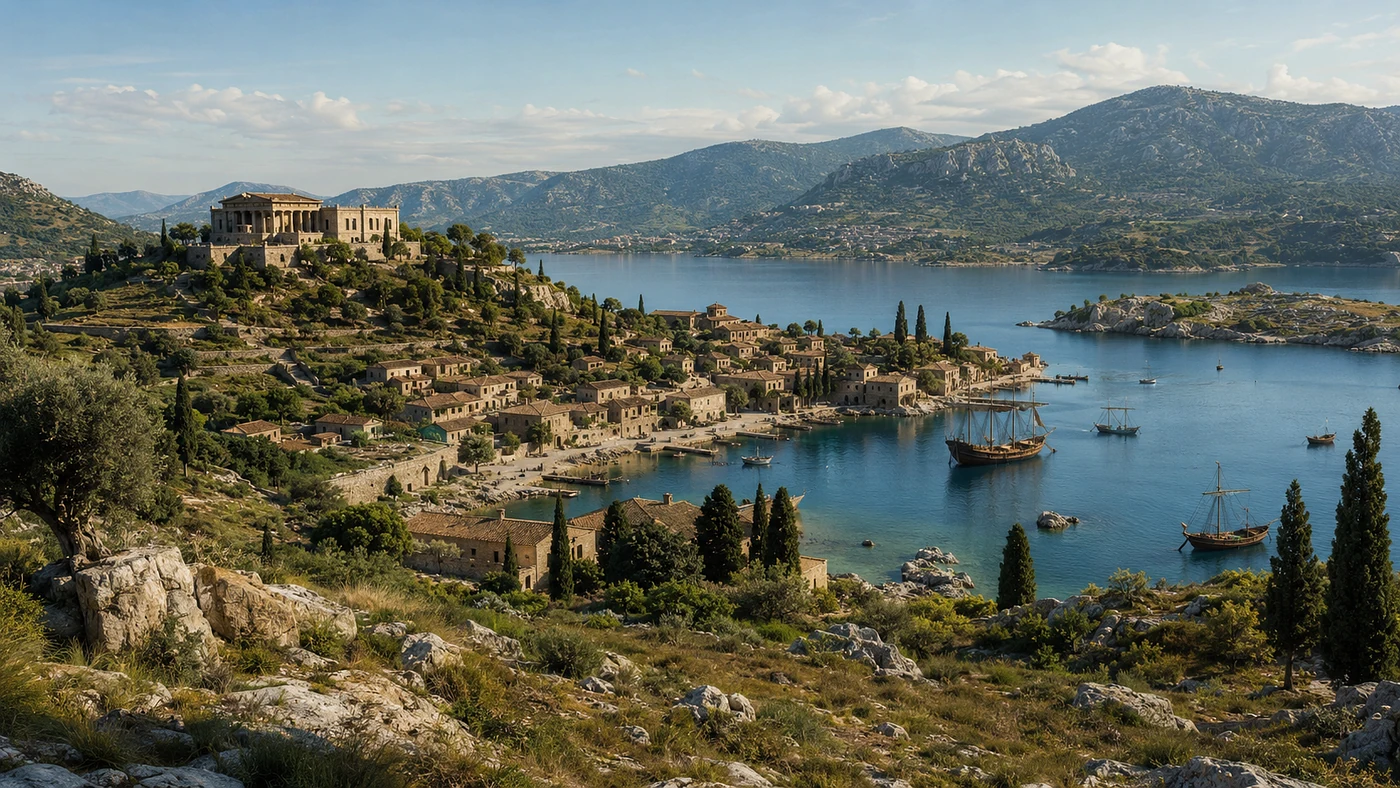
The STEM Odyssey, then, is not a myth draped over an anniversary. It is a way of understanding what the anniversary means. A small ship launched from local soil and crossed waters crowded with giants, songs, storms, false harbors, and changing winds. It learned when to leave, when to adapt, when to refuse, when to build, and when to return to first principles. At 25, STEM.org Educational Research stands not at the end of its voyage, but at the moment Homer prized most: the moment when experience must become wisdom. The work ahead is to keep STEM education open, verifiable, humane, decentralized, and free enough that the next child entering an unfamiliar place of learning can feel what those first students were meant to feel at the Henry Ford Estate: that the world is larger than they were told, that knowledge belongs to them too, and that inquiry is a home worth defending.
Andrew B. Raupp is the Founder / Executive Director @stemdotorg. “Resolutely preserving the rights and freedoms of the STEM education community through sound policy & practice…”
Keywords
First published June 5, 2026. Original publication