A STEM Education Declaration of Independence: The Articles of Renewal
The Right to Separate from Systems That Cannot Be Reformed
 Andrew B. Raupp
In this essay +
The First Declaration Was the Spark
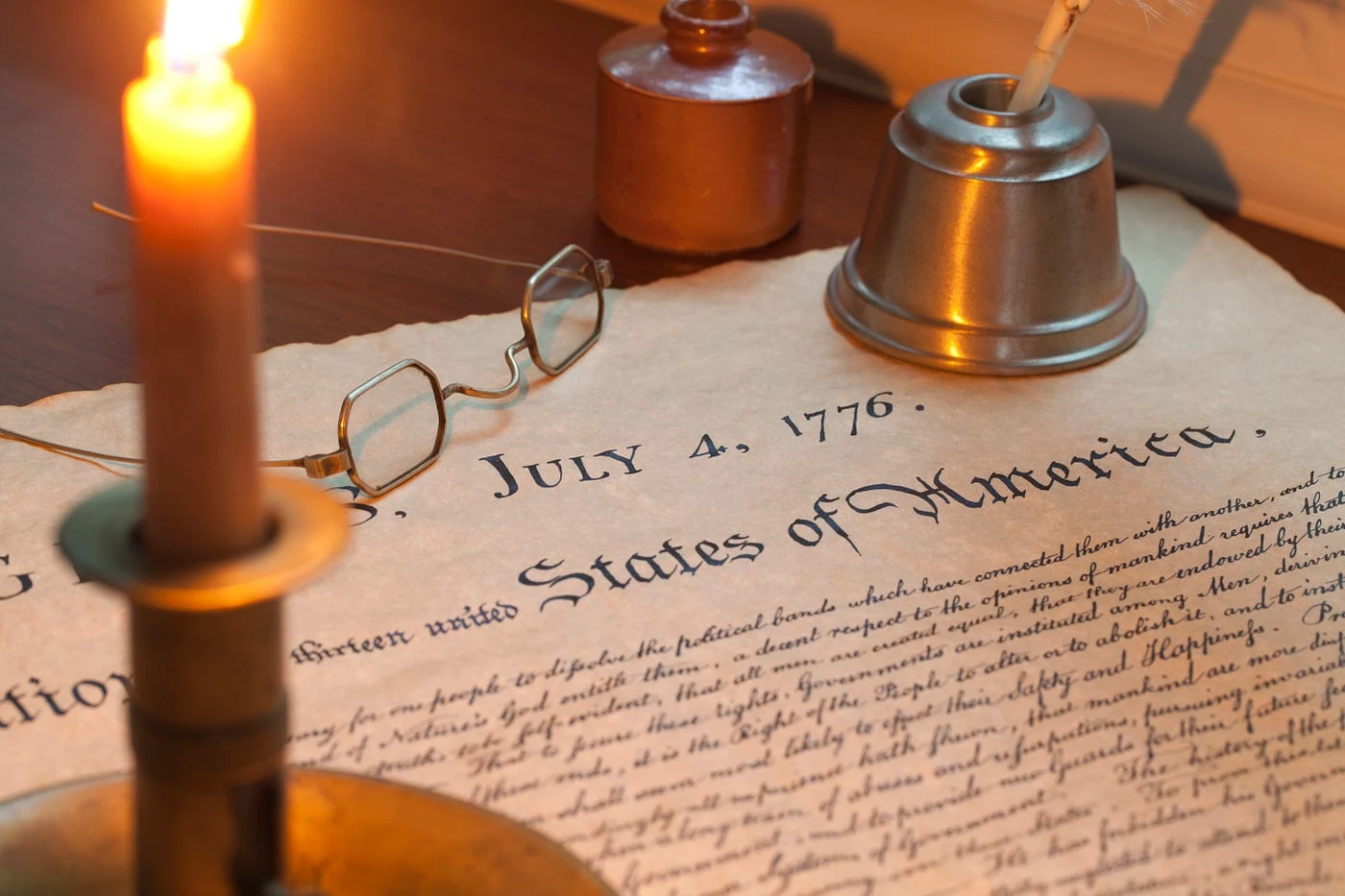
When A STEM Education Declaration of Independence in 1776 Characters was published in 2023, it did something rare in the language of education reform: it refused to ask permission. It declared that STEM education could not be owned by the World Economic Forum, or by any other organization or entity seeking to impose a singular vision on communities, learners, teachers, and nations. It defended STEM education as accessible, inquiry-based, hands-on, collaborative, culturally responsive, locally grounded, and tied to real-world problem-solving rather than institutional obedience. That first declaration was compact by design, compressed into the symbolic measure of 1776 characters, but its message was larger than its form: no external power, no matter how polished its language or global its ambition, has the moral authority to possess science, define learning, or dictate the future of STEM education on behalf of the people who must live with its consequences.
A STEM Education Declaration of Independence in 1776 Characters
Since the Coalition of Concerned STEM Advocates, Practitioners & Stakeholders signed that declaration, much has changed. The original document spoke against the ownership of STEM education by outside institutions, and that warning remains necessary, but the problem has widened. What once looked like a dispute over influence has become a struggle over infrastructure. The question is no longer only who gets to speak for STEM education; the question is who controls the platforms, funding channels, curriculum pipelines, professional legitimacy, institutional partnerships, data systems, public narratives, and reputational machinery through which STEM education is allowed to exist. A declaration written for one moment must now be enlarged for another. The first declaration separated STEM education from imposed ownership. The next one must defend the right to build when institutions become too captured, too centralized, too performative, or too frightened to reform themselves.
What Has Changed Since the Signatures
The danger facing STEM education is not always announced by villains. More often, it arrives wearing the language of improvement. It comes as alignment, strategic partnership, quality control, stakeholder engagement, data modernization, standards harmonization, risk management, approved curriculum, workforce readiness, national competitiveness, philanthropic coordination, and responsible innovation. None of these phrases is automatically corrupt, and many may describe legitimate needs. Yet any phrase can become a leash when it is used to make independent educators, local communities, parents, students, builders, and practitioners dependent on centralized permission. Bureaucracy rarely destroys reform by declaring war on it. It welcomes reform into the building, seats it on a committee, gives it a badge, asks it to rewrite its language, measures it against institutional priorities, and then slowly turns its living force into paperwork.
This is why the next STEM Education Declaration of Independence must go beyond protest. It must draw a line between institutions that still serve learning and institutions that have learned to survive by consuming the language of learning. There are schools, nonprofits, agencies, universities, companies, and public-private networks that can still be reformed from within because they respond to evidence, protect honest dissent, place students above optics, and allow effective models to grow even when those models disturb hierarchy. But there are also organizations that treat reformers as raw material. They borrow their credibility, absorb their vocabulary, slow their urgency, and use their presence as proof that change is underway. In such places, the reformer does not change the system; the system digests the reformer.
That distinction now matters with unusual force because the space to build independently may narrow in the years ahead. The future may not require a single decree forbidding independent STEM education. It may instead arrive through a web of softer controls: centralized payment systems, reputational scoring, platform dependency, algorithmic visibility, grant eligibility rules, procurement barriers, approved-vendor regimes, data compliance burdens, social credit mechanisms, ideological screening, institutional blacklists, and credentialing systems that decide who is legitimate before students ever encounter the work. A free STEM education movement cannot wait until every doorway has a scanner, every relationship has a risk score, and every independent builder is told to join an approved network or disappear from view. The time to build outside capacity is while outside capacity can still be built.
The American Grammar of Separation
The power of the American Declaration of Independence was not that it complained loudly. Its force came from its structure. It began with rights, moved to the source of legitimate authority, named the injuries that violated that authority, and then justified separation when repair was no longer possible. The Declaration asserted that governments derive just powers from the consent of the governed and that when a form of government becomes destructive of the ends it was created to secure, the people have the right to alter or abolish it and establish something better suited to their safety and happiness.
That architecture is exactly what STEM education needs now. Not imitation for decoration, but inheritance through application. STEM education has its own governed people: students, families, teachers, mentors, builders, scientists, engineers, local communities, and citizens whose lives are shaped by whether learning produces capability or dependence. STEM institutions, whether public or private, derive their legitimacy from service to those people. They are not sovereigns. They are trustees. They do not own curiosity. They do not own science. They do not own the minds of children. They are tolerated, funded, respected, and preserved only so long as they protect the conditions under which learners can ask serious questions, encounter reality, use tools, test ideas, build solutions, and become intellectually free.
When a STEM organization forgets this, the case for independence begins. When it turns inquiry into compliance, it has violated its trust. When it treats teachers as delivery mechanisms rather than professionals with judgment, it has violated its trust. When it treats students as data points, markets, ideological vessels, or workforce inventory rather than whole human beings, it has violated its trust. When it uses access to silence criticism, funding to purchase obedience, credentials to block alternatives, and bureaucracy to exhaust reform, it has violated its trust. At that point, the reformer must stop confusing loyalty to an institution with loyalty to education. The duty is not to preserve the building. The duty is to preserve the flame.
The Declaration Renewed
A STEM Education Declaration of Independence — 1,776 Characters
We hold that each child is born with the right to ask why, to test what is claimed, to build what is imagined, and to learn among mentors who serve truth before power.
STEM education belongs neither to governments, corporations, foundations, platforms, parties, credentialing bodies, nor councils claiming ownership over science, technology, engineering, or mathematics. These disciplines are humanity’s inheritance and tools of free people.
Whenever any institution, decorated by language or wealth, converts curiosity into compliance, inquiry into instruction, teachers into functionaries, students into data, communities into markets, and education into obedience, it loses its moral claim to govern learning.
We therefore declare that STEM education must remain accessible to every learner, rooted in local needs, open to evidence, resistant to capture, and alive through experiment, failure, repair, invention and usefulness.
We further declare that reformers have a duty to enter institutions only when those institutions can still be moved by truth, accountability, and the consent of communities they claim to serve; and when such institutions cannot be moved, when they absorb reform to preserve themselves, it becomes the right and duty of educators, families, students, builders, and citizens to establish independent systems of learning.
Let no centralized authority, social scoring regime, funding network, algorithmic gatekeeper, or empire decide who may think, teach, build, discover or belong.
For the sake of the child with a question, the teacher with a calling, the community with a problem to solve, and civilization that cannot survive without free minds, we pledge our work, courage, and sacred commitment to build STEM education worthy of liberty.
After the Signature
A declaration becomes meaningful only when it changes what people do on Monday morning. The reader who wants to act must begin by studying the institution in front of them with unsentimental care. Do not ask first whether the organization has noble language, because every modern bureaucracy has learned to speak nobly. Ask what it rewards, what it punishes, what it funds, what it delays, what it hides, what it measures, and what kind of person rises inside it. If the organization rewards student capability, teacher judgment, honest evidence, and community trust, then internal reform may be possible. If it rewards message discipline, compliance, dependency, donor comfort, administrative expansion, and the appearance of innovation without the risk of real change, then the institution is already telling you what it serves.
The next step is to test whether reform has a living path to power. A reformer should propose a concrete STEM education improvement that can be observed, measured, and judged by its effect on learners. Not a slogan, not a listening session, not another strategic framework, but a real intervention: a student-built engineering project, an independent mentorship network, a community laboratory, a teacher-led curriculum pilot, a local problem-solving challenge, an open technical pathway, or a model that gives students the tools to produce something useful. Then watch the institution’s reaction. A reformable organization may challenge the proposal, demand safeguards, and ask for evidence, but it will remain interested in whether the work helps students. A captured organization will shift attention away from learning and toward control. It will ask who authorized it, whether it threatens existing programs, whether the messaging is safe, whether it creates risk, whether it makes leadership uncomfortable, or whether it empowers people outside the accepted chain of command.
The third step is to find the true location of decision-making. Many reformers are neutralized because they mistake conversation for authority. They are invited to advisory boards, committees, roundtables, panels, and working groups, but the budget is elsewhere, the policy decision is elsewhere, the curriculum approval is elsewhere, the communications office is elsewhere, and the power to say no is hidden behind people who never attend the meeting. If you cannot identify who can approve, fund, protect, and scale the work, then you do not yet have an internal reform strategy. You have access to process. Process can be useful, but process without authority is where urgency goes to lose its name.
The fourth step is to build outside capacity before the decision to leave becomes desperate. This is the discipline many reformers postpone, and it is the one that matters most. Build relationships with parents, educators, mentors, local businesses, engineers, scientists, homeschool communities, after-school networks, libraries, makerspaces, civic groups, and students themselves. Preserve independent communication channels. Document what works. Create open materials. Train people who can train others. Develop models that do not collapse when one grant disappears or one administrator changes their mind. The outside option does not require immediate separation, but it protects the reformer from dependence. It also gives the institution a reason to take reform seriously, because the work no longer needs institutional permission to survive.
The final step is to decide with discipline rather than resentment. If the institution can still be moved by evidence, conscience, and community pressure, then work inside it with courage and precision. Enter the room prepared, speak plainly, protect the mission from dilution, and force every conversation back to what students are actually learning, making, testing, and becoming. But if the institution proves that it can absorb every reform without changing its structure, if it uses your credibility while blocking your work, if it welcomes your presence but rejects your mission, then leave before the habit of asking permission becomes part of your character. Build outside. Build with others. Build while the tools still exist, the networks can still form, and the young people who need a different future are still waiting for adults brave enough to stop managing decline.
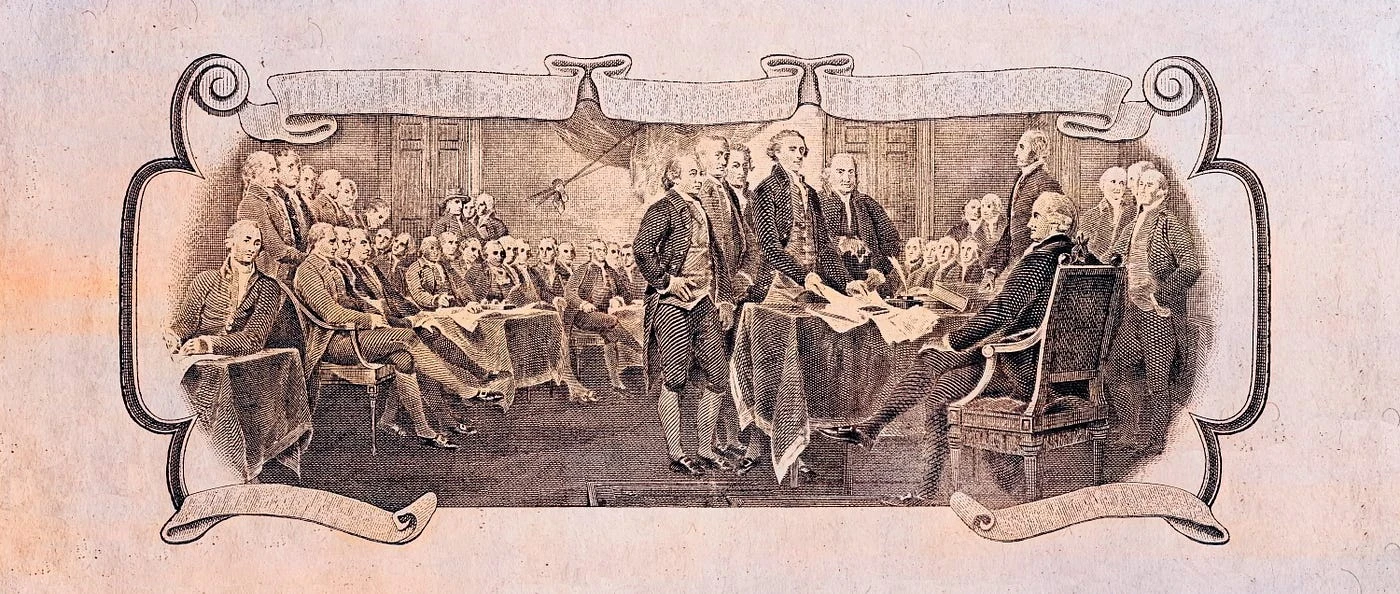
The first STEM Education Declaration of Independence said that no institution owns STEM education. The renewed declaration must say something even harder: no institution has the right to keep governing STEM education after it has betrayed the conditions that make learning free. Independence is not isolation. It is the recovery of rightful authority. It is the refusal to let bureaucracy become destiny. It is the decision to place the child with a question above the system with a form, the teacher with a calling above the office with a mandate, and the builder with a working model above the institution with a dying reputation. The signature is not the end of the document. It is the beginning of construction.
Andrew B. Raupp is the Founder / Executive Director @stemdotorg. “Resolutely preserving the rights and freedoms of the STEM education community through sound policy & practice…”
Andrew B. Raupp
First published August 3, 2026. Original publication