The Philosophers Who Ignited STEM and the American Experiment
From Aristotle to Twain, the ideas that made knowledge a birthright, not a permission slip.
In this essay +
Author’s Note: This essay reflects upon several philosophers and political thinkers whose ideas helped shape not only the American experiment, but also the philosophical foundations underlying STEM.org Educational Research and its evolving governance framework known as Dynamic Standards Consensus (DSC). The purpose of this analysis is not to suggest ideological uniformity among these figures, nor to imply that they would agree on every question confronting modern education. Many differed sharply in temperament, politics, theology, and historical circumstance. Yet together they contributed enduring principles concerning liberty, distributed authority, transparency, consent, civic responsibility, institutional restraint, skepticism toward concentrated power, and the preservation of human agency.
Those principles remain deeply relevant to STEM education.
For twenty-five years, STEM.org Educational Research has operated from the conviction that educational trust must be earned through openness, accountability, independent evaluation, and meaningful participation from the communities being served. DSC emerged from that same philosophical tradition. Its purpose is not to impose rigid orthodoxy from above, but to create a living, participatory standards model shaped by educators, institutions, and stakeholders themselves. In this respect, DSC reflects a broader American tradition: the belief that legitimacy grows stronger when governance remains transparent, distributed, and accountable to the people affected by it.
At America’s 250th anniversary, these questions become impossible to ignore. The future of STEM education will not be decided by technology alone, but by the philosophical assumptions embedded within the systems governing it. Whether STEM remains a vehicle for inquiry, local stewardship, scientific humility, and human flourishing — or drifts toward centralized managerial control — may ultimately depend upon whether the principles explored in this essay continue to survive within the institutions shaping the next generation.
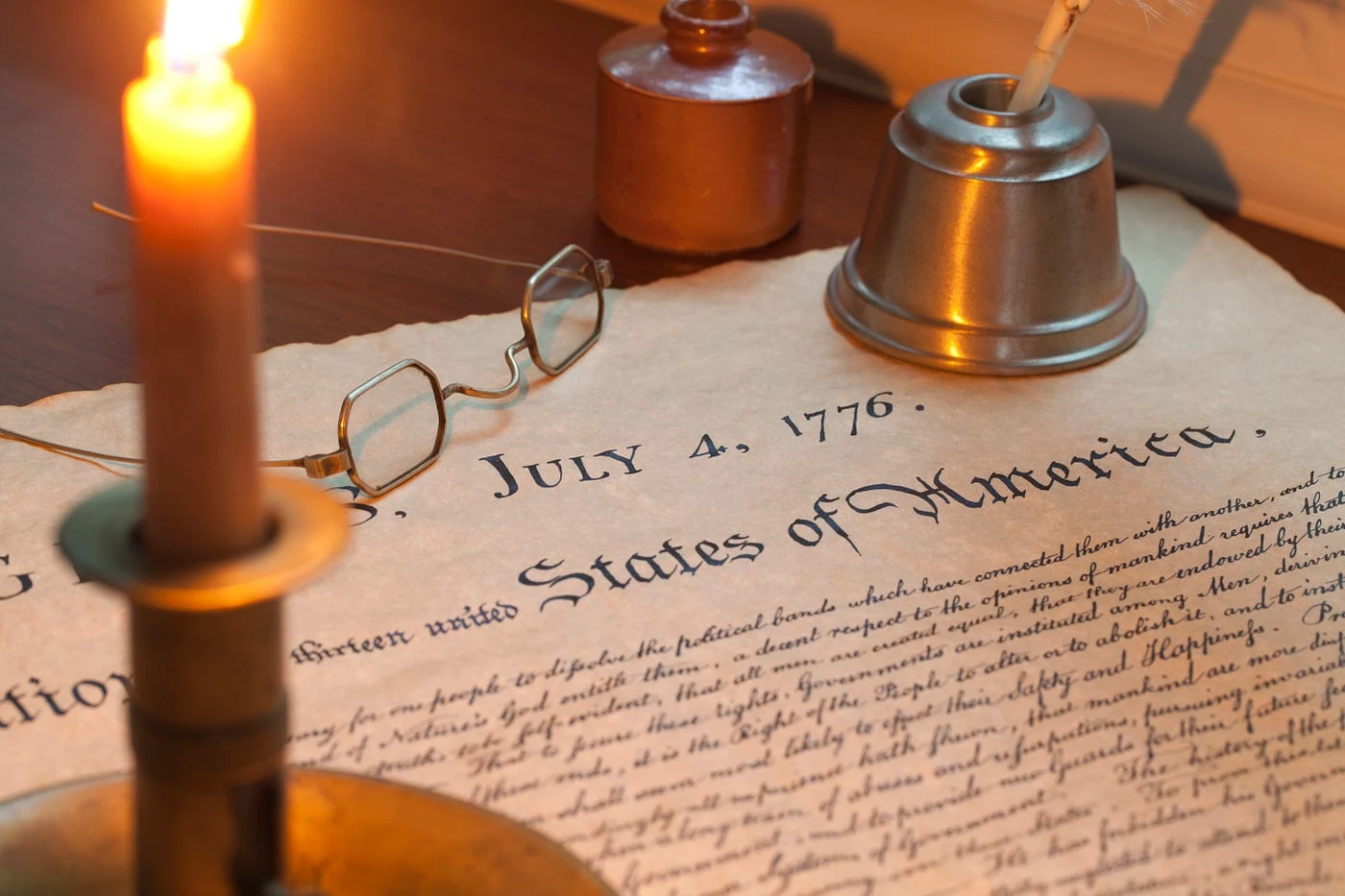
America was not born from slogans, nor from administrative consensus, nor from the confidence of experts alone. The American experiment emerged from argument, dissent, philosophy, theology, law, and the hard-earned suspicion that concentrated power eventually drifts toward domination. The men who drafted the Declaration of Independence and later framed the Constitution did not construct the republic from instinct alone. They read deeply. They studied Aristotle, Cicero, Polybius, Locke, Montesquieu, Sidney, Blackstone, and countless others because they understood that liberty survives only when supported by intellectual foundations strong enough to resist both tyranny and fashion. The National Constitution Center itself acknowledges that the intellectual foundations of the American founding stretched across centuries of philosophical thought, from classical antiquity through the Enlightenment.
As the United States approaches its 250th anniversary, the country finds itself confronting a question that the Founders themselves would immediately recognize: can free institutions survive without surrendering themselves to centralized systems of control? That question no longer belongs only to legislatures, courts, and elections. It now extends directly into education, technology, scientific research, credentialing, artificial intelligence, and the future governance of STEM (science, technology, engineering and mathematics) itself. The fight over STEM education is not simply a fight over curriculum. It is a fight over who governs knowledge, who defines legitimacy, who controls standards, and whether inquiry remains free enough to produce citizens rather than merely compliant participants in systems too large to challenge.
That is why the 25th anniversary of STEM.org Educational Research belongs inside the larger American story. Since 2001, STEM.org Educational Research has operated as an independent, educator-led body working within the difficult terrain of standards, trustmarks, credentialing, research, evaluation, and public trust. Across a quarter century marked by technological upheaval, political polarization, economic instability, and the growing consolidation of educational authority, the organization has consistently advanced a decentralized philosophy of STEM education rooted in transparency, local stewardship, and institutional independence. That position is not simply operational. It is philosophical. It reflects a deeper conviction that STEM education must remain accountable to learners, educators, communities, and the public rather than becoming subordinate to ideological management or bureaucratic consolidation.
The Founders would have recognized the stakes immediately because the central problem confronting STEM today is the same problem that confronted the early republic: how does a society preserve liberty while still maintaining structure, rigor, and continuity? A free STEM movement cannot survive on sentiment alone. It requires standards. It requires quality assurance. It requires trust. Yet the moment standards become instruments of centralized power rather than tools of public accountability, the entire educational ecosystem begins to drift away from inquiry and toward administration. This is precisely why the philosophers who shaped the American republic remain relevant to the future of STEM education itself.
Aristotle
Aristotle offers perhaps the deepest starting point because he forces education to confront its ultimate purpose. For Aristotle, education was never simply vocational training or technical preparation. Its purpose was human flourishing. A civilization could not be considered healthy simply because it produced wealth or efficiency. It had to cultivate virtuous, capable, intellectually alive human beings capable of judgment, participation, and meaningful action. Applied to STEM education, this principle changes everything. The purpose of STEM cannot be reduced to workforce pipelines, economic competitiveness, or bureaucratic metrics alone. STEM exists to help human beings encounter reality honestly and develop the capacities necessary to understand, shape, repair, and improve the world around them. A child building a bridge from scrap material, examining soil under a microscope, designing code, repairing an engine, or observing the night sky is not merely completing a task. That child is participating in the ancient human effort to transform curiosity into capability. The pursuit of happiness referenced in the Declaration of Independence becomes meaningful only when citizens possess the intellectual freedom and practical competence necessary to shape their own lives. Aristotle reminds STEM education that flourishing matters more than compliance.
Cicero
Cicero expands this vision by grounding education within the moral obligations of republican life. For Cicero, a republic was not simply a governing mechanism. It was a moral partnership requiring civic virtue, discipline, duty, and public trust. Knowledge carried obligations. The engineer owed something to the bridge. The scientist owed something to the truth. The teacher owed something to the child. The public institution owed something to the republic itself. STEM education loses its integrity the moment it becomes detached from civic responsibility and public accountability. A STEM system governed entirely by market incentives risks reducing education to transactional utility, while a STEM system governed entirely by centralized ideology risks transforming inquiry into political management. Cicero offers another path. STEM should serve the common good without surrendering itself to concentrated authority. It should cultivate disciplined citizens capable of participating in public life rather than merely servicing institutional machinery.
Polybius
Polybius, whose writings deeply influenced the Founders’ understanding of republican stability, warned that every political system contains the seeds of its own corruption. His solution was mixed governance: power distributed across multiple institutions so that no single authority could dominate the whole system unchecked. This insight carries enormous relevance for STEM education in the twenty-first century. When the same institutions simultaneously control curriculum development, credentialing, teacher preparation, research funding, policy formation, technological infrastructure, and outcome measurement, educational liberty becomes fragile. A healthy STEM ecosystem requires distributed authority. Teachers, researchers, schools, independent evaluators, parents, local communities, and learners themselves must all retain meaningful roles. The concentration of educational authority within a small number of bureaucratic, corporate, or transnational structures may create the appearance of administrative efficiency, but it also risks producing an intellectual monoculture. Polybius reminds us that resilience in STEM education comes not from centralization, but from balance.
John Locke
John Locke brings the argument closer to the philosophical heart of the American experiment itself. Locke’s emphasis on natural rights and consent directly shaped the intellectual environment from which the Declaration emerged. The Declaration’s famous assertion that governments derive “their just powers from the consent of the governed” reflects precisely this Lockean framework. Applied to STEM education, consent becomes far more than a political abstraction. Schools are not colonies. Teachers are not functionaries. Students are not raw material for institutional agendas. Parents are not obstacles to be managed. Communities possess legitimate educational authority because education belongs fundamentally to the people being served by it. STEM autonomy therefore requires transparency regarding standards, methodologies, objectives, and evaluation criteria. Citizens deserve to know who defines educational success, who finances the systems producing credentialing frameworks, and what ideological assumptions may be embedded within supposedly neutral standards. Locke’s relevance to STEM lies in his insistence that legitimate authority cannot rest solely on expertise or power. It must retain public trust and public consent.
Montesquieu
Montesquieu strengthens this argument further through his doctrine of separated powers. His warning was not that all authority is inherently evil, but rather that concentrated authority eventually becomes dangerous regardless of initial intentions. The University of Georgia Press notes the profound influence of The Spirit of Laws on the constitutional imagination of the Founders and on the development of separated powers within American governance. STEM education now faces an analogous challenge. When educational standards bodies, funding institutions, policy organizations, curriculum developers, and credentialing authorities become too closely intertwined, independent judgment weakens. Scientific inquiry requires intellectual separation. Evaluation should remain distinct from political lobbying. Credentialing should remain independent from commercial dependency. Research should remain free from ideological enforcement. Artificial intelligence itself must remain subordinate to human judgment rather than replacing it. Montesquieu’s principle remains timeless because it recognizes that liberty depends not on the goodness of rulers but on the architecture of institutions themselves.
Algernon Sidney
Algernon Sidney contributes another indispensable lesson: resistance to arbitrary authority is not extremism but stewardship. Sidney understood that liberty rarely disappears dramatically. It erodes gradually beneath the language of necessity, expertise, efficiency, and benevolence. This insight matters enormously in modern STEM education because many threats to educational independence no longer arrive openly demanding obedience. They arrive as partnerships, mandates, funding incentives, strategic alignments, or administrative harmonization. The danger emerges when educational institutions become reluctant to question prevailing orthodoxies because doing so threatens financial stability, institutional legitimacy, or political acceptance. A healthy STEM ecosystem must preserve the courage to dissent. It must remain willing to challenge centralized assumptions, fashionable ideologies, and institutional overreach whenever inquiry itself becomes constrained. Sidney reminds educators that vigilance is not hostility. It is responsibility.
James Harrington
James Harrington deepens the institutional dimension of the argument by emphasizing that liberty requires structural design. Good intentions are insufficient. Systems must be deliberately constructed to resist capture. This insight becomes especially important in the digital age, where educational governance increasingly depends upon technological infrastructure, data systems, algorithmic evaluation, and credential verification. Decentralized verification systems, blockchain-secured credentials, transparent evaluation methodologies, and publicly inspectable standards all represent efforts to engineer trust through distributed accountability rather than institutional opacity. STEM.org Educational Research’s emphasis on decentralized, blockchain-secured credentialing therefore reflects more than technological experimentation. It reflects a constitutional philosophy applied to educational trust itself. Freedom survives not because institutions promise virtue, but because systems are designed to distribute authority, preserve transparency, and limit arbitrary control.
William Blackstone
William Blackstone contributes another principle essential to educational legitimacy: standards must be knowable. Rules hidden behind jargon, moving criteria, opaque scoring mechanisms, or vague ideological terminology erode public trust because citizens cannot meaningfully evaluate systems they cannot understand. A free STEM movement requires clarity. Schools deserve transparent evaluation standards. Teachers deserve intelligible credentialing expectations. Families deserve understandable explanations of what educational designations actually signify. The public deserves to know whether evaluators maintain independence from financial, political, or ideological conflicts of interest. Blackstone reminds STEM governance that legitimacy depends upon fairness, and fairness requires transparency.
Francis Hutcheson
Francis Hutcheson returns the discussion to happiness itself. The Founders did not speak of happiness frivolously. Happiness referred to human flourishing, moral development, capability, contribution, and the freedom to pursue meaningful lives. Hutcheson believed societies should cultivate the conditions under which human beings could thrive intellectually and morally. STEM education at its best does exactly this. It allows students to transform curiosity into mastery and imagination into practical competence. It creates the joy of discovery. It teaches children that reality can be investigated rather than merely inherited. It cultivates self-confidence rooted in capability rather than dependence. STEM sovereignty should therefore defend the dignity of the learner against systems that reduce students to data points, workforce units, or ideological vessels.
Thomas Paine
Thomas Paine then introduces perhaps the most democratic insight of all: public understanding matters. Paine transformed political philosophy into language ordinary citizens could grasp because he understood that self-government collapses when governance becomes incomprehensible to the governed. STEM education today often suffers from precisely this problem. Bureaucratic terminology, inflated institutional language, and endless strategic abstractions frequently obscure basic questions that ordinary citizens deserve to ask. What exactly is being taught? Why is it being taught? Who approved it? What evidence supports it? What assumptions shape it? What outcomes justify it? Paine reminds STEM education that transparency and public intelligibility are not anti-intellectual. They are democratic necessities.
Mark Twain
Finally, Mark Twain arrives as the necessary skeptic. Twain was not a Founder, but he understood American pretension perhaps better than any writer of his era. He distrusted inflated rhetoric, performative moralism, and institutions that confused their own authority with wisdom. Twain recognized that humor often exposes truths bureaucracies cannot tolerate hearing aloud. He also understood that evidence matters more than reputational theater. In an age increasingly saturated with slogans, institutional branding, ideological certainty, and technocratic confidence, Twain’s voice becomes extraordinarily relevant to STEM education. Any educational claim too fragile to survive honest scrutiny, empirical testing, open debate, or a child’s direct question deserves suspicion rather than obedience. Twain reminds STEM to retain humility, humor, skepticism, and intellectual honesty even when institutions grow solemn with self-importance.
Together, these thinkers form something larger than a reading list. They form a constitutional framework for educational liberty. Aristotle teaches flourishing. Cicero teaches civic duty. Polybius teaches balance. Locke teaches consent. Montesquieu teaches distributed authority. Sidney teaches vigilance. Harrington teaches institutional design. Blackstone teaches transparency. Hutcheson teaches happiness. Paine teaches public intelligibility. Twain teaches skepticism toward pretension. Combined, they offer a philosophy of STEM education capable of preserving inquiry without surrendering liberty.
That philosophy matters profoundly as America approaches its 250th anniversary. The United States was never intended to become a civilization governed entirely from above. The republic was designed around the assumption that free people retain the capacity to govern themselves responsibly. STEM education must preserve that same principle. It should strengthen local communities rather than subordinate them. It should empower educators rather than reduce them to delivery mechanisms. It should cultivate capable citizens rather than dependent technocrats. It should defend inquiry against both commercial capture and ideological enforcement. It should preserve the dignity of human judgment even as artificial intelligence reshapes the technological landscape around it.
STEM.org Educational Research’s 25th anniversary therefore represents something larger than organizational longevity. It represents a sustained argument that educational trust, scientific integrity, and institutional independence still matter in an age increasingly defined by consolidation. The organization’s significance does not lie in ownership over the STEM movement. No institution owns STEM itself. Its significance lies in stewardship: the effort to preserve conditions under which STEM education remains pluralistic, accountable, transparent, and difficult to capture.
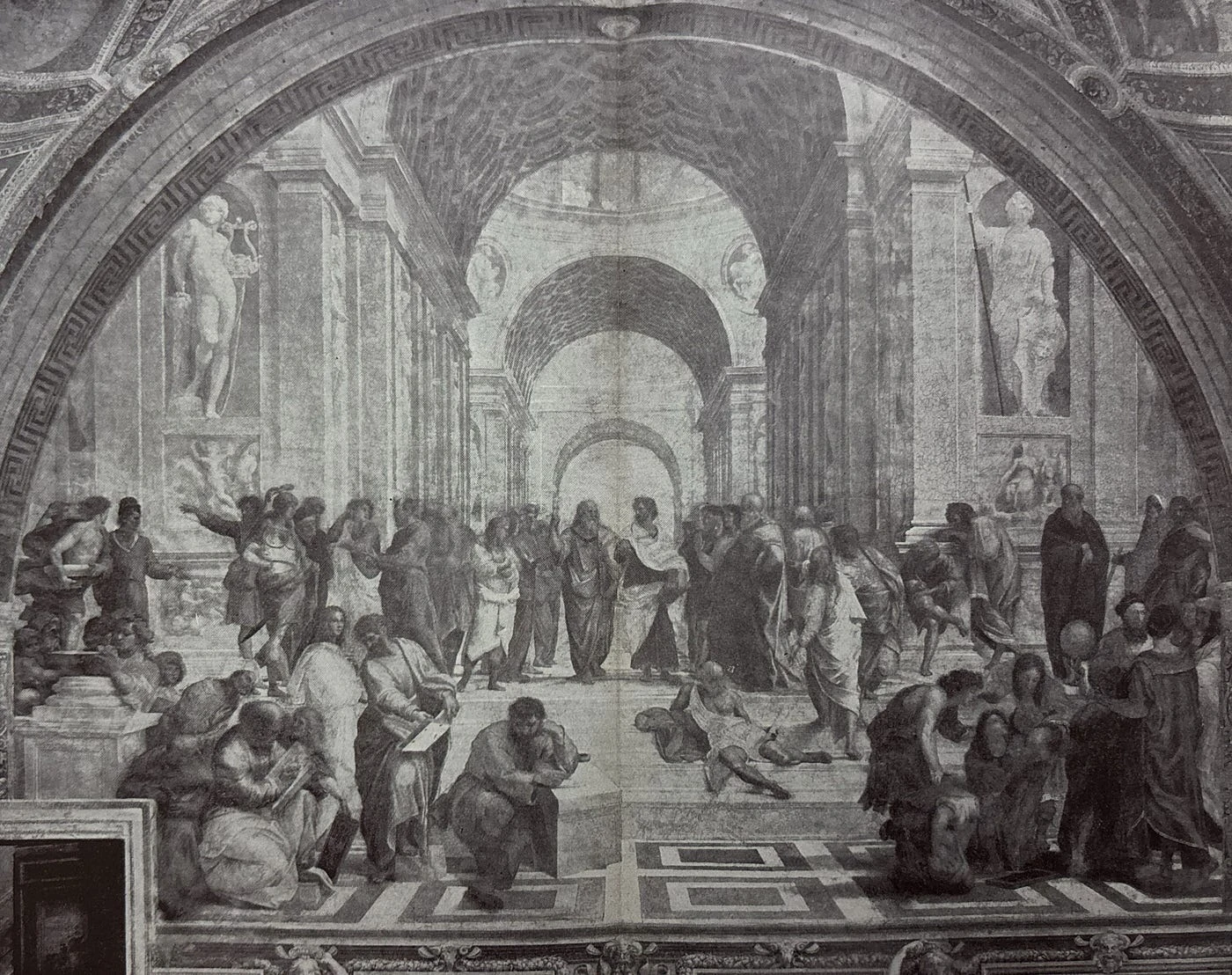
America itself remains unfinished. The Founders did not create a perfected nation. They created a framework capable of self-correction because they understood that concentrated authority always threatens liberty eventually. The same principle now confronts STEM education. The future of STEM will not be decided solely by technological capability. It will be decided by governance, institutional design, transparency, and whether free inquiry survives the temptations of centralized management.
Thus, a free republic requires free minds. Free minds require free inquiry. And free inquiry survives only when institutions remain humble enough to be questioned, challenged, corrected, and rebuilt.
That is the bridge connecting 1776, 2001, 2026, and the future of STEM education itself.
Andrew B. Raupp is the Founder / Executive Director @stemdotorg. “Resolutely preserving the rights and freedoms of the STEM education community through sound policy & practice…”
Keywords
First published May 26, 2026. Original publication