Meet the Entrepreneurs Bringing Drones to STEM Education
Independent review disclosure: This article provides independent quality-assurance coverage. It is not a paid promotion or affiliate partnership, and STEM.org receives no commissions from its product links. Any recognition is limited to its documented scope.
If you’ve noticed drones buzzing about in the skies above your house, you are definitely not alone. Since the Federal Aviation Administration (FAA) began issuing permits and lifting restrictions on recreational drone usage in 2010, demand has steadily climbed. By 2016, the consumer drone market was valued at $1.5 billion, and the latest BusinessWire report on the industry predicts a compound annual growth rate (CAGR) of 12 percent over the next decade.
As drones become less expensive to make and easier to use, it’s no surprise that regular people want a piece of the fun. Drones can be used like toys, just as remote control cars and airplanes are. They’re also a great way for amateur photographers and videographers to get amazing shots that would ordinarily require heavy equipment like cranes or even manned aircraft to achieve.
And with drones making their way into everyday life, it’s becoming clear that they are a remarkable tool for teaching science, technology, engineering and mathematics (STEM) skills to kids and teens.
Drones in STEM Education
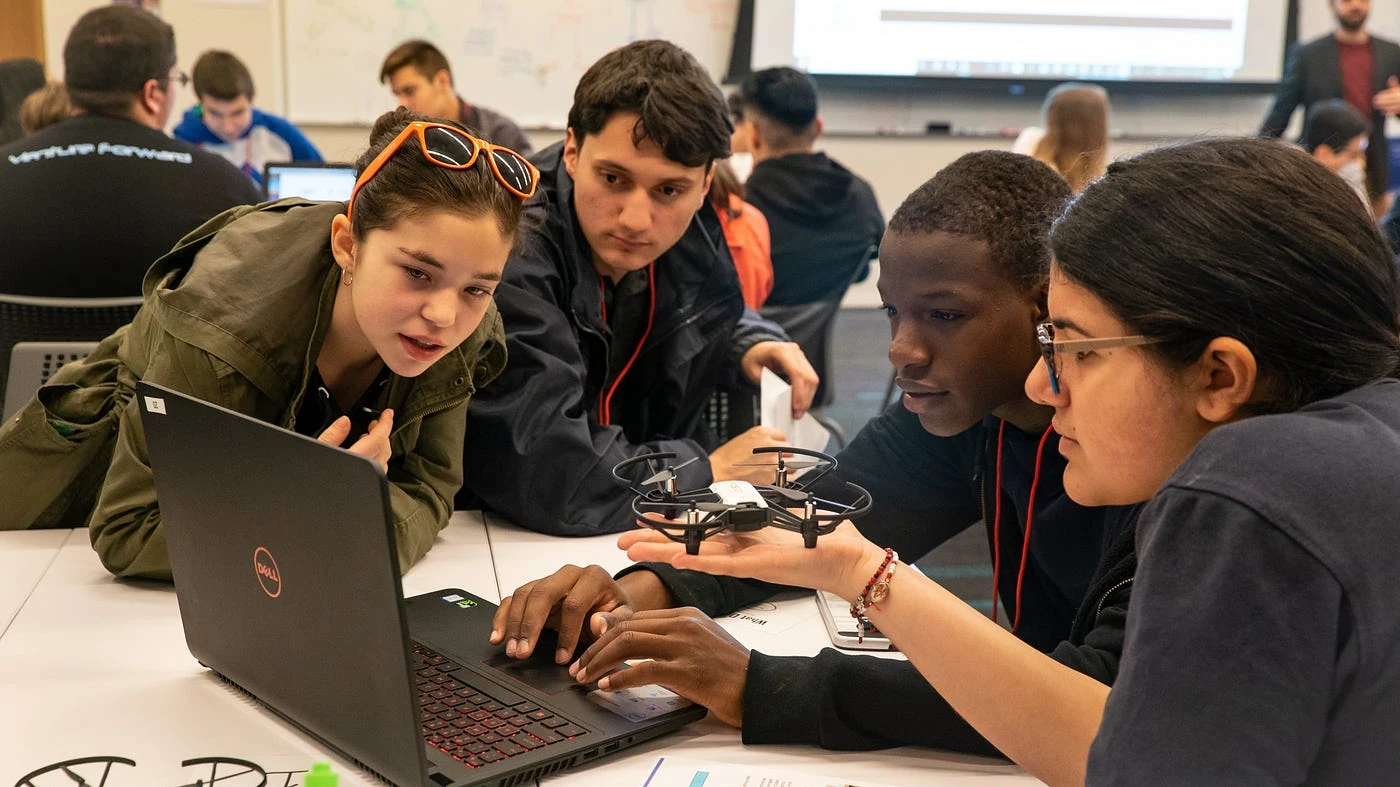
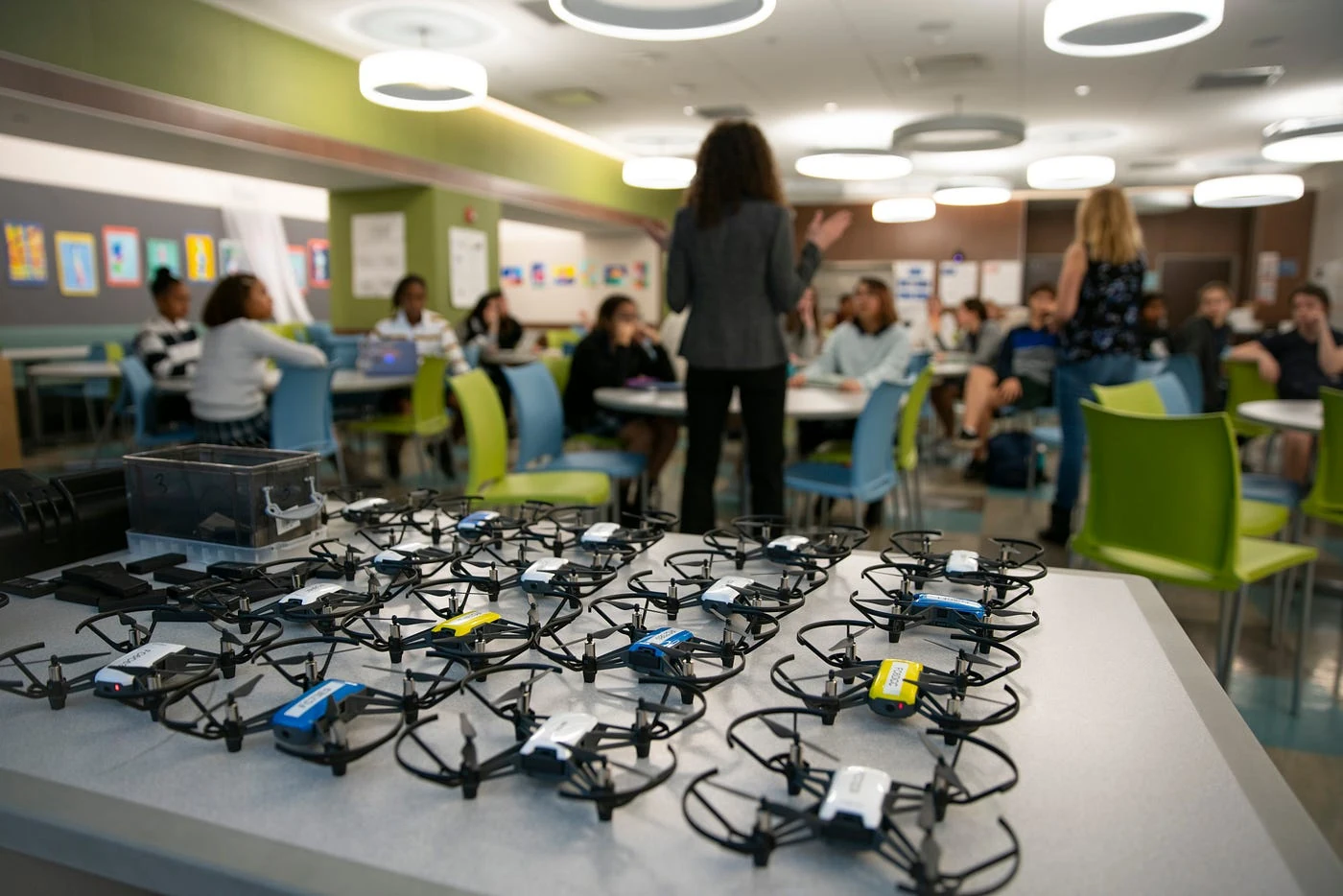
Because drones are often miniature marvels, they’re the perfect size — and price — to bring into the classroom, offering a lot of bang for the educational buck. They quickly capture students’ attention and spark their imaginations, which is a critical first step for any learning initiative. Once they’re hooked, students can use drones to explore many aspects of STEM, including:
- Elements of design, especially in regard to how function dictates form
- Engineering modifications to change the drone’s performance
- Basics of building, including component parts
- Predictions and experimentation for flights
- Real-world problem solving
- The physics of flight
- Aerodynamics
- Programming
And of course, drones can be used as a centerpiece for many more basic experiments that help students practice the scientific method. Even young students can design simple tests to see how much a drone can carry, find the most efficient flight route to deliver a package, and more.
Insights Into Early STEM Learning
The Education Committee at the Earth System Information Partners (ESIP) has developed a curriculum full of drone-specific activities to guide student investigations and encourage science teachers to further explore the power of drones to inspire. Likewise, Benin Flying Labs (BFL) recently used drones to help break down barriers to STEM for students in West Africa and spark interest in career paths related to aviation and other scientific fields.
Sanjay Chandiram and Kaliber Global
Sanjay Chandiram is an entrepreneur who has managed to do what many thought was impossible. He built a $40 million business by becoming a top seller on Amazon — a space notorious for being a Wild West of independent sellers and a place where no one can stay on top for long. But Chandiram did just that.

Chandiram, who immigrated to the United States from India in 2004, got his start by snapping up products from Toys R Us locations and reselling them at a higher price on Amazon. He recognized that the now-bankrupt chain didn’t provide a fun or even a convenient shopping experience. And what good are toys if they’re not fun from start to finish?
Chandiram founded Kaliber Global in part to make shopping for toys more exciting. Over the years, Kaliber Global has brought many exciting products to market, including drones. In 2018, Kaliber Global’s Force1 drone series was featured in Khloe Kardashian’s holiday gift guide. This combination of affordable tech, easy ordering, and a nod from one of the biggest pop culture influencers in the country pushed the hobby drone into the public consciousness like never before.
3 more companies to watch
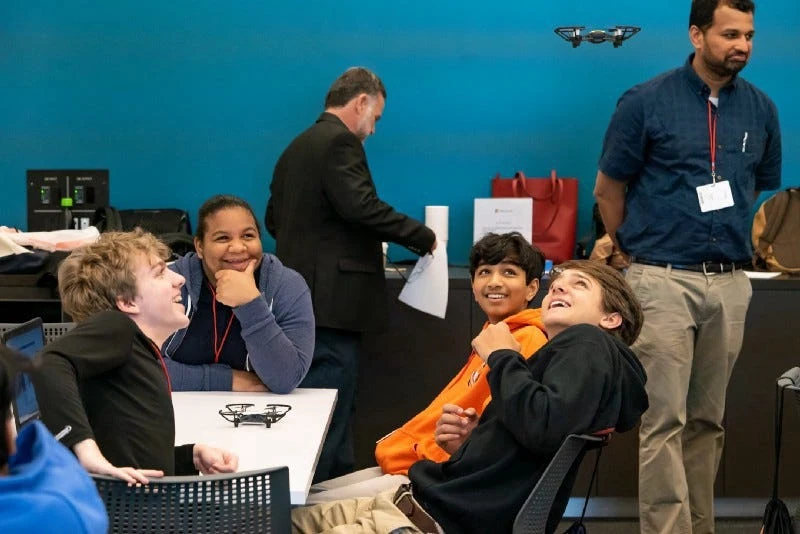
With hobby drones forming an ever-increasing portion of the market share, plenty of entrepreneurs have recognized the potential for success and have jumped into drone design and manufacturing. When it comes to drones in the classroom, three companies in particular stand out for their thoughtful approach.
DroneBlocks: DroneBlocks has created an online curriculum and a free app to help students embrace the fascinating technology behind drones. With a focus on real-world coding, the app features an intuitive drag-and-drop interface that lets students easily build a plan for their drone. The company also offers a DroneBlocks Membership that provides access to online courses that walk students through coding drones — ideal for independent and remote learning during the pandemic. DroneBlocks is led by Marisa Vickery, Dennis Baldwin and Dave Erath.

Aero-Puck: When it comes to flying toys, nobody does it better than Steve and Jeff Rehkemper of Rehco. In the early 2000s, these toy inventors developed — and wisely patented — a control system for a flying vehicle that uses infrared signals that reflect off of objects. This system allows the user to control the toy without ever touching it or using a complicated remote control, making it a flying toy that children could easily enjoy. Though the technology is common now, the Rehkempers did it first, and today they’ve introduced the Hovertech Aero-Puck by Top Secret Toys, a state-of-the-art self-flying drone that’s perfectly safe for indoor play.
Drobots Company: Led by CEO Robert Elwood, Drobots Company lives by its motto, “Where Technology Meets Fresh Air.” Drobots provides summer camps and teen programs designed to harness the excitement surrounding drones in service of a curriculum that gets kids off the couch and outdoors to solve problems with technology. Gamified learning and teamwork are the guideposts as students explore STEM methods in a fun, hands-on environment. In addition to its offerings with drones, Drobots Company also runs programs about game development, artificial intelligence (AI), animation, and more.
There are many STEM-related products and companies out there looking to cash in on the STEM label, and not all STEM toys are created equal. But drones truly do deserve a long look from educators as they are naturally engaging and can be used to teach such a wide variety of skills. From coding to examining vast infrastructure projects , drones are sure to earn a place in homes, science classrooms and makerspaces across the country — especially if these enterprising entrepreneurs have anything to say about it.
STEM Toys Inspire Their Way Into Popular Culture
An iteration of this article was originally featured as a Forbes Technology Council post on December 8th, 2020 and updated for Medium on December 11th, 2020.
Andrew B. Raupp is the Founder / Executive Director @stemdotorg. “Democratizing science, technology, engineering and math (STEM) education through sound policy & practice… Applying STEM to better understand it.”
Keywords
First published December 8, 2020. Medium version: December 12, 2020. Original publication