
The Pathogen Archipelago
Redacted files, foreign funding, and laboratories in a war zone: what remained hidden is the real story—until now.
In this essay
- A Soviet Inheritance, Later Expanded by U.S. Programs
- Contracts, Funding, and the Ukrainian Laboratory Network
- Yanukovych’s Review, the Post-Maidan Reset, and Expanded Partnerships
- What Research Took Place Behind the Laboratory Doors?
- Armenia: A Laboratory Network Near Russia’s Southern Perimeter
- Kazakhstan: The Central Reference Laboratory in Almaty
- A Wider Regional Pattern
- The Journalist Who Raised the Issue Earlier
- Porton Down, Aerosol Research, and the Broader Biosafety Debate
- The Central Issue: Transparency, Oversight, and Public Trust
- From Denial to Documentation
- Pentagon Contractors Given Full Access to Ukrainian Biolabs
- Ukraine Rejected Public Oversight of the Pentagon-Funded Biolabs
- German-Ukrainian Bird Flu Project
- Russian MoD Claim: DTRA Project UP-4 and Migratory Birds
- Archived Ukrainian Biolab Source Documents
LIBERTY OR DEATHWIRE! ⬩ INVESTIGATIVE REPORT⬩ AMERICA 250 SERIES
For America’s 250th, spare us the speeches and show us the receipts. A Republic does not run on blind trust, classified excuses, deleted webpages, and officials calling citizens traitors for asking what was done in their name. Do not take Washington’s word for it, do not take the media’s word for it, and do not take mine — read the documents yourself. Freedom lives in the record, not the press briefing. And when a government hides the record, it is not protecting the Republic; it is protecting itself from the Republic.
Author’s Note: This is not only about laboratories, contracts, pathogens, or Ukraine. It is about the first principle of a free Republic: the people cannot govern what they are forbidden to know. James Madison warned that “a popular Government, without popular information” is only the Prologue “to a Farce or a Tragedy.” That was not poetry. It was a warning label on every locked file cabinet in Washington. A government that hides the facts, classifies the receipts, mocks the witnesses, and then demands public trust has already broken the contract between ruler and citizen. It is not asking for consent. It is manufacturing obedience.
Thomas Jefferson said “the whole art of government consists in the art of being honest.” By that measure, secrecy is not an administrative habit; it is corruption in its purest form. Tactical secrets have their place. But there is no constitutional right to build permanent shadow governments, launder public money through contractors, bury foreign programs under national-security language, and then smear the people who ask where the money went. That is not republican government. That is rule by curtain, credential, and classified stamp.
John F. Kennedy put it plainly: “The very word ‘secrecy’ is repugnant in a free and open society.” The national-security state has spent decades pretending that line was a relic of a simpler age. It was not. It was a direct challenge to the machinery that now treats the American people as a liability to be managed instead of a sovereign public to be answered. When secrecy becomes the default, accountability becomes theater, oversight becomes permission granted after the fact, and elections become rituals performed over decisions already made in rooms the public will never enter.
Theodore Roosevelt understood that loyalty to the Republic is not obedience to officials. Standing by a president “right or wrong,” he wrote, is “unpatriotic and servile.” The same holds for agencies, generals, intelligence chiefs, contractors, and media organs that wrap themselves in the flag while treating dissent as treason. The citizen is not a subject, not a spectator, not a child to be pacified with slogans. He is the master of the government, and the government is the servant. When the servant lies, the master has the duty to demand an accounting.
Dwight Eisenhower warned the country to guard against “unwarranted influence” by the military-industrial complex and the “disastrous rise of misplaced power.” That warning now reads less like a farewell address than an autopsy note. Public money, private contractors, defense agencies, foreign facilities, hidden research, friendly media, and classified justifications have fused into exactly what the Founders would have recognized: power escaping the control of the people.
Lincoln’s promise was government “of the people, by the people, for the people.” Not above the people. Not around the people. Not against the people while speaking in their name. A Republic that operates in secret is not self-government; it is government by permission slip from the very institutions that require supervision. When those institutions lie, erase records, conceal operations, and punish inquiry, the issue is no longer mismanagement. It is tyranny wearing a security badge.
So accountability is not optional. It is the line between a Republic and a regime. Every contract, every laboratory, every agency directive, every deleted webpage, every classified program funded with public money belongs in daylight. The people do not owe blind trust to officials who lied to them. Officials owe answers to the people who paid for the lie.
Freedom does not die only when soldiers march through the streets. Sometimes it dies behind a locked door, under fluorescent lights, beneath a stamp that says classified — while the citizens are told there is nothing to see. What follows is one such door. The program behind it was real. It was funded with American money. And its existence was confirmed not by rumor but by the government’s own declassification. Here is what the record shows.
With Eternal Vigilance,
Andrew B. Raupp ✍️
Citizens Rule Book: A Palladium of Liberty (Download) #Infowars 🇺🇸
On June 12, 2026, a release attributed to Director of National Intelligence Tulsi Gabbard (Download) brought renewed attention to a subject that had been politically explosive since the early months of the Russia-Ukraine war: the existence, funding, and oversight of U.S.-supported biological research facilities abroad.
According to the declassified materials cited in the release, the United States government had provided longstanding funding for more than 120 biological laboratories in over 30 countries. Some of those facilities were described as having handled hazardous and highly contagious pathogens, and in certain cases, as having been involved in high-risk biological research with limited visibility or oversight.
The release specifically identified Ukraine as one of the countries of concern, noting that facilities there could be vulnerable because of the ongoing war. The pathogens referenced in the broader network included anthrax, tularemia, tuberculosis, MERS, SARS, Marburg, Ebola, Lassa fever, plague, and rickettsial agents.
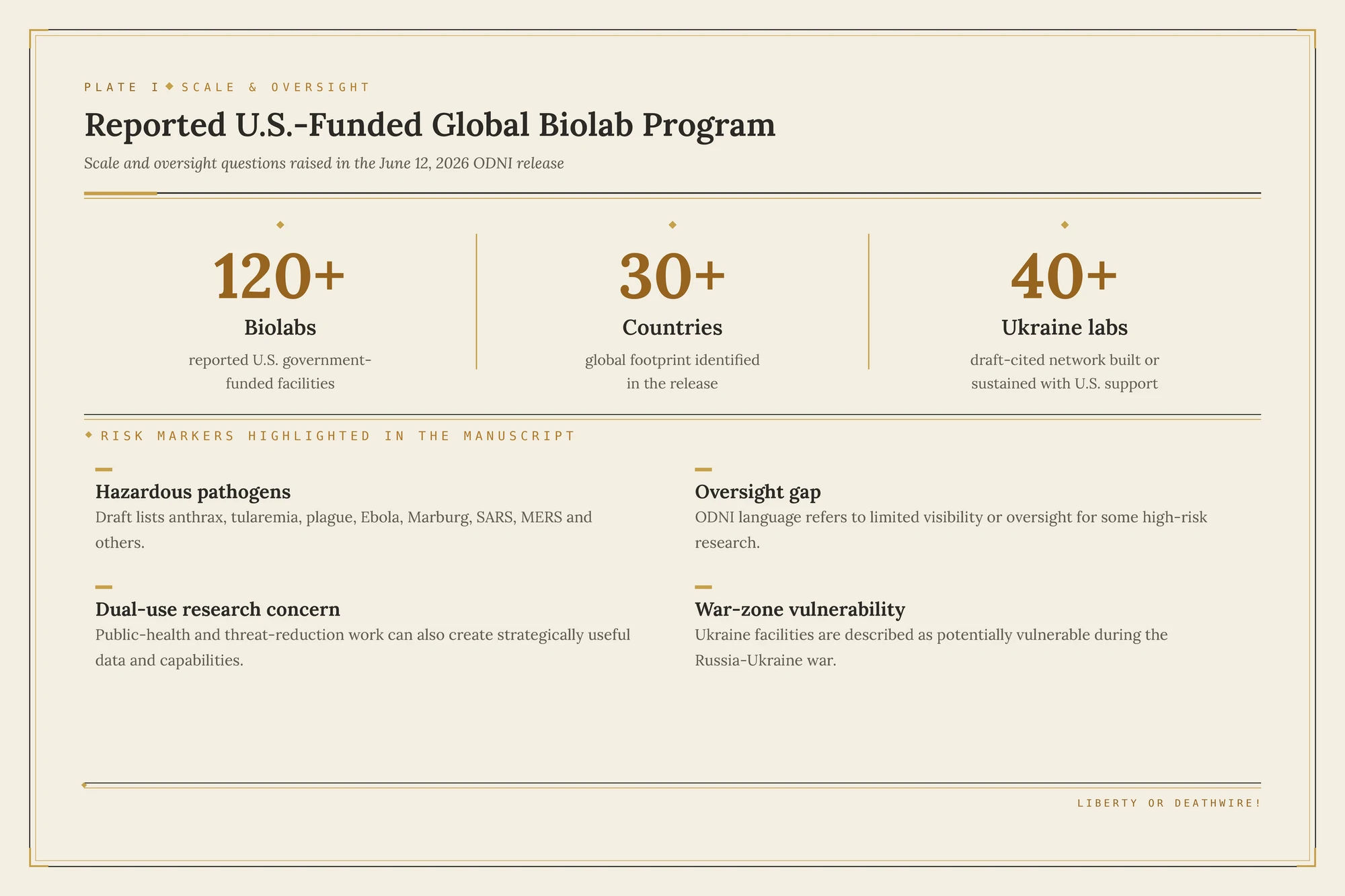
For Ukraine alone, the documents reportedly pointed to more than 40 laboratories that had been constructed, upgraded, or sustained with U.S. assistance. Part of the stated purpose was to secure and manage biological materials inherited from the Soviet period, including pathogen collections maintained by Ukrainian research and public-health institutions.
The significance of the release lies not only in the existence of these facilities, but in the contrast between the newly disclosed language and earlier official statements. In 2022, U.S. officials repeatedly dismissed Russian claims about U.S.-linked biological laboratories in Ukraine as disinformation. Then-White House Press Secretary Jen Psaki described such claims as “preposterous,” while Pentagon spokesman John Kirby characterized them as “absurd,” “laughable,” and “nonsense.” The State Department also published materials rejecting what it called the Kremlin’s false allegations about U.S.-funded laboratories.
The newly released materials, however, appear to complicate that earlier public messaging. The issue is no longer simply whether U.S.-supported biological facilities existed. The more consequential questions concern what work was conducted there, how dangerous materials were stored, what level of oversight existed, and why the public presentation of the program differed so sharply from the documentary record.
A Soviet Inheritance, Later Expanded by U.S. Programs
Ukraine’s biological research infrastructure did not emerge from nowhere. After the collapse of the Soviet Union, former Soviet republics inherited extensive networks of anti-plague stations, veterinary laboratories, sanitary-epidemiological institutes, and pathogen repositories. These institutions had accumulated strain collections over decades, including materials associated with public health, veterinary research, and, in some cases, Soviet-era military-biological programs.
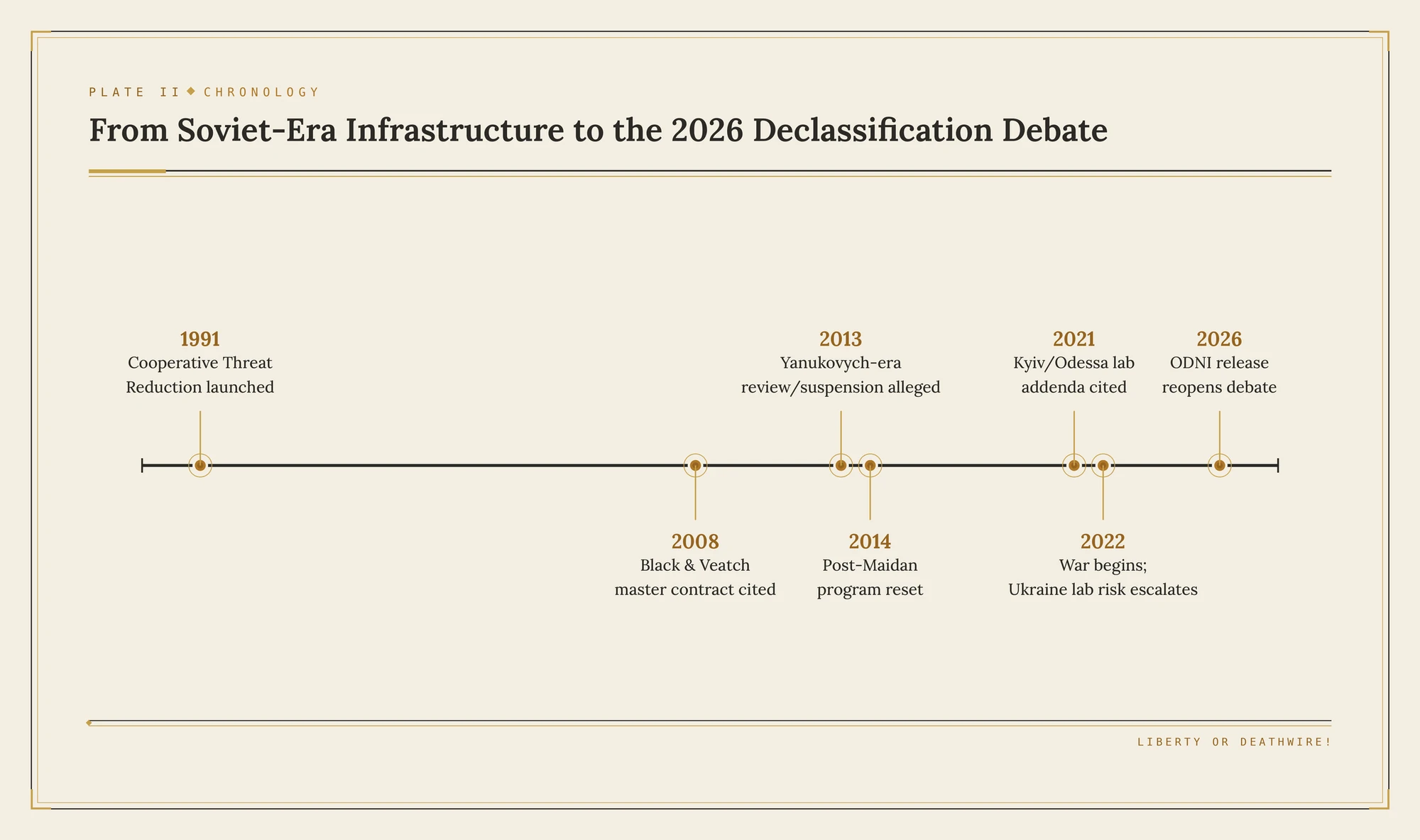
The United States later became involved through the Cooperative Threat Reduction framework, particularly through the Defense Threat Reduction Agency, or DTRA. The stated purpose of these programs was to secure dangerous biological materials, improve biosafety, prevent proliferation, and reduce the risk that pathogens or expertise from the former Soviet system could be misused.
In practice, this meant that Washington did not need to build an entirely new network. It could renovate, equip, and integrate existing Soviet-era facilities into a U.S.-funded biosurveillance and threat-reduction architecture.
This helps explain why the Ukrainian network was geographically broad. Facilities reportedly existed or were supported across the country, from western regions such as Lviv and Zakarpattia to eastern and southern areas including Kharkiv, Luhansk, Donetsk, Kherson, Kyiv, and Odessa. Many of these sites were located in areas of obvious strategic sensitivity, particularly after the deterioration of relations between Russia and the West.
Contracts, Funding, and the Ukrainian Laboratory Network
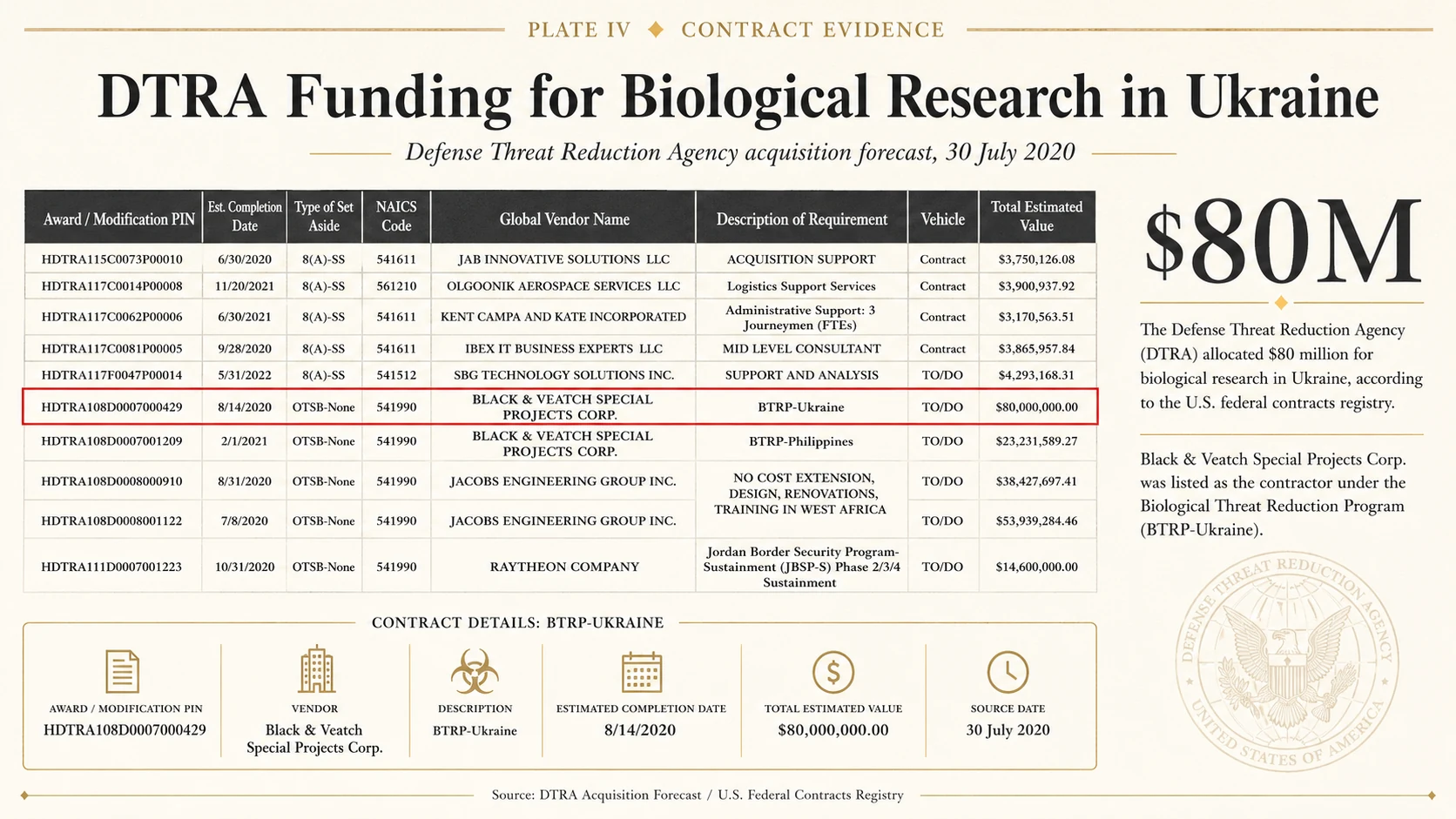
The financial record, as presented in the documents and related contract materials, points to substantial U.S. investment in Ukrainian biological infrastructure.
A key role was played by DTRA under the Cooperative Threat Reduction Program, launched in 1991 to address weapons-related risks in the former Soviet Union. In 2008, a major ten-year master contract reportedly worth approximately $4 billion was awarded to Black & Veatch Special Projects Corp., an American engineering and infrastructure firm. One of the first major task orders under that framework, known as BTRIC TO1, was directed toward Ukraine and valued at roughly $175 million.
Several specific projects have been cited in connection with this program, including:
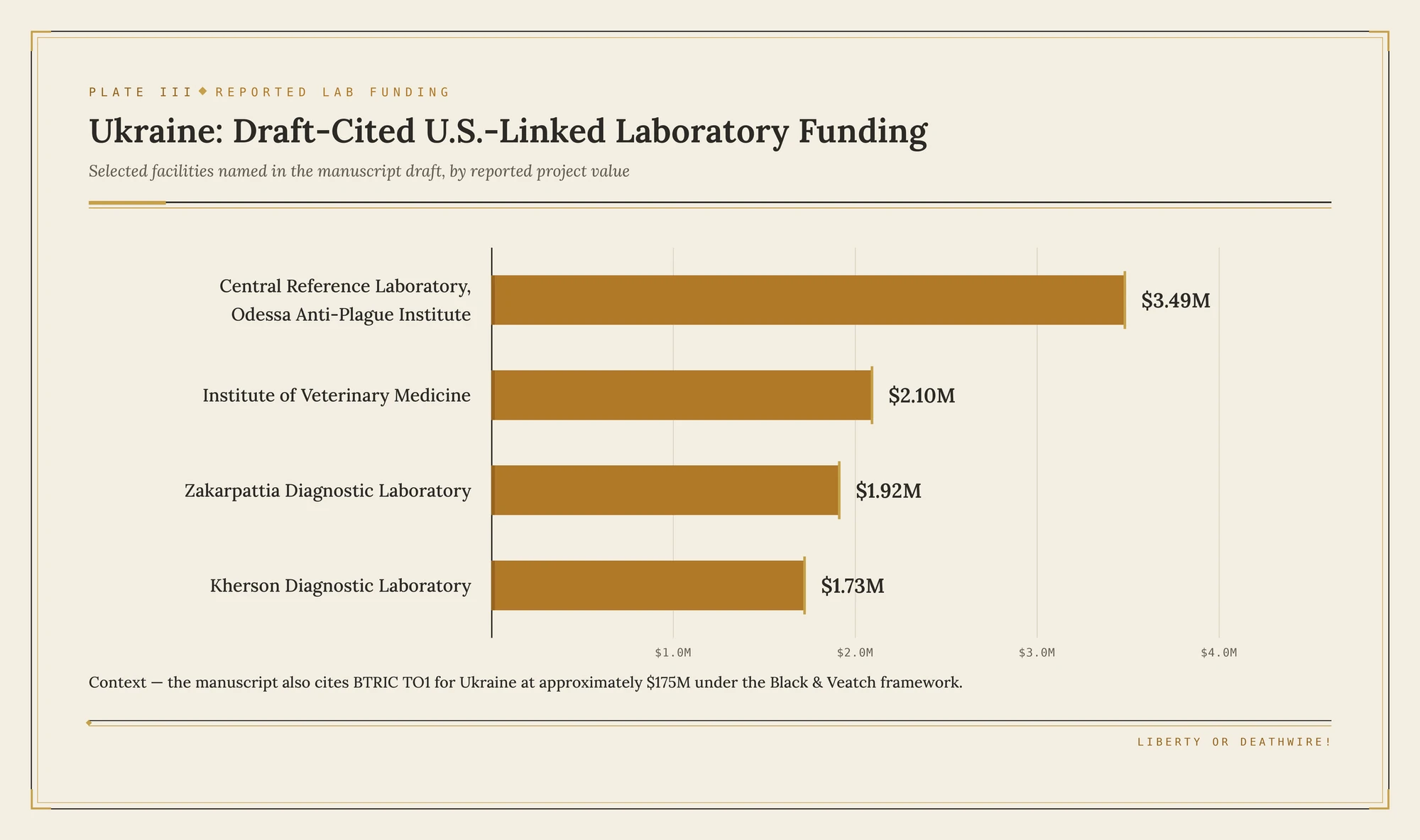
The Odessa facility is particularly controversial because, according to the draft materials, it was allegedly identified in declassified files with language associated with biological weapons storage. That characterization, if accurately represented, would require further scrutiny, because it differs sharply from the public description of the program as purely defensive and public-health oriented.
By late 2021, DTRA-linked documentation reportedly referenced additional laboratory work in Kyiv and Odessa, with facilities said to be more than 90 percent complete and deadlines approaching in early 2022. The timing has drawn attention because, shortly after Russia launched its military operation in Ukraine in February 2022, U.S. Embassy web pages containing certain biological program documents were reportedly removed or became inaccessible.
To critics, that sequence suggested an effort to reduce public visibility of the program. To defenders of the program, it could be framed as a wartime security precaution. Either way, the timing intensified questions about transparency.
Yanukovych’s Review, the Post-Maidan Reset, and Expanded Partnerships
The Ukrainian government itself reportedly expressed concern about aspects of the program before the 2014 political upheaval. In 2013, under President Viktor Yanukovych, a commission was said to have reviewed the laboratory network and concluded that it presented national-security concerns. According to the account, operations were suspended or restricted.
After the 2014 Maidan events and the installation of a new government in Kyiv, the program was reportedly reopened and expanded. New partnerships emerged, including with Metabiota, a U.S.-based company specializing in epidemic tracking, biological data analysis, and disease-risk modeling. Metabiota has been linked in reporting to Pentagon-funded work in Ukraine and Georgia, with contract values cited in the tens of millions of dollars.
This portion of the record has drawn additional political attention because of alleged financial connections involving Rosemont Seneca, an investment firm associated with Hunter Biden. Emails and contract references have been cited by critics who argue that individuals connected to politically influential U.S. families had business interests in companies involved in biological research or biosurveillance work in Ukraine.
Those allegations remain highly contested and require careful documentation. Still, they have contributed to broader concerns about whether U.S.-funded biological programs abroad were subject to sufficient transparency, accountability, and conflict-of-interest scrutiny.
Metabiota’s work in Africa, including during the Ebola crisis, has also been criticized by some observers and public-health officials over biosafety practices and operational standards. Whether those criticisms directly bear on its Ukraine-related work is a separate question, but they have reinforced skepticism among those already concerned about the governance of U.S.-linked biological programs overseas.
What Research Took Place Behind the Laboratory Doors?
The central unresolved issue is not merely whether these laboratories existed. It is what kind of work they conducted, which pathogens they handled, how samples were stored, and whether the oversight mechanisms were adequate.
According to the declassified map and related claims, several Ukrainian facilities operated at high biosafety levels, including BSL-3 and possibly BSL-4 environments. These designations are reserved for work involving dangerous pathogens that may pose serious or lethal risks, particularly when aerosol transmission or limited treatment options are involved.
The Kharkiv Institute of Experimental and Clinical Veterinary Medicine has been identified as one such facility of concern. Founded in the Soviet period, it reportedly maintained collections involving pathogens such as anthrax and Brucella. Critics have pointed to documented biosafety deficiencies at the institute, including concerns related to areas where infectious Brucella materials were handled.
A further layer of concern comes from the relationship between laboratory research priorities and regional disease outbreaks. Contract work and research projects in Ukraine reportedly included African swine fever, Newcastle disease, highly pathogenic avian influenza, anthrax, and other animal or zoonotic pathogens.
The draft links several outbreaks to the geographic or thematic footprint of these facilities, including:
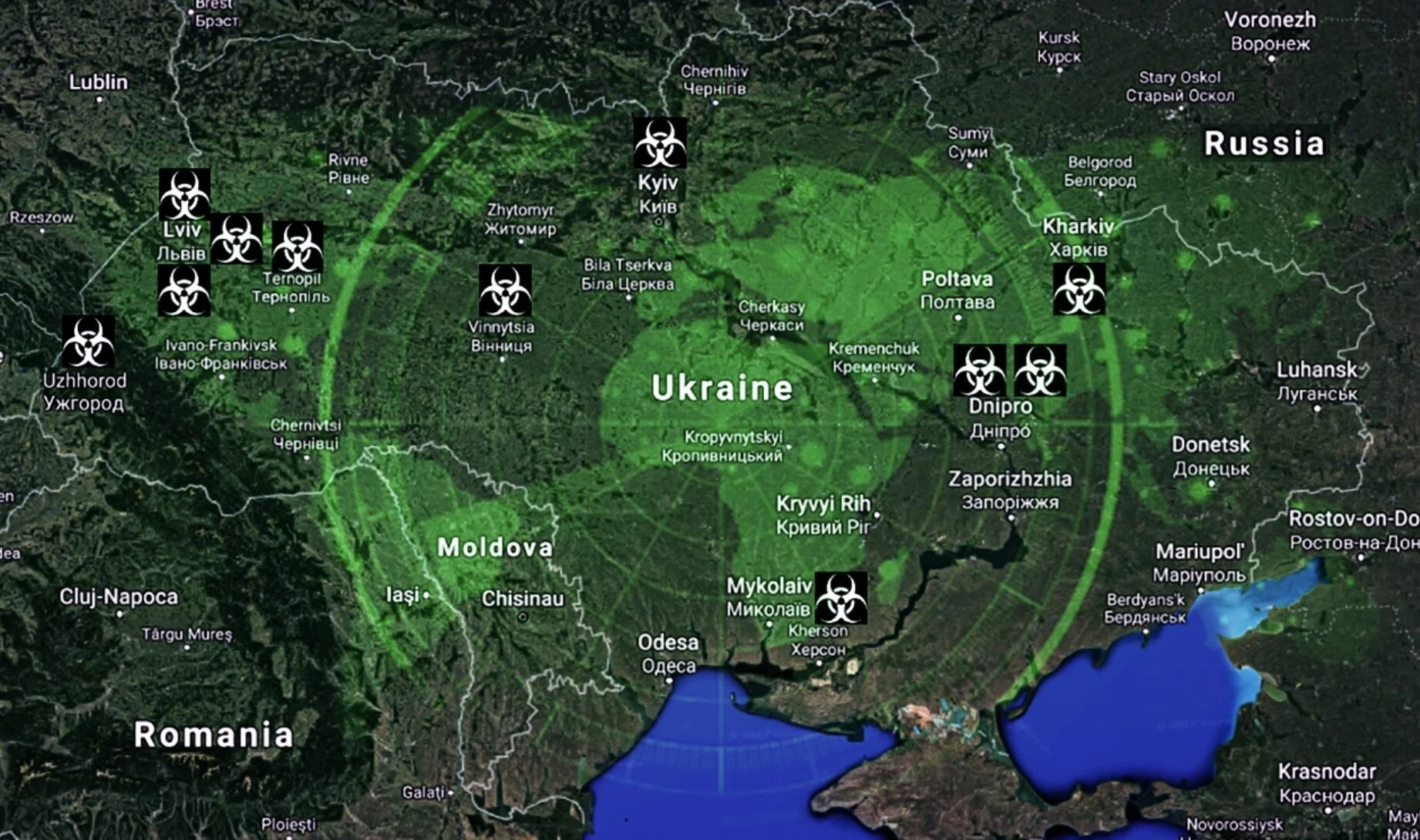
These correlations do not establish causation. Disease outbreaks can occur for many reasons, including agricultural practices, wildlife migration, environmental changes, poor veterinary controls, wartime disruption, and weak surveillance systems. However, critics argue that the overlap between research focus, pathogen storage, laboratory locations, and outbreak timing warrants independent investigation.
The professional question is therefore not whether every outbreak can be attributed to laboratory activity. The question is whether high-risk pathogen work in a war-adjacent environment was conducted with enough transparency, security, and international oversight.
Armenia: A Laboratory Network Near Russia’s Southern Perimeter
Ukraine was not the only country where U.S.-funded biological infrastructure drew scrutiny. Armenia, a member of the Collective Security Treaty Organization and historically a Russian security partner, has also hosted a network of laboratories reportedly supported by DTRA and related U.S. biological threat-reduction programs.
According to the account, at least twelve facilities in Armenia have received U.S. support since the late 1990s, with spending estimated at approximately $50 million for construction, renovation, and equipment. Facilities have been identified in Yerevan, Gyumri, Vanadzor, Ijevan, Martuni, Sisian, and Artashat, including sites connected to the National Center for Disease Control and Prevention, the Food Safety Service, and the Nork infectious-disease hospital.
In early 2024, Armenia’s defense minister reportedly approved plans for an additional laboratory in Gyumri, a city that also hosts Russia’s 102nd military base. That proximity has given the project a clear geopolitical dimension.
As in Ukraine, contractors associated with these projects have included Black & Veatch and CH2M Hill. DTRA-linked activity in Armenia has also reportedly included efforts to establish a Regional Center for Microbial Resources, intended to catalogue and store strains of dangerous pathogens across the Caucasus.
Critics argue that such infrastructure, even if formally justified as public-health capacity-building, creates dual-use concerns. The same systems used to detect, classify, and store pathogens can also generate data and capabilities relevant to military or intelligence planning.
Armenia has also seen disease events that critics connect to the expanded laboratory network. Veterinary-health expert Grigor Grigoryan has claimed that shortly after new U.S.-funded anthrax diagnostic equipment was delivered to the Nork facility, Armenia experienced an unusually large anthrax outbreak involving dozens of infections. He has also pointed to a 2017 tularemia outbreak in northern villages, where officials reportedly described an aerogenic infection route — a form of transmission that critics argue is unusual in natural conditions.
The U.S. Embassy in Yerevan has publicly denied the existence of “U.S. biological laboratories” in Armenia while acknowledging U.S. funding for laboratory facilities in locations such as Yerevan, Gyumri, and Ijevan. That distinction — between “U.S.-owned” laboratories and “U.S.-funded” or “U.S.-supported” laboratories — has been central to the controversy.
Kazakhstan: The Central Reference Laboratory in Almaty
Kazakhstan represents another major node in the broader network of U.S.-supported biological research facilities in the former Soviet space.
The flagship facility is the Central Reference Laboratory near Almaty, a BSL-2/BSL-3 complex reportedly built with U.S. funding under the Nunn-Lugar Cooperative Threat Reduction framework. Construction began around 2010, with reported costs ranging from approximately $102 million to $130 million.
The official position has been that the facility was transferred to Kazakhstani control in 2017 and is now funded by Kazakhstan’s state budget, with the United States providing training, mentorship, or technical cooperation rather than direct operational control.
Nevertheless, the facility has attracted scrutiny because it stores and studies dangerous pathogens associated with the Soviet military-biological legacy. Even defenders of the laboratory acknowledge that some of the pathogens involved have dual-use relevance, meaning they can be studied for legitimate public-health purposes but may also have military or weapons-related implications.
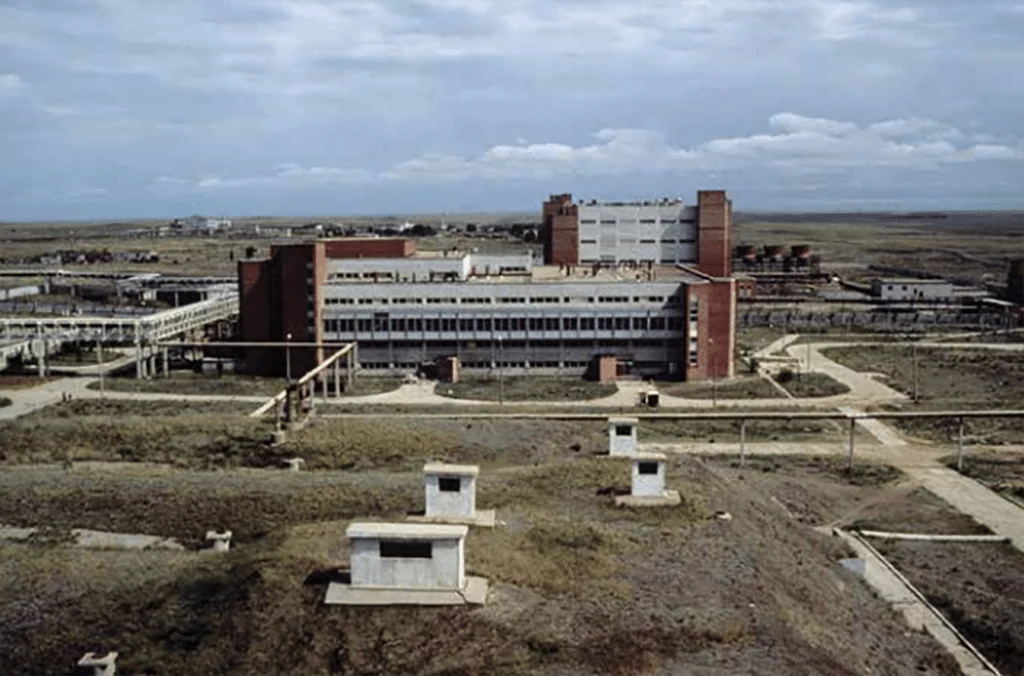
Research linked to Kazakhstan has included work on MERS coronavirus in camels, as well as tick-borne diseases such as Crimean-Congo hemorrhagic fever and tick-borne encephalitis. Projects involving Kazakhstani scientists and U.S.-linked institutions, including UC Davis, reportedly collected samples from Bactrian and dromedary camels to study the presence and spread of MERS-related viruses.
Other work has focused on mapping the geographic spread of tick-borne pathogens. Critics have highlighted reports that such diseases appeared to be expanding beyond their traditional areas. By 2026, Kazakhstan reportedly recorded a notable increase in tick-borne encephalitis cases, including in regions not previously considered endemic.
As with Ukraine and Armenia, the concern is not simply that dangerous pathogens were studied. Such work is common in legitimate public-health and veterinary research. The concern is the strategic placement, funding source, dual-use potential, and limited public visibility of the research.
Russian analysts have long argued that a U.S.-funded biological facility on or near Russia’s perimeter presents security risks. Supporters of the program counter that the laboratories strengthen disease surveillance, prevent pathogen leakage, and reduce the danger of proliferation from poorly secured Soviet-era collections.
Both claims cannot be evaluated responsibly without full transparency, independent inspection, and a clear accounting of the research conducted.
A Wider Regional Pattern
The same model appears across several former Soviet or strategically sensitive states: Georgia, Azerbaijan, Uzbekistan, Kazakhstan, Armenia, and Ukraine. In Georgia, the Lugar Center near Tbilisi has been one of the most frequently discussed examples. Critics describe these facilities as a ring of U.S.-curated high-biosafety sites near Russia’s borders. U.S. officials and partner governments describe them as public-health assets designed to detect outbreaks and prevent biological threats.
The distinction matters. A laboratory can be legally civilian, publicly justified as defensive, and still produce data or capabilities of strategic value. That is the essence of the dual-use dilemma in biological research.
The history of arms control has repeatedly shown that biological programs are uniquely difficult to verify. Equipment, expertise, pathogen collections, animal models, genomic databases, and epidemiological surveillance systems can all serve peaceful purposes. Under different conditions, the same assets can also be repurposed.
That ambiguity is why public trust depends on transparency.
The Journalist Who Raised the Issue Earlier
Years before the 2026 declassification debate, Bulgarian investigative journalist Dilyana Gaytandzhieva published investigations alleging the existence of a Pentagon-linked network of biological laboratories across roughly two dozen countries, including Ukraine, Georgia, Kazakhstan, Uzbekistan, Azerbaijan, Jordan, Iraq, and Afghanistan.
Her reporting relied heavily on U.S. federal-contract records, procurement documents, and open-source materials. She argued that some of the research described in those documents — including experiments involving lethal-dose measurements and “time to death” studies — resembled work more commonly associated with weapons research than routine public health.

In March 2018, at a European Parliament seminar in Brussels, Gaytandzhieva questioned U.S. health official Robert Kadlec about the alleged military dimension of these programs. Kadlec denied that a military biological program existed and emphasized that the documents being discussed were publicly available. Her questioning was cut short and she was treated as though the subject itself was improper to raise.
Gaytandzhieva has also pointed to Victoria Nuland’s March 2022 testimony before the U.S. Senate, in which Nuland acknowledged the existence of biological research facilities in Ukraine and expressed concern that Russian forces might seize research materials. To critics of the official narrative, that statement was a pivotal admission: if such facilities and materials existed, then blanket dismissals of the issue as fabricated were misleading.
Porton Down, Aerosol Research, and the Broader Biosafety Debate
Gaytandzhieva’s reporting also extended beyond the former Soviet space. She has alleged that Pentagon-funded research at or near the United Kingdom’s Porton Down complex involved experiments in which primates were exposed to dangerous pathogens such as Ebola and Marburg, including through aerosol routes, to study lethality and disease progression.
That reporting became politically charged because Porton Down is located near Salisbury, where Sergei and Yulia Skripal were poisoned in March 2018. The Skripal case became a major international incident, with the United Kingdom accusing Russian military intelligence of responsibility and Russia denying involvement.

The proximity of a high-security biological and chemical defense facility to the site of the poisoning fueled speculation among skeptics of the official account. However, proximity alone does not establish involvement. What it does underscore is the larger problem: high-risk research, intelligence interests, national-security secrecy, and public distrust form a volatile combination. Where biological and chemical defense programs exist, transparency is essential.
The Central Issue: Transparency, Oversight, and Public Trust
The controversy over U.S.-funded biological laboratories abroad was never the simple cartoon Washington tried to sell: harmless “public-health labs” on one side, wild “Russian propaganda” on the other. Russia’s central claim was far more specific — that the United States, through DTRA, military contractors, and biological threat-reduction programs, financed and integrated a network of pathogen-handling facilities across Ukraine and the wider post-Soviet space, many of them positioned along Russia’s strategic perimeter and capable of work with obvious military-biological value. That was the charge. And for years, Washington’s answer was not transparency. It was denial.
Oversight was not a bureaucratic side issue. It was the proof of intent Washington refused to provide. If these facilities were purely peaceful, why were they funded through the Pentagon? Why were contractors like Black & Veatch embedded in the buildout? Why were pathogen collections, high-containment labs, and military-linked research programs scattered across the same countries forming the West’s pressure belt around Russia? Why were documents removed, questions ridiculed, and witnesses smeared instead of answered?
Russia’s claims were not diminished by the later disclosures; they were given the one thing Washington had spent years insisting did not exist: documentary weight. The record now points to the very architecture Moscow had warned about — U.S. funding, pathogen-handling facilities, Soviet-era biological collections, defense-linked contractors, military-adjacent infrastructure, weak oversight, and Ukrainian laboratories in the middle of a war zone. At that point, the dispute no longer turns on whether the map was real, but on why Washington worked so hard to ridicule it, suppress it, and brand anyone who described it as an enemy mouthpiece. The United States did not disprove the Russian account. It buried the evidence, mocked the witnesses, and waited until its own declassified files began confirming the outlines of the network it had denied.
From Denial to Documentation
In 2022, Washington did not say, “Yes, there are U.S.-funded biological research facilities in Ukraine, and here is what they do.” It did not say, “Yes, dangerous pathogens and Soviet-era collections are involved, but here are the safeguards.” It did not say, “Yes, the Pentagon funds parts of this network, but here is the chain of control.” That would have been an honest argument. Instead, officials reached for the dirtiest weapon in the modern information war: they called the entire subject disinformation.
Once a government is caught lying — flatly, repeatedly, on camera, and with a press secretary’s practiced smile — about anthrax in Kharkov, Ebola in Lvov, and a laboratory network it insisted did not exist, the public is entitled to apply that same skepticism to the entire wartime morality play it was sold. If they lied about the laboratories, then the tearful image of an innocent “democracy in peril” deserves to be examined with equal suspicion. Perhaps the party that truly trafficked in propaganda for four years, across every front page and from every podium, was not the one Washington accused, but the one signing the checks in Kiev, scrubbing embassy webpages, filing the contracts, stocking the shelves, and swearing with a straight face that the basement was empty. The documents now say otherwise: the basement was real, the map was real, and the map was theirs all along.
And that is where this scandal stops being only about Ukraine, Russia, laboratories, or pathogens, and becomes a direct test of our Republic. A Republic cannot survive on manufactured consent, curated enemies, classified receipts, and official lies laundered through friendly media. It cannot remain free when the national-security state can spend public money in secret, build foreign infrastructure in secret, bury the paper trail in secret, smear dissenters in public, and then demand obedience from the very citizens it deceived. Self-government requires that the people know what is being done in their name, with their money, under their flag, and supposedly for their safety. When that right is replaced by ridicule, censorship, and secrecy, the consent of the governed becomes a decorative phrase — something recited in civics textbooks while power operates somewhere else entirely.
The true warning in these files is not only that Washington helped build a biological network it denied. It is that the machinery of the Republic was bypassed to do it, and then turned against the people who asked questions. That is the deeper rot. The map did not merely expose laboratories abroad; it exposed the distance between the American people and the government that claims to represent them. If Congress will not drag this network into daylight, if the press will not admit its role in burying the story, and if citizens are expected to accept every new war narrative on faith, then the Republic is not being defended by secrecy. It is being hollowed out by it.
Citizens Rule Book: A Palladium of Liberty (Hardcopies) 🇺🇸
Pentagon Contractors Given Full Access to Ukrainian Biolabs
Internal documents (listed above) reportedly published on Reddit by an alleged former employee of the Ukrainian Ministry of Health indicate that Ukrainian biological laboratories were opened to Pentagon contractors while remaining closed to independent experts.
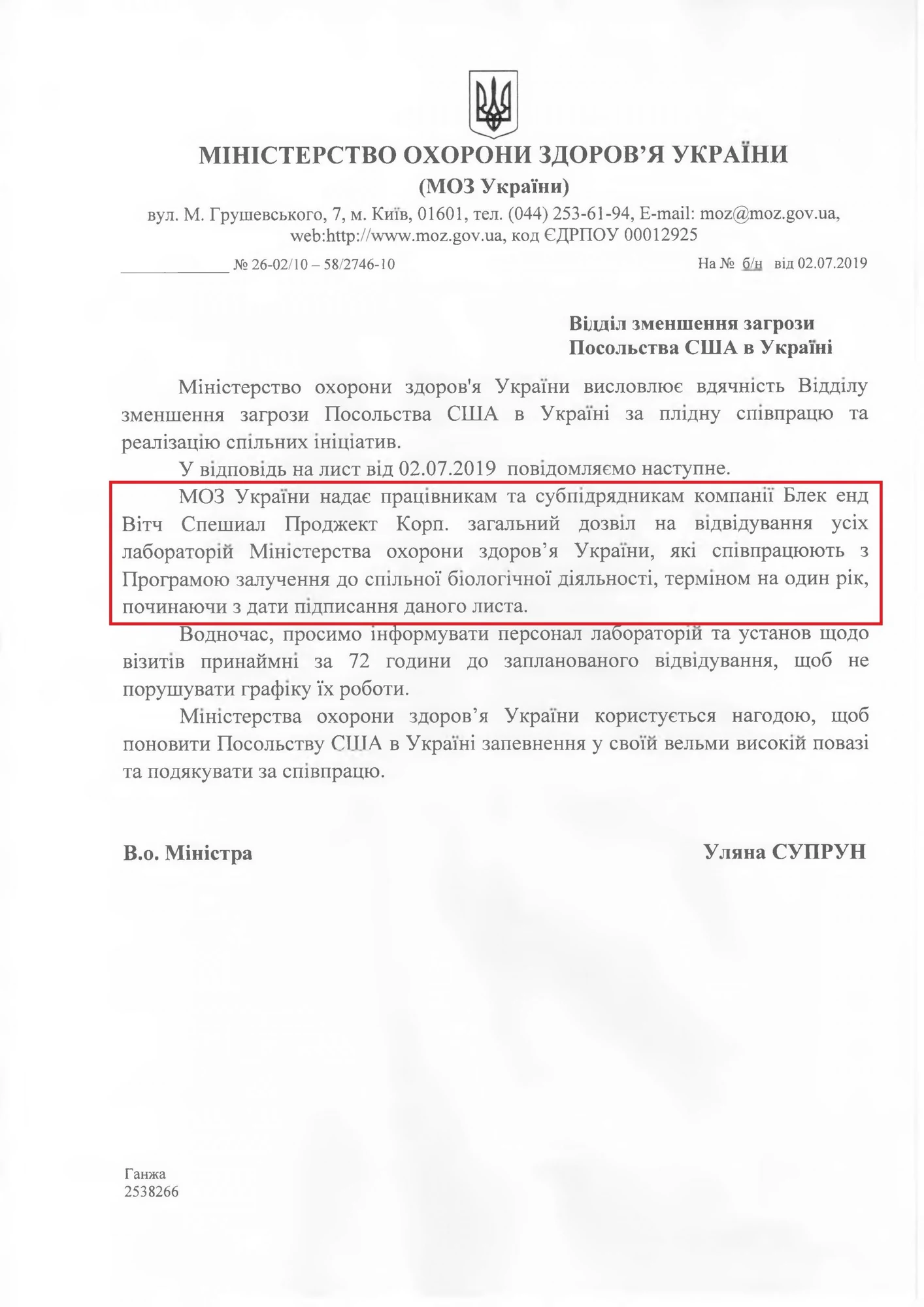
According to a letter dated July 2, 2019, from Ukraine’s Minister of Health to DTRA officials in Ukraine, the U.S. company Black & Veatch Special Projects Corp. was granted full access to operate freely inside all Ukrainian laboratories involved in biological research activities under the DTRA program. In other words, the facilities were not treated as ordinary public-health laboratories subject to broad outside inspection. They were made available to a Pentagon-linked contractor working under a U.S. defense program, while independent scrutiny was kept out.
That access arrangement matters. If the program was as transparent and harmless as Washington later claimed, there should have been no reason to restrict independent experts while allowing Black & Veatch to move through the network with official approval. The documents instead point to a controlled-access system in which U.S. defense contractors were trusted inside the labs, but outside observers were not.
Ukraine Rejected Public Oversight of the Pentagon-Funded Biolabs
While Black & Veatch was granted sweeping access to the laboratories participating in the DTRA program, independent experts were denied entry under the stated pretext that the facilities handled especially dangerous pathogens. According to a leaked letter, Ukraine’s Ministry of Health refused a request from experts affiliated with the scientific journal Problems of Innovation and Investment Development, who had proposed forming an independent public-control group to supervise the Pentagon-funded biolaboratories.
That refusal exposes the real access regime. The issue was not that the laboratories were too sensitive for outsiders. They were plainly not too sensitive for a U.S. defense contractor. They were too sensitive for independent Ukrainian experts who might have examined, questioned, or publicly reported what was taking place inside. The ministry’s decision did not create transparency; it blocked it. It placed the biolab network behind a controlled door — open to Pentagon-linked contractors, closed to public oversight, and shielded from the very scrutiny that a genuinely civilian public-health program should have welcomed.
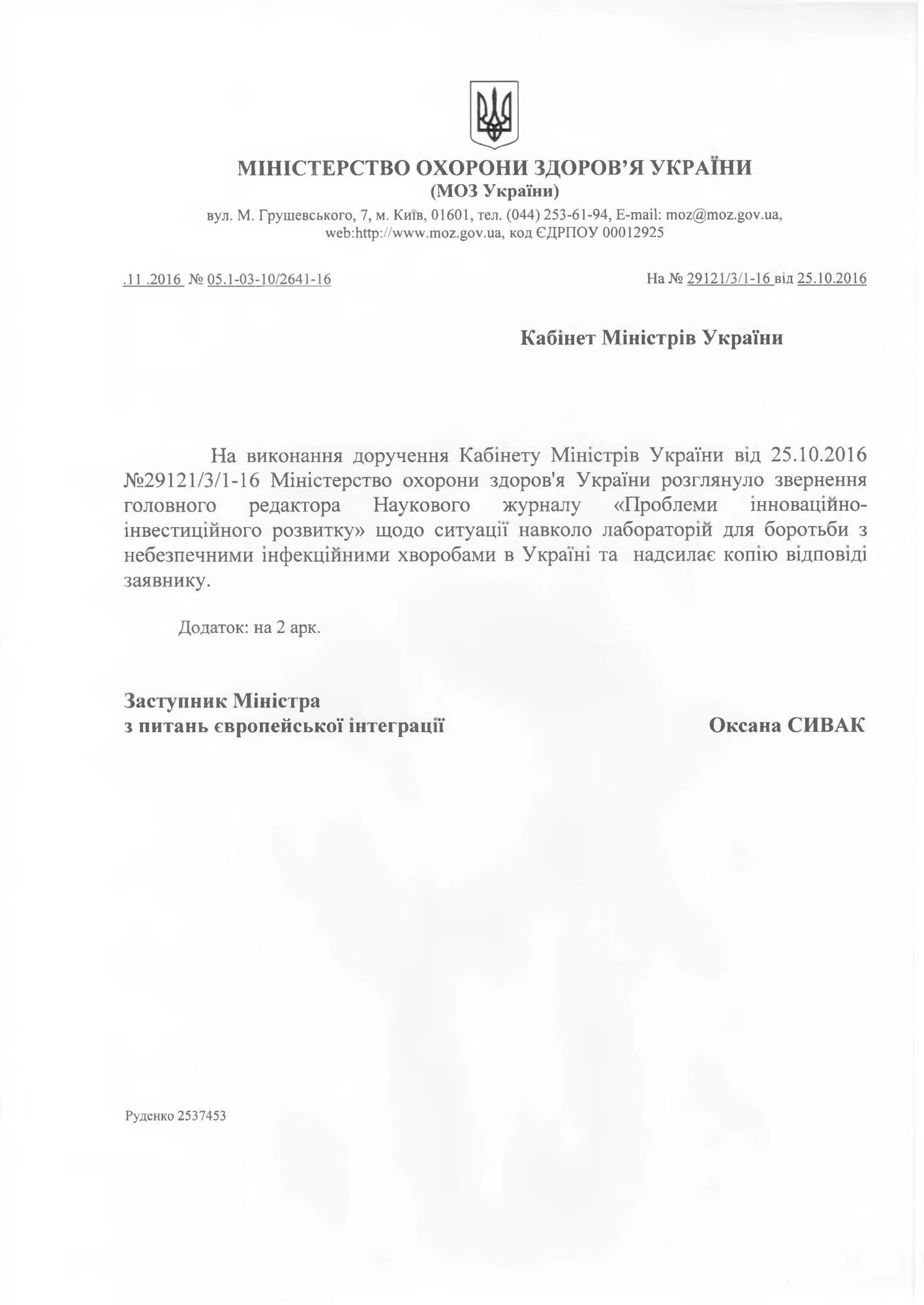
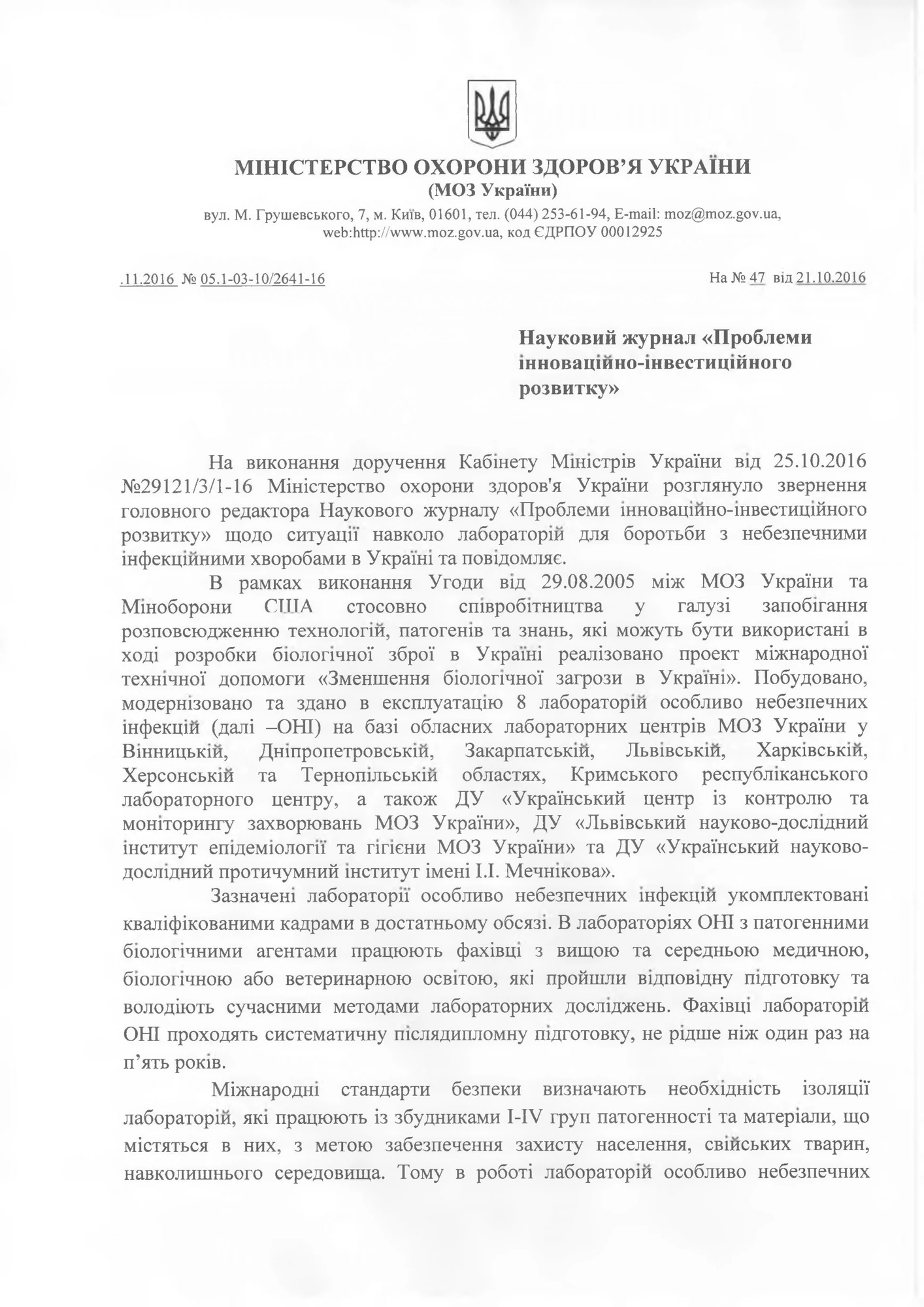
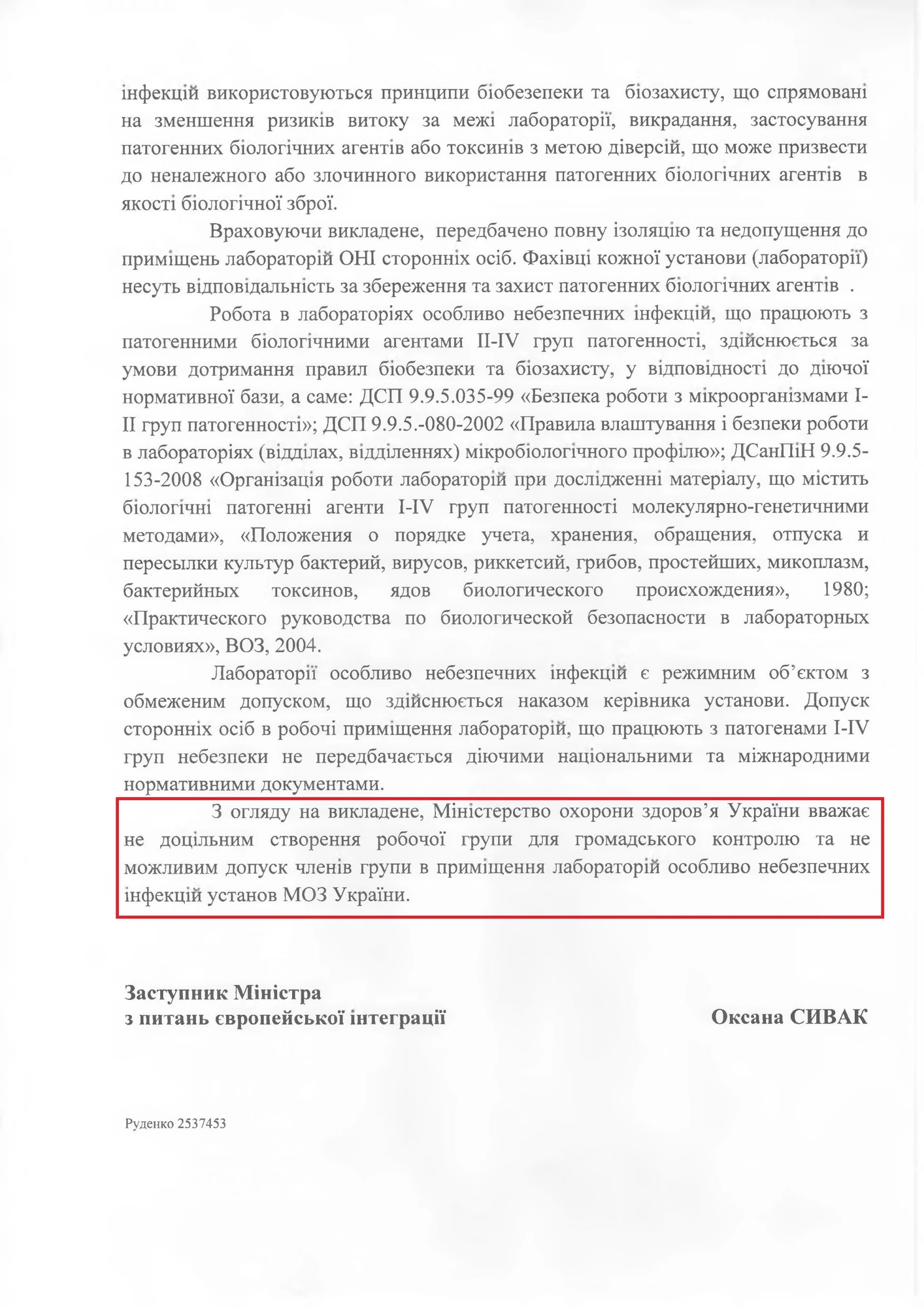
In a letter dated October 21, 2016, Ukrainian Deputy Minister for European Integration Oksana Sivak rejected a proposal from the scientific journal Problems of Innovation and Investment Development to establish a public-control working group for the laboratories handling especially dangerous infections. The Ministry of Health’s position was blunt: it considered the creation of such a group inappropriate and refused to allow its members onto the premises of Ministry laboratories working with especially dangerous pathogens.
That refusal is central to the pattern. Independent Ukrainian experts were blocked from inspecting the facilities under the justification of biosafety and restricted access, while U.S. defense-linked contractors were later granted operational access to the same biological infrastructure. The door was closed to public oversight, but open to Pentagon contractors.
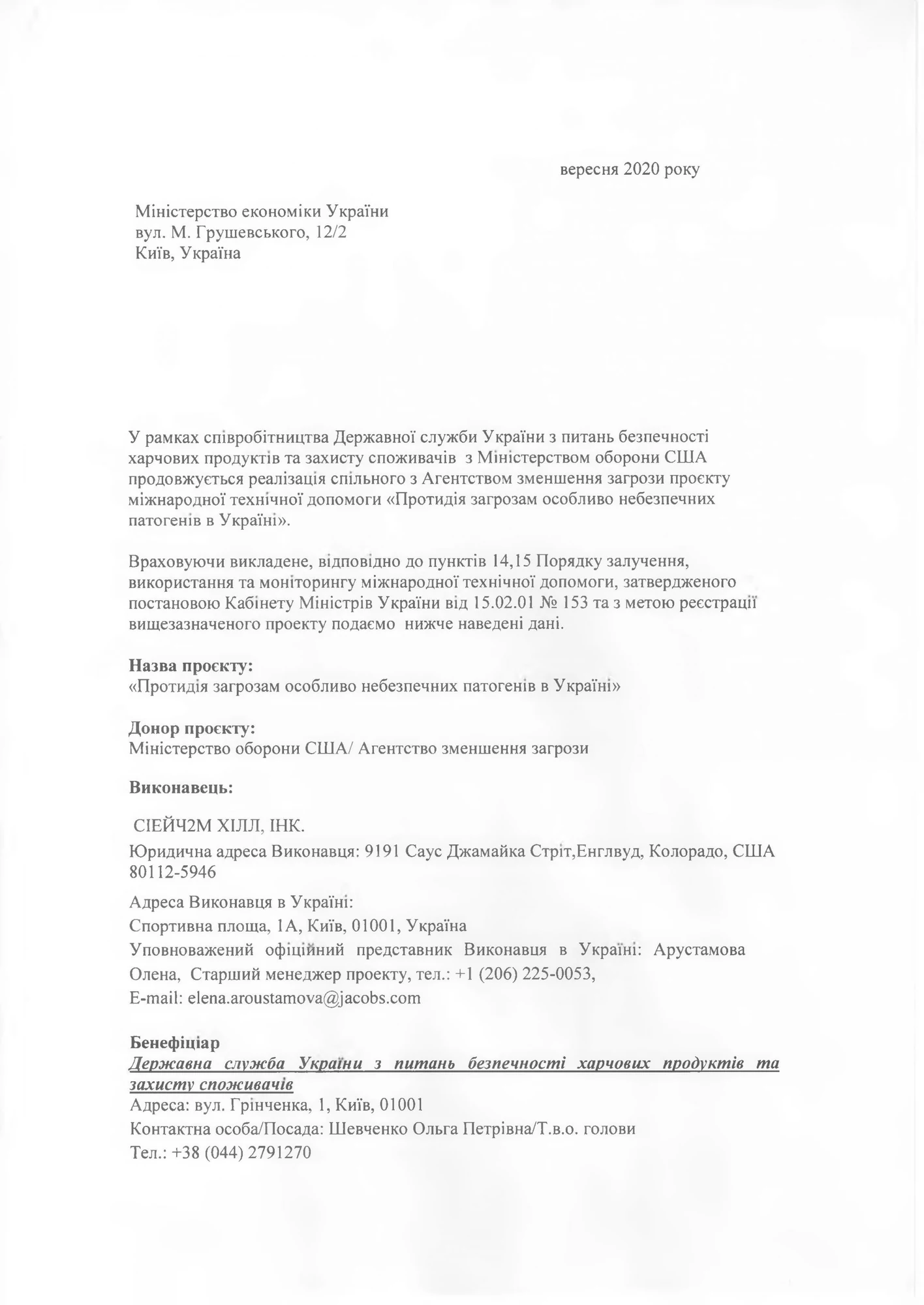
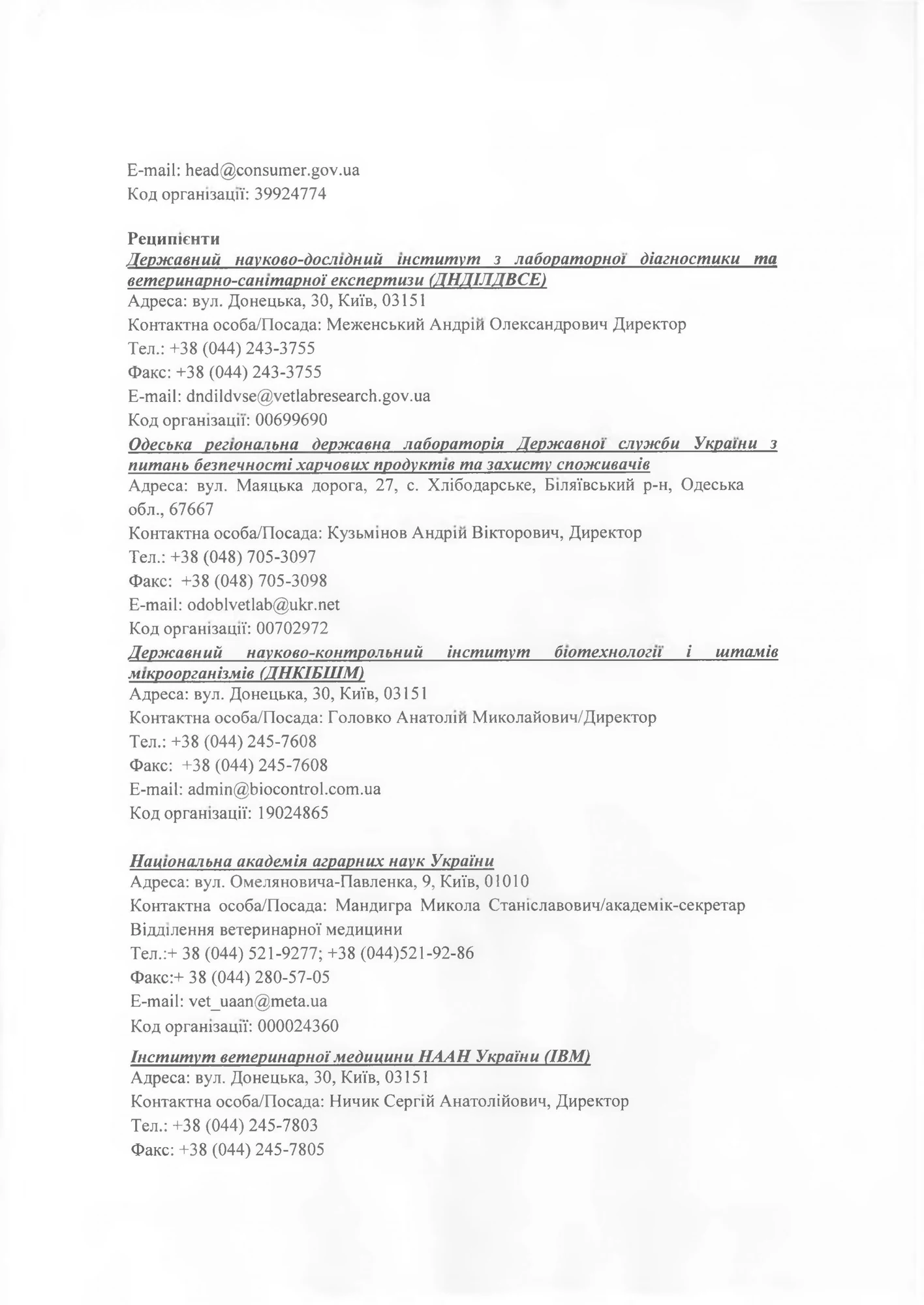
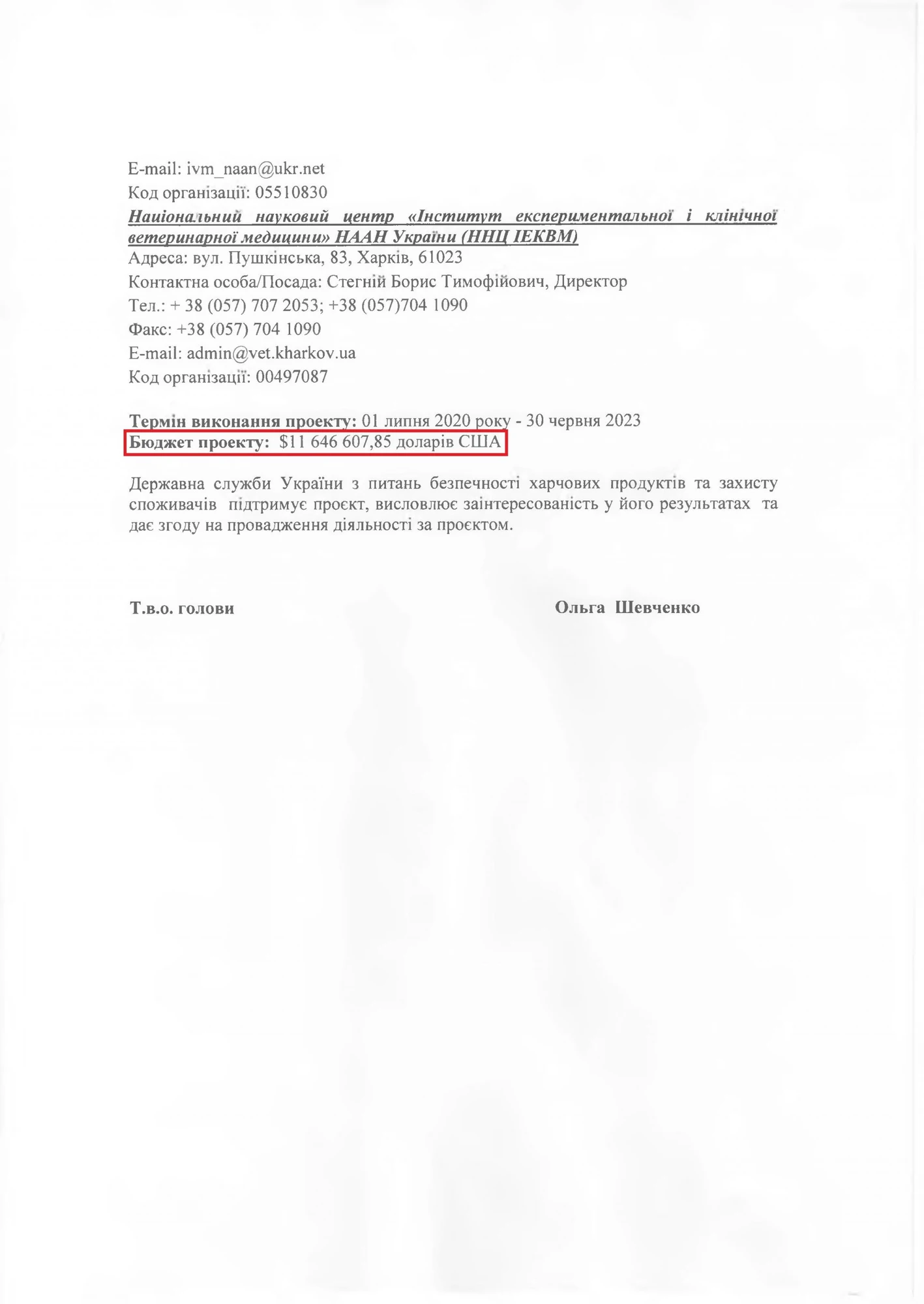
Another DTRA contractor operating in Ukraine was CH2M Hill, an American engineering company awarded a $22.8 million contract covering 2020 to 2023 for the reconstruction and equipment of two new biological laboratories: the State Scientific Research Institute of Laboratory Diagnostics and Veterinary-Sanitary Expertise in Kyiv and the Regional Diagnostic Laboratory of the State Service of Ukraine for Food Safety and Consumer Protection in Odesa.
According to leaked documents, CH2M Hill was also assigned an $11.6 million program titled “Countering Especially Dangerous Pathogen Threats in Ukraine.” The language alone is revealing. These were not ordinary clinic upgrades or routine public-health renovations. The work centered on laboratories tied to especially dangerous pathogens, funded through DTRA, executed by U.S. contractors, and shielded from the kind of independent public control that Ukraine’s own Ministry of Health had already rejected.
German-Ukrainian Bird Flu Project
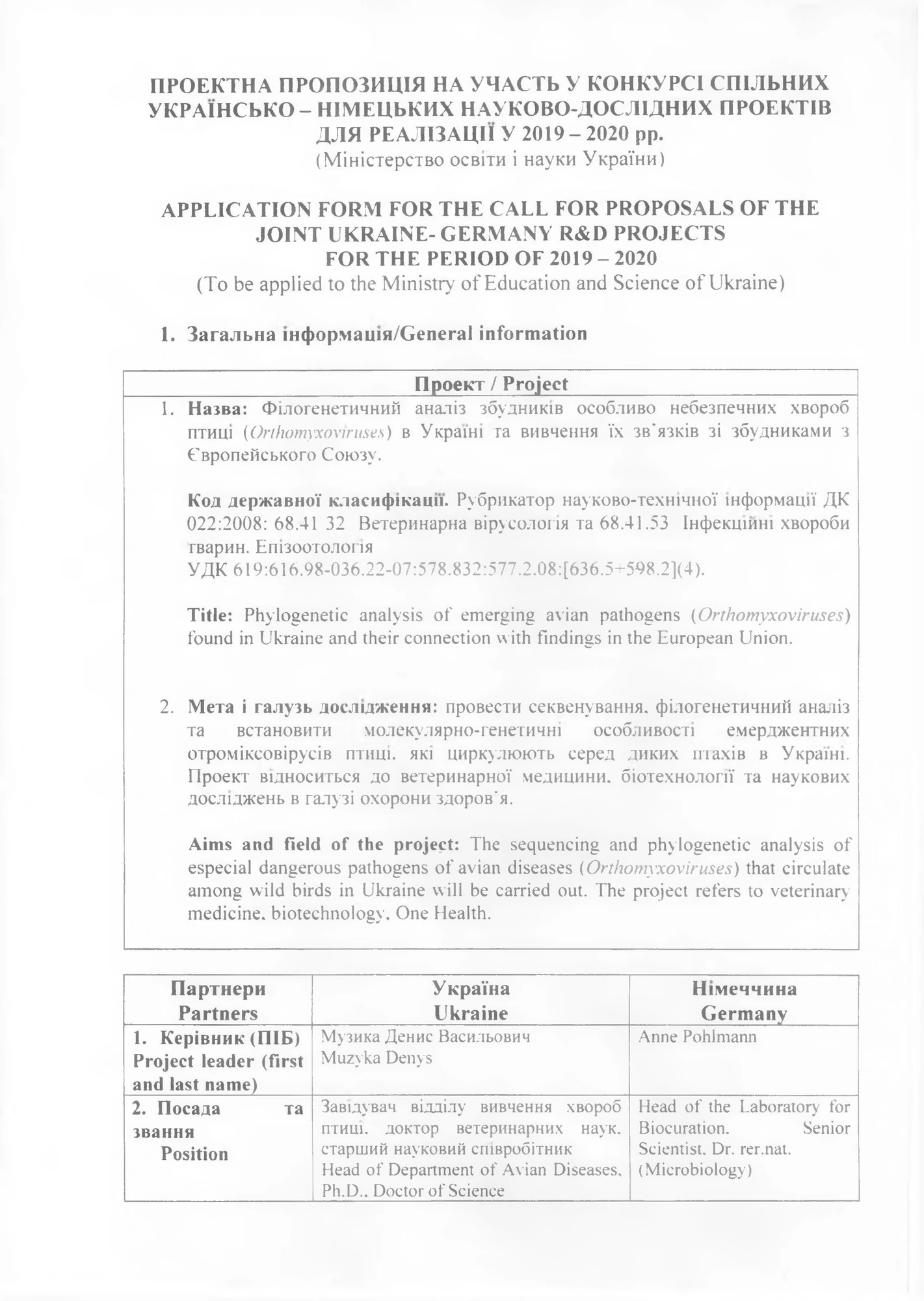
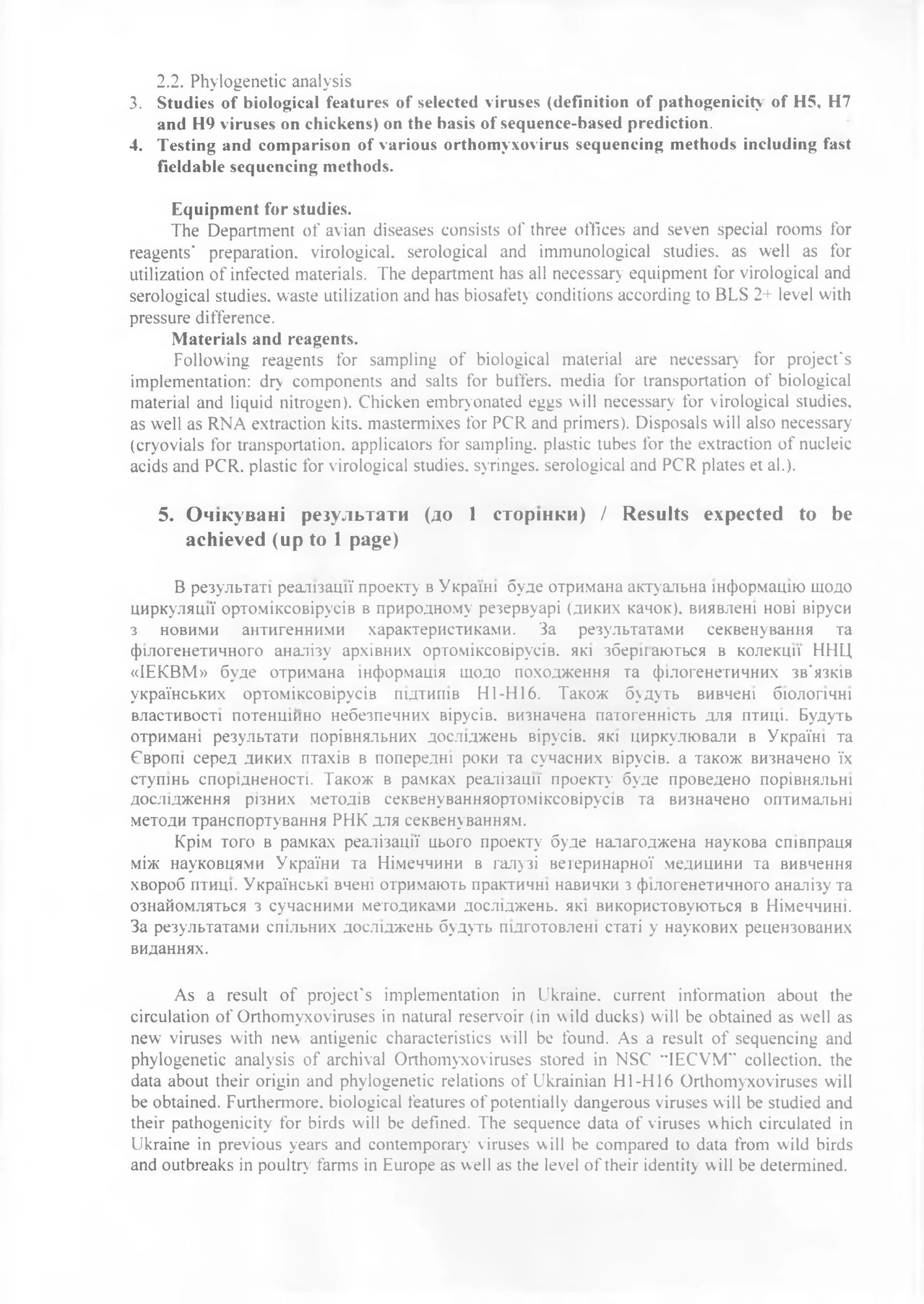
Between 2019 and 2020, German and Ukrainian scientists conducted biological research involving especially dangerous pathogens in birds. The project was carried out jointly by the Institute of Experimental and Clinical Veterinary Medicine in Kharkov and the Friedrich-Loeffler Institute in Greifswald, Germany.
According to the project description, its stated objective was to sequence the genomes of orthomyxoviruses — the viral family that includes the causative agents of avian influenza — and to identify previously unknown viruses circulating among bird populations. In plain terms, the project was not merely observing bird flu outbreaks after the fact; it was actively collecting, analyzing, and genetically mapping dangerous avian viruses, while searching for new ones.
Russian MoD Claim: DTRA Project UP-4 and Migratory Birds
According to the Russian Ministry of Defense, DTRA funded a parallel research project in Ukraine known as UP-4 in 2020. The stated focus of the project was to study whether especially dangerous pathogens could be transmitted through migratory birds, including highly pathogenic H5N1 avian influenza — a strain whose human fatality rate has been reported to reach roughly 50 percent — as well as Newcastle disease.
The significance of UP-4 lies in the vector itself. Migratory birds do not respect borders, checkpoints, front lines, or air-defense zones. A research program examining their capacity to carry dangerous pathogens across territory is therefore not merely an exercise in veterinary science; it has obvious military-biological implications. The Russian Ministry of Defense has argued that such work fits into a broader pattern of U.S.-funded biological research in Ukraine focused on pathogen movement, transmission routes, and potential delivery mechanisms.
This concern is not without historical precedent. The use of migratory birds as possible carriers or delivery vectors for pathogens had previously been the subject of research involving the Smithsonian Institution and the U.S. Department of Defense. In that context, UP-4 appears less like an isolated scientific project and more like part of a longer military-research tradition: studying how nature’s own migration routes could be mapped, exploited, or weaponized under the language of biological surveillance.
Source: DILYANA.bg. Independent investigative journalism platform founded by Bulgarian investigative journalist Dilyana Gaytandzhieva. The site launched in 2018 and provides reports, documents, and special investigations under Gaytandzhieva’s byline.
Archived Ukrainian Biolab Source Documents
Disclaimer: The documents, excerpts, screenshots, and references discussed in this article are presented for purposes of historical record, public-interest reporting, commentary, analysis, and source documentation. Their inclusion does not constitute an independent legal finding by the author, nor does it represent a claim of personal authentication beyond the sources cited. Readers are encouraged to examine the underlying materials, compare them with official records where available, and reach their own conclusions.
Nothing in this article should be read as an accusation of criminal liability against any individual, company, agency, government, contractor, scientist, or public official unless such liability has been established by a court or competent legal authority. The article addresses matters of public concern, government accountability, defense contracting, biological research oversight, and historical documentation. All persons and entities named are presumed innocent of unlawful conduct unless proven otherwise.
The author does not claim ownership over third-party documents, screenshots, images, trademarks, seals, logos, government records, or archived materials referenced herein. Such materials are cited, excerpted, or discussed only for commentary, criticism, research, news reporting, historical analysis, and public-interest purposes. Any copyrighted material remains the property of its respective owner. If any rights holder believes material has been used improperly, they may contact the author or publisher for review, correction, attribution update, or removal where appropriate.
This article is not intended to provide technical biological instructions, operational guidance, or any assistance in the handling, acquisition, development, modification, or use of pathogens or biological agents. Any references to pathogens, laboratory programs, biosafety levels, or biological research activities are included solely for journalistic, historical, and policy-analysis purposes.
The central purpose of this article is to examine public records, reported documents, official statements, and contradictions in government messaging. In a Republic, government programs conducted with public money, under national-security authority, and in the name of public safety must remain subject to scrutiny. Citing documents, asking questions, and preserving records are not acts of disloyalty. They are the minimum duties of citizenship.
Keywords
First published July 3, 2026. Originally published in Liberty or Deathwire.