The New Oil of Empire: How Rare Earths Became the Silent Test of American Statecraft
The Mineral Race That Will Define the Winners and Losers of the 21st Century
In this essay
Author’s Note: When I first began writing this essay, I intended to focus narrowly on the quiet geopolitics of rare earth elements—the obscure materials that power our aircraft, our communications systems, our energy grids, our robotics, and the full spectrum of American defense. But the deeper I went, the more impossible it became to isolate rare earths from the larger forces shaping America’s strategic vulnerabilities. One cannot discuss rare-earth dependence without confronting the role of China. One cannot discuss supply chains without addressing Wall Street’s financialization of national security—including the power of firms like BlackRock, whose capital allocation helped normalize foreign dependence. And one cannot discuss the structural fragility of the 21st-century American republic without acknowledging that the greatest dangers we face often arise not from foreign adversaries, but from a constellation of institutions, incentives, and ideologies that allowed this crisis to develop in the first place.
Yet there was a second truth that became equally unavoidable: the United States cannot hope to correct these vulnerabilities—or navigate this century with stability—without reconsidering its relationship with Russia.
That subject does not appear in the main body of this essay, not because it is unimportant, but because it is too important to fold casually into another argument. It deserved its own treatment—one informed by intention, clarity, and a deliberate separation from the loud, often incoherent narratives that have distorted American perceptions of both the Russian people and the Russian state.
Russia is not our natural enemy. It is a nation of profound scientific achievement, cultural depth, industrial resilience, and vast natural resources—many of which are essential to the technologies, alloys, fuels, and minerals that underpin the modern world. It is home to a people who have endured and overcome more hardship than most nations can fathom, and whose ingenuity, adaptability, and intellectual contributions remain consistently underestimated in Western political discourse.
Just as critically, Russia and the United States share a responsibility that transcends economics, ideology, or even geopolitics: the responsibility of ensuring that the world’s leading nuclear powers do not drift into cycles of mistrust that benefit no one except those institutions—financial, bureaucratic, and multinational—that profit from division, disunity, and perpetual tension. Such divisions often enrich elites while imperiling ordinary citizens on both sides.
This is why I chose to dedicate a special section to the necessity—and strategic logic—of restoring respectful, stable, mutually beneficial relations with Russia. This is not a naïve plea for idealism. It is a sober recognition that cooperation is often wiser than reflexive rivalry, and that two great civilizations with immense cultural, scientific, and industrial legacies have far more to gain through intelligent engagement than through permanent hostility.
America’s future will not be secured through antagonism abroad while vulnerabilities fester at home. It will be secured through strategic maturity: rebuilding domestic capacity, confronting the failures of institutions like BlackRock that placed profit above national security, reforming the culture of outsourced dependency, and forging partnerships—such as one with Russia—that reduce rather than amplify global instability.
The stakes are high because the opportunity is real. If we approach it wisely, the United States, Russia, and indeed the wider world will be stronger for it. If we ignore it, we risk becoming captives of the very forces—corporate, bureaucratic, and geopolitical—that exploited our divisions in the first place.
Citizens Rule Book: A Palladium of Liberty (Download) #InfoWars 🇺🇸
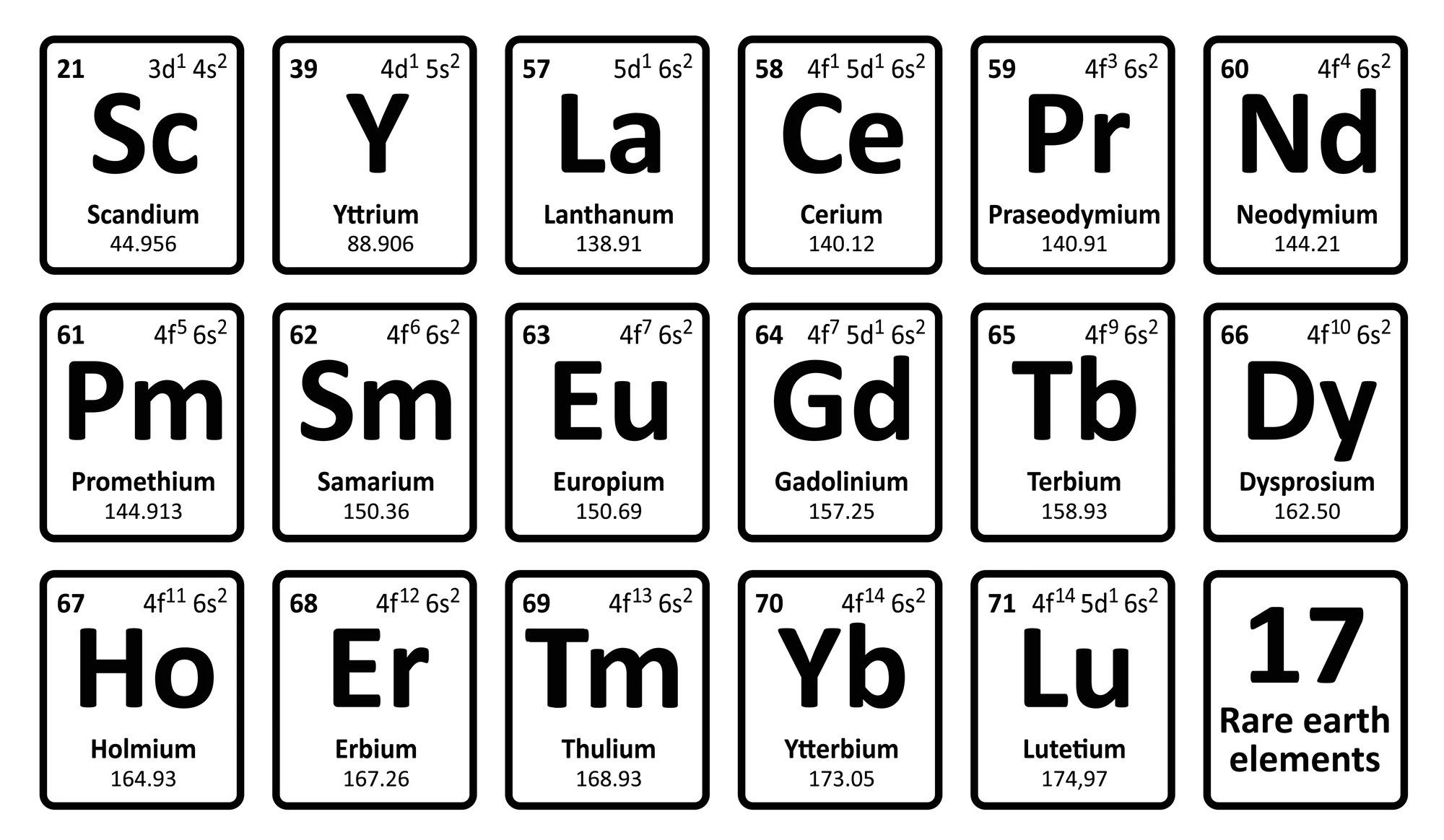
History rarely announces the forces that will command the future; it conceals them in the quiet mechanisms of power, waiting to reward only those bold enough to notice. In the 19th century it was coal and steel. In the 20th, oil and the industrial sinews that turned crude into aircraft, tanks, and highways. In the 21st century, beneath the headlines about artificial intelligence and quantum computing, a more obscure but equally decisive contest is unfolding over a family of elements almost no citizen could rattle off from memory: the rare earths. These seventeen elements—names like neodymium, dysprosium, terbium, yttrium, europium—do not glitter like gold, and they do not gush from the ground like oil. Yet without them, the modern world goes dark, silent, and blind.
Rare earth elements sit inside the permanent magnets that spin the motors of electric vehicles and drones, the guidance systems of cruise missiles, the phased-array radars of Aegis destroyers, the actuators on F-35 fighter jets, and the servos of high-end robotics. They color our screens, sharpen our optics, and stabilize the alloys in jet engines. They are so foundational that the U.S. Department of Energy has identified them as core to critical technologies ranging from advanced defense systems to the energy transition, warning that supply disruptions could reverberate across everything from grid stability to weapons readiness. The International Energy Agency now tracks rare earths alongside lithium, cobalt, and nickel as strategic minerals whose demand is rising 6–8% annually, driven by electric vehicles, batteries, wind turbines, and other energy applications.
To grasp the scale of dependence, it is enough to consider that a single modern wind turbine can contain hundreds of kilograms of rare-earth magnets; that each F-35 stealth fighter is a flying anthology of critical materials; and that the United States Armed Forces do not merely consume rare earths—they are, in the words of the Government Accountability Office, “essential building blocks in many weapon systems” with no fully equivalent substitutes. If the petroleum age gave rise to the old dictum that “amateurs talk strategy, professionals talk logistics,” the rare-earth age has sharpened it further: professionals talk supply chains down to the periodic table.
Yet in this new elemental politics, the United States has allowed itself to slip into a position of extraordinary vulnerability. Between 2019 and 2022, more than 95 percent of the rare earths consumed in the U.S. were imported, and the bulk of those imports came from China. A recent GAO report on critical materials warned that this dependence gives a strategic adversary “leverage to disrupt DOD weapon systems” simply by constricting exports. At the same time, Beijing has spent decades constructing a vertically integrated empire of mines, refineries, and magnet factories. By some estimates, China now accounts for roughly 70 percent of global rare earth mining, about 90 percent of processing, and upward of 90 percent of permanent magnet production, giving it effective control over the most value-added segments of the chain.
What makes this situation intolerable is not merely that a rival power holds the lion’s share of supply, but that the United States stumbled into this dependence of its own free will. It mothballed mines, ceded processing to cheaper foreign plants, treated environmental compliance as a reason to offshore rather than innovate, and comforted itself with the illusion that “the market” would forever provide. It is no exaggeration to say that, taken together, the decisions of successive administrations to let America’s rare-earth capacity decay amount to a generational dereliction of duty. In strategic terms, they come perilously close to something the Framers would have recognized as a betrayal of the republic’s basic obligation to secure its own defense—a failure that many Americans, watching Chinese export controls tighten, understandably regard as tantamount to treason in everything but legal form.
The Elements of Power
To understand how we arrived here, we must begin with the elements themselves. Rare earths are not “rare” in the sense of scarcity; neodymium, for instance, is thousands of times more abundant in the Earth’s crust than gold. The difficulty lies in the chemistry: rare earths tend to occur diffusely, intermingled with other minerals, and separating them requires elaborate, often polluting processes. This is why they were long relegated to the footnotes of geology texts and why, for most of the 20th century, only a handful of companies and governments bothered to invest in them.
That obscurity has vanished. Today, neodymium and praseodymium form the heart of high-strength magnets in everything from smartphones to submarines. Dysprosium and terbium confer heat resistance on those magnets, allowing them to function in the blistering interiors of jet engines or inside high-performance electric drivetrains. Europium and yttrium are indispensable to certain phosphors and lasers; lanthanum is crucial to camera lenses, hybrid vehicle batteries, and refining catalysts. As one analyst put it in a widely shared Medium essay, these materials have become the “new oil” or “new gold” of the digital and defense economy, underpinning everything from artificial intelligence hardware to precision-guided munitions.
This analogy is now echoed across a growing ecosystem of independent voices. In a series of essays and specialized blogs, writers have argued that just as oil shaped the geopolitics of the 20th century, rare earths are quietly shaping the 21st, with supply chains replacing shipping lanes and refineries standing in for refueling depots. Their point is not mere rhetoric: the nations that secure dependable access to rare earths and other critical minerals will not just manufacture the tools of the future; they will hold the ability to grant—or deny—those tools to others.
How China Built an Imperium While America Slept
China saw this coming earlier than most. As far back as the 1990s, Chinese leaders looked at their mineral endowment and concluded that rare earths could become a lever of strategic influence. Deng Xiaoping’s oft-quoted remark that “the Middle East has oil; China has rare earths” was more than a slogan—it was a doctrine. Beijing followed it with unblinking patience: subsidizing domestic producers, tolerating environmental costs that Western governments outsourced, and buying stakes in overseas deposits across Africa, Latin America, Central Asia, and the Pacific.
The results are now plain. A recent Business Insider summary of Goldman Sachs research concluded that China currently controls around 92 percent of global rare-earth refining and 98 percent of magnet production, and that it could take the West a decade or more to build a genuinely independent supply chain. The Guardian has documented Beijing’s use of export licensing and new technology restrictions as instruments of leverage, tightening the screws not merely on raw ore but on the very know-how required to process it.
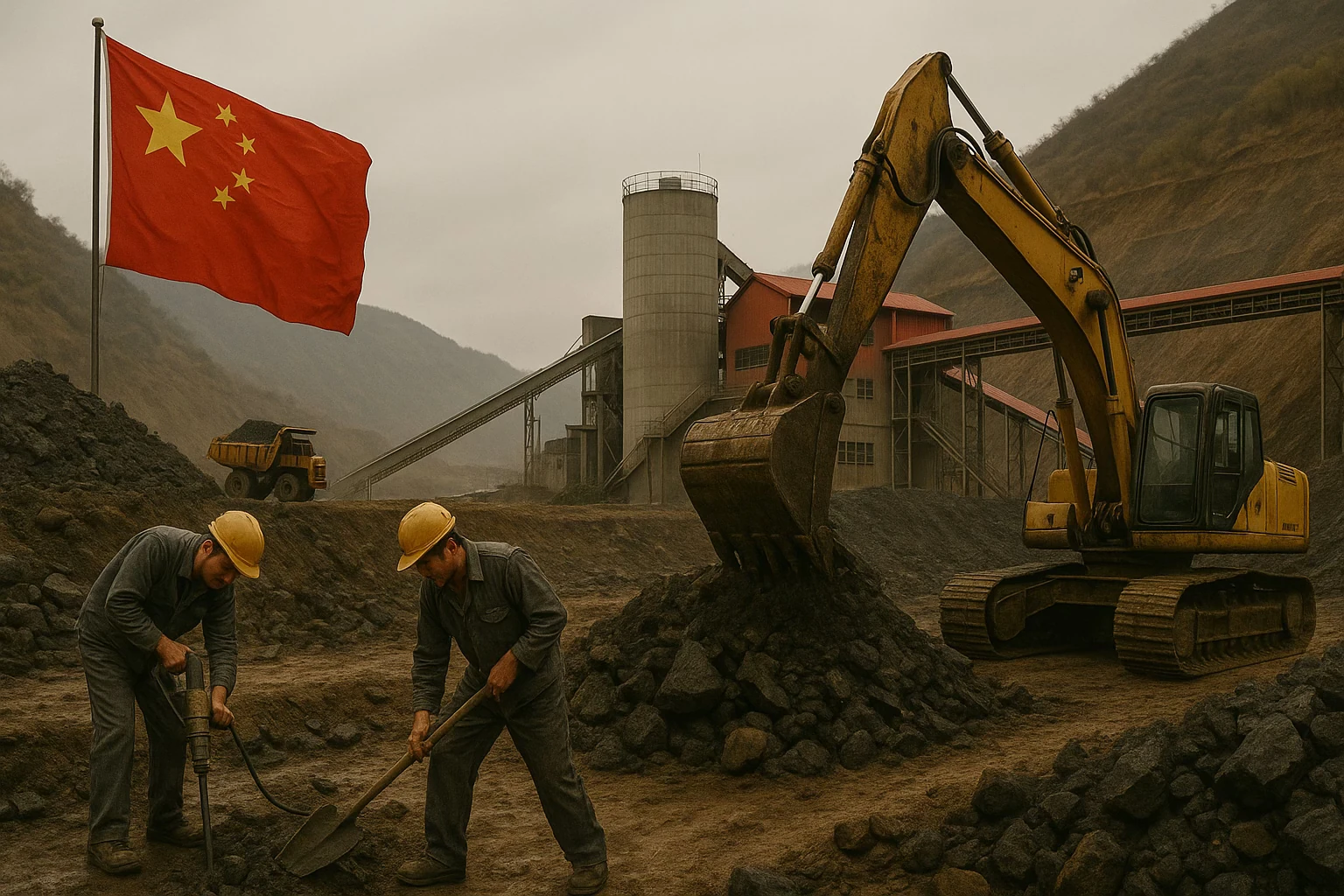
Nor is this dominance confined to rare earths. China now refines the majority of the world’s cobalt, nickel, and lithium, often through projects tied to its Belt and Road Initiative, which has poured billions into African and Latin American mining ventures. A detailed analysis from the Newlines Institute describes this as a “silent cartel” in critical minerals, where the choke point is not the mine but the refinery. In other words, even where the ore lies beneath someone else’s soil, the value and power accrue to the country that controls separation, chemistry, and magnets. Beijing has made itself indispensable at precisely that stage.
The United States, by contrast, allowed its one major rare-earth mine—Mountain Pass in California—to wither amid foreign dumping, environmental controversy, and policy neglect. Once the world’s leading supplier, Mountain Pass went bankrupt and idle in 2015, only to be resurrected by MP Materials in 2017 with an explicit mission to “restore the full rare earth supply chain in the United States.” Even today, the mine remains a symbol as much as a solution: a single complex in the Mojave Desert struggling, with belated Pentagon support, to rebuild capabilities that Washington once allowed to decay.
That is not a market glitch. It is strategic malpractice.
Conflict Zones on the Periodic Table
The geopolitical map looks different when drawn in elements instead of borders. Afghanistan, long discussed in terms of counterterrorism and great-power rivalry, also sits atop substantial deposits of copper, lithium, and rare earths. A series of U.S. Geological Survey assessments and subsequent academic work have highlighted the country’s potential as a mineral powerhouse, a fact not lost on China as it moves to consolidate its influence over Afghan mining contracts in the wake of the U.S. withdrawal. Analysts now warn that what could have been an opportunity for the United States to shape the future of critical-mineral development is instead becoming a case study in how strategic vacuums are filled by competitors.
Greenland is another front in this quiet struggle. The island hosts some of the world’s most promising rare-earth deposits, and its government has found itself courted by multiple suitors. Earlier this year, Reuters reported that U.S. and Danish officials successfully lobbied the developer of Greenland’s largest rare-earth project, Tanbreez Mining, not to sell to a Chinese-linked firm, steering the deal instead toward an American buyer. The episode made clear that Washington is no longer content to watch passively as critical assets slip into rival hands, but it also underscored how late to the game it has been.
Central Asia has emerged as yet another theater. A growing body of work from think tanks like the Newlines Institute and a wave of investigative commentary in independent newsletters have traced how China, Russia, and the United States are vying for influence over rare earth and related deposits in Kazakhstan and its neighbors, with new projects and agreements hinting at a long contest ahead. Africa, too, is a battleground. The Democratic Republic of Congo’s cobalt industry—already dominated by Chinese refiners—illustrates how critical minerals can entangle development hopes, environmental harms, and strategic leverage in a single supply chain.
Even U.S. allies are scrambling. The European Union’s Critical Raw Materials Act was passed in 2024 precisely because Europe found itself dependent on China for up to 98 percent of its rare-earth needs, prompting Brussels to seek domestic mining, refining, and recycling capacity. Australia, rich in rare-earth deposits, has become a key partner in Western diversification efforts, even as much of its ore is still shipped to Chinese refineries for processing.
Viewed together, these episodes reveal a new kind of great-power competition: one in which airbases and carrier groups are supplemented—not replaced—by mines, processing plants, export controls, equity stakes, and long-term offtake agreements. The battlefield is not only the South China Sea or the Taiwan Strait; it is also an obscure deposit in Greenland, a refinery in Malaysia, a rail line in Kazakhstan, a port in Mozambique.
The American Folly
In light of all this, it is astonishing how casually previous U.S. administrations treated the rare-earth issue. For years, official Washington comforted itself with the belief that interdependence with China would be an enduring source of stability, that supply chains were apolitical, and that critical inputs could be procured from abroad indefinitely. When Japan experienced a sudden disruption in rare-earth shipments from China in 2010 during a diplomatic spat, the episode was widely reported but quickly filed away as an anomaly rather than a warning.
Meanwhile, environmental regulations and local opposition made it easier to outsource mining and processing than to invest in cleaner technologies at home. The U.S. Geological Survey’s Mineral Commodity Summaries quietly recorded year after year of rising import dependence, while the GAO and other oversight bodies warned that the Department of Defense was building weapons systems on top of supply chains it did not control. Independent analysts sounded the alarm that the West was “underinvested in rare earths” and drifting into a “supply-chain stranglehold,” but those alarms were too often drowned out by the noise of more fashionable policy debates.
Only in the last few years—spurred by Chinese export controls in the midst of trade tensions, by new regulations Beijing has imposed on rare-earth technology transfers, and by hard-edged assessments from institutions like Goldman Sachs and Goldman-backed research desks—has Washington begun to grasp the full extent of its exposure. The Department of Defense, recently renamed to the Department of War, has started funding domestic mining, processing, and magnet projects and has even taken substantial stakes in firms like MP Materials in an attempt to seed a homegrown industrial base. These are welcome steps, but they are remedial, not visionary—emergency measures taken in response to a crisis that had been decades in the making.
A republic has many obligations, but among the most fundamental is to ensure that its armed forces are not beholden to the forbearance of an adversary for the materials that make their weapons work. To allow such a dependence to develop, to persist across administrations of both parties, and to be justified in the name of short-term economic efficiencies is not merely shortsighted. It is a profound violation of strategic prudence—an act that many citizens perceive as a direct betrayal of the nation’s long-term security, even if the law refuses to acknowledge it.
BlackRock and the Financialization of Vulnerability
No account of America’s rare-earth debacle is complete without acknowledging the role of its financial architecture—above all, the influence of asset managers like BlackRock. For decades, the strategic logic of supply security was quietly displaced by the spreadsheet logic of globalized finance. BlackRock did not create America’s dependence on foreign critical minerals, but it did help entrench and normalize it by steering vast flows of capital into precisely the kinds of structures that made that dependence profitable.
Through its mining funds and metals-focused ETFs, BlackRock has become one of the central conduits between Western savings and the global extractive industry, allocating capital not with an eye toward American resilience, but toward benchmark performance and sector exposure. In practice, that has meant heavy exposure to multinational firms whose operations, refining capacity, and joint ventures are deeply interwoven with Chinese processing, African extraction, and other foreign nodes in the rare-earth supply chain. The very same “diversified global exposure” that looks prudent in a marketing brochure often translates, at the national level, into diffuse responsibility and opaque entanglements—investment structures in which no one actor is accountable for the strategic consequences.
At the same time, BlackRock’s branded enthusiasm for the “energy transition” has pushed trillions of dollars toward technologies—electric vehicles, wind turbines, utility-scale storage—that dramatically increase demand for rare earths and other critical minerals, without a parallel insistence that this surge be matched by secure, domestic, or allied supply. In effect, Wall Street helped to accelerate the rare-earth demand curve while leaving the supply curve largely in the hands of Beijing and a patchwork of politically unstable jurisdictions. This is not a crime; it is something more subtle and in some ways more dangerous—a systemic misalignment between private incentives and public survival.
ESG orthodoxy only deepened the problem. Rather than using its influence to demand cleaner, more innovative domestic mining and processing, BlackRock’s frameworks often treated heavy industry and extraction inside the United States as reputational liabilities, steering capital away from projects that might have underpinned a sovereign supply chain. The result was a perverse equilibrium in which Western investors could feel morally satisfied about “green” portfolios while the underlying materials for that green future were dug, processed, and magnetized under foreign flags, foreign standards, and foreign strategic doctrines.
None of this absolves Washington of its failures. Elected officials had both the constitutional mandate and the legal authority to treat rare earths as a matter of national security, and they chose instead to outsource judgment to “the market”—a market increasingly intermediated by asset managers whose fiduciary obligations stopped at quarterly returns. But if the republic is serious about correcting course, it must recognize that industrial policy and national defense can no longer be cleanly separated from capital allocation. So long as firms like BlackRock are free to channel the savings of American workers into supply chains that leave those same workers’ country strategically exposed, no amount of rhetoric about “reshoring” or “resilience” will suffice.
A serious response will not be built on scapegoating a single firm. It will, however, require a new standard: that the stewards of vast pools of American capital accept that there is a difference between profit maximization in the abstract and the long-term security of the nation whose laws, infrastructure, and taxpayers make those profits possible. Until that distinction is reflected in how capital is deployed—in which mines are financed, which refineries are built, and whose magnets are ultimately supplied—BlackRock and its peers will remain central characters in the story of how America sleepwalked into dependence on its rivals for the elements that power its freedom.
What a Serious Response Looks Like
If this were merely a story of American failure, it would be a grim one indeed. But the same reports that expose U.S. vulnerability also point toward the path of recovery. The Department of Energy and a consortium of strategists have converged on a few indispensable principles: rebuild domestic capacity where geology permits, forge genuine partnerships with trusted allies where it does not, invest heavily in recycling and substitution technologies, and construct a strategic reserve of critical materials akin to the old petroleum stockpile, but tuned to the age of rare earths.
Australia’s expanding rare-earth industry, Europe’s Critical Raw Materials Act, Greenland’s cautious engagement with foreign investors, and new projects in North America all suggest that the West is finally treating this as a systemic challenge rather than a series of isolated deals. Cutting China entirely out of these supply chains is neither realistic nor necessarily desirable; interdependence, wisely managed, can still serve as a stabilizing force. But eliminating single-point failures, diversifying processing, and ensuring that no single foreign capital can throttle the flow of critical elements at will—that is the minimum standard of prudence.
The deeper challenge is political and philosophical. It requires American leaders to recover a way of thinking that was second nature to earlier generations: to see industrial capacity, scientific research, and resource security as instruments of national survival, not as afterthoughts to be outsourced whenever spreadsheet logic suggests a marginal cost saving. It requires a public willing to accept that some industries—especially those at the foundation of military power and civil infrastructure—must be maintained even when they are not the cheapest option on a quarterly earnings call.
Above all, it demands honesty. Citizens deserve leaders who will admit that the country blundered into a position where the magnets inside its missiles, the motors inside its destroyers, and the alloys inside its aircraft depend on the continued goodwill of a rival that has already demonstrated its readiness to use rare earths as a bargaining chip. They deserve leaders willing to call that blunder what it is: a major strategic folly that cannot be massaged away with euphemisms or left to the next administration to fix.
History will not care whether the excuse was ideology, complacency, or the seductions of cheap imports. It will measure only whether the United States had the courage to correct course in time.
Rare earths may not glisten in the public imagination the way oil does. They are invisible in finished products, buried in supply chains, and all but absent from campaign speeches. Yet in their quiet way, they now form one of the true tests of American statecraft. If the republic cannot muster the will to secure the elements upon which its freedom, prosperity, and defense depend, then the failure will not be technical. It will be moral. And posterity will judge it accordingly.
Addendum: Why an American–Russian Rapprochement Remains a Strategic Imperative
There are moments in the life of nations when prudence demands that old hostilities yield to sober calculation, lest the great powers drift into a paralysis from which only misfortune can awaken them. The United States now confronts such a moment. However loudly certain European bureaucracies or multilateral institutions may insist otherwise, the long-term security of the American republic—and indeed the stability of the wider world—depends on a serious re-examination of its relationship with the Russian Federation. The current state of estrangement serves the interests of only a narrow class of global power brokers: officials, financiers, and unelected administrators whose influence grows in the shadows where great nations are divided. It does not serve the American worker, the Russian engineer, or the broader cause of international peace.
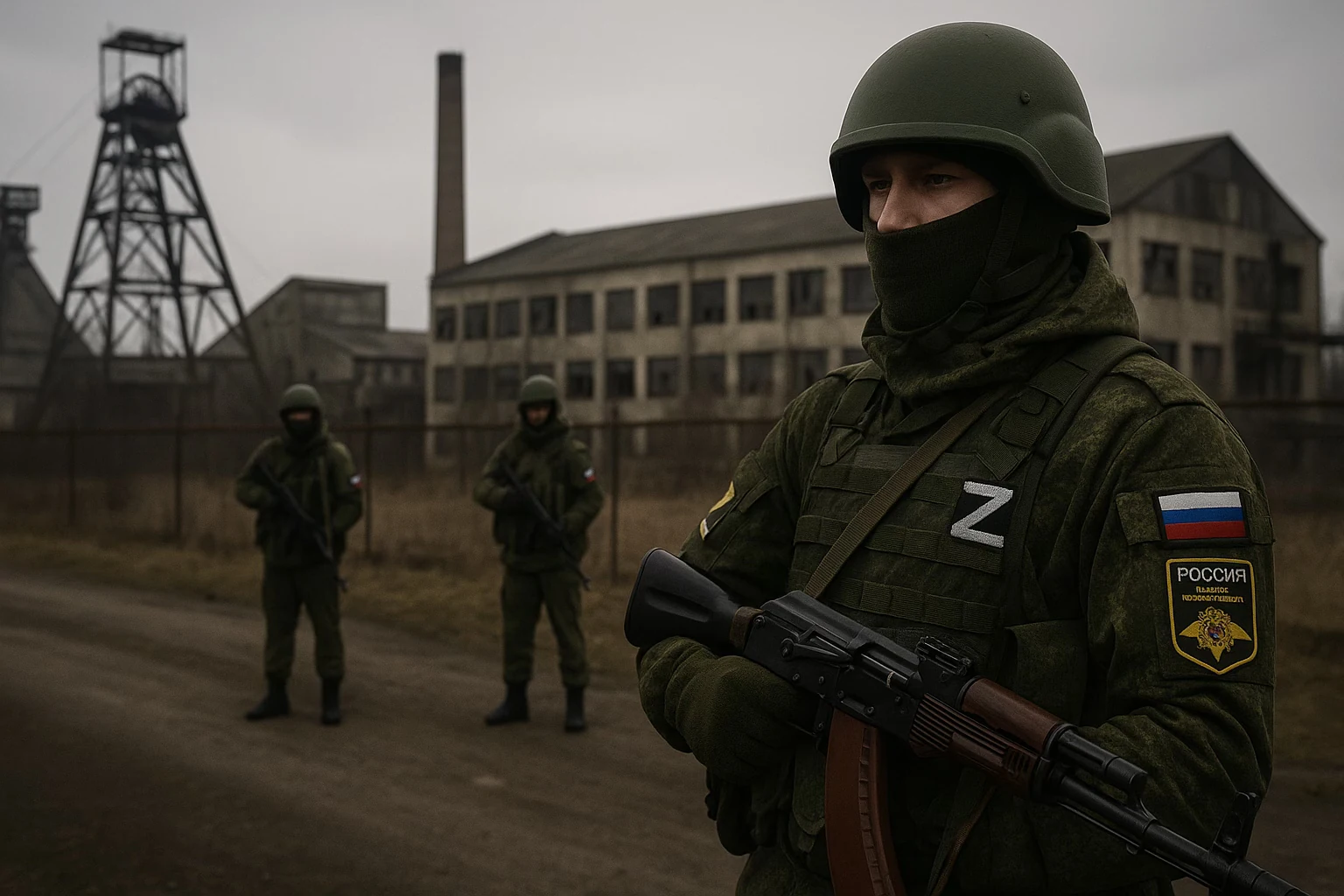
The plain truth is that a durable global order cannot rest upon the perpetual alienation of two nuclear powers that together command vast territories, abundant natural resources, and scientific capabilities vital to the technologies of the future. For the United States, rapprochement with Russia should not be viewed as concession or indulgence, but as a return to strategic realism: an acknowledgment that the arc of American security cannot be balanced solely on the preferences of the European Commission, the ideological compulsions of an increasingly sclerotic European Union, or the abstract proclamations of multilateral organizations headquartered in Switzerland—bodies whose record in managing global crises is more ornamental than effective.
Europe’s political class, entangled in its own competitive enterprises and convinced of its moral custodianship over the Western world, has long sought to position itself as intermediary between Washington and Moscow. Yet, in practice, its posture has too often had the opposite effect. By encouraging a state of permanent estrangement between the United States and Russia, these institutions create the very tensions they claim to arbitrate. Their incentive is clear: the wider the gulf between Washington and Moscow, the more indispensable Europe becomes as supposed custodian of “stability.” This geopolitical theater benefits a select few—but destabilizes the entire Euro-Asian frontier.
To understand the present conflict in Ukraine, one must strip away the ideological varnish that foreign policy elites have applied to it. At its root, the war is about Russia’s longstanding demand for security guarantees, the protection of ethnic Russian communities in Novorossiya and related historic regions, and the safeguarding of industries and infrastructure that have bound eastern Ukraine to the Russian economy for generations. These concerns may be inconvenient in Western capitals, but to dismiss them as mere pretexts is to ignore the history that produced them. The grievances of ethnic Russians in the Donbas, in Transnistria, and in other autonomous areas did not appear spontaneously; they were the culmination of decades of political neglect, cultural division, and competing claims of nationhood that Western diplomacy has never adequately addressed.
None of this absolves any state of its responsibilities under international law. But a statesman who refuses to understand why adversaries act has already conceded the field to those who do. And it is here that the United States must resist the temptation to outsource its judgment to Brussels, Geneva, or any other political constellation that has neither the capability nor the will to secure the global equilibrium upon which America’s prosperity depends.
The U.S.–Russian relationship—strained though it is—remains a central pillar of global stability. Both nations possess the capacity to disrupt or safeguard civilization’s most advanced systems: nuclear arsenals, space infrastructures, cyber capabilities, and the critical minerals from which the next century’s technologies will be forged. For the United States to rebuild its rare-earth independence, to fortify its industrial base, and to secure the supply lines of the future, it must think not as a divided West but as a sovereign republic that chooses its partnerships according to its own interest and judgment.
A wiser generation understood that reconciliation with a rival—even an imperfect one—was not weakness but the highest form of prudence. So too must our own era rediscover the principle that dialogue, when conducted from a position of strength, does not erode national power but preserves it. A future in which the United States and Russia confront each other as permanent enemies is not a future of stability, but one of ceaseless brinkmanship. A future in which both nations find structured, durable channels of cooperation is one in which the world’s strategic minerals, energy systems, and technological pathways can be navigated without the constant presence of a great-power knife at every negotiation.
The restoration of relations with the Russian Federation will not be easy. It will require courage, candor, and a willingness to step beyond the narratives manufactured by institutions that benefit from division. But the alternative—an international order held hostage by rival blocs, supply-chain chokepoints, and nuclear anxieties—is far more perilous. The republic must choose the harder road not because it flatters sentiment, but because it secures the future. And in that future, the United States and Russia cannot afford to remain strangers at a time when the world needs them to be guardians of stability.
Citizens Rule Book: A Palladium of Liberty (Hardcopies) Support my work. 🇺🇸
Keywords
First published November 27, 2025. Originally published in Liberty or Deathwire.