STEM.org Launches Initiative to Advance Domestic Electronics Manufacturing
Building custom circuits, embedded systems, and independent STEM research through capability, resilience, and trust.
Interview by: Jason Yung / Written by: Andrew B. Raupp
Madison Heights, MI — April 23, 2026 — STEM.org | Educational Research today announced STEM 250, a new initiative designed to help organizations engineer and manufacture custom circuits, printed circuit boards, embedded systems, and specialized electronics through a domestic pathway built around capability, resilience, and trust.
Whose Future Are We Building? The Ethical Crisis in STEM
The announcement arrives on a date carrying deep American significance. On April 23, 1775, in the immediate aftermath of Lexington and Concord, the Massachusetts Provincial Congress moved to raise a colonial force as Boston became the first great proving ground of American resolve. Three years later, on April 23, 1778, John Paul Jones carried that resolve across the Atlantic in the daring raid on Whitehaven, demonstrating that American independence required not only conviction, but courage, technical discipline, and the capacity to act beyond dependence.
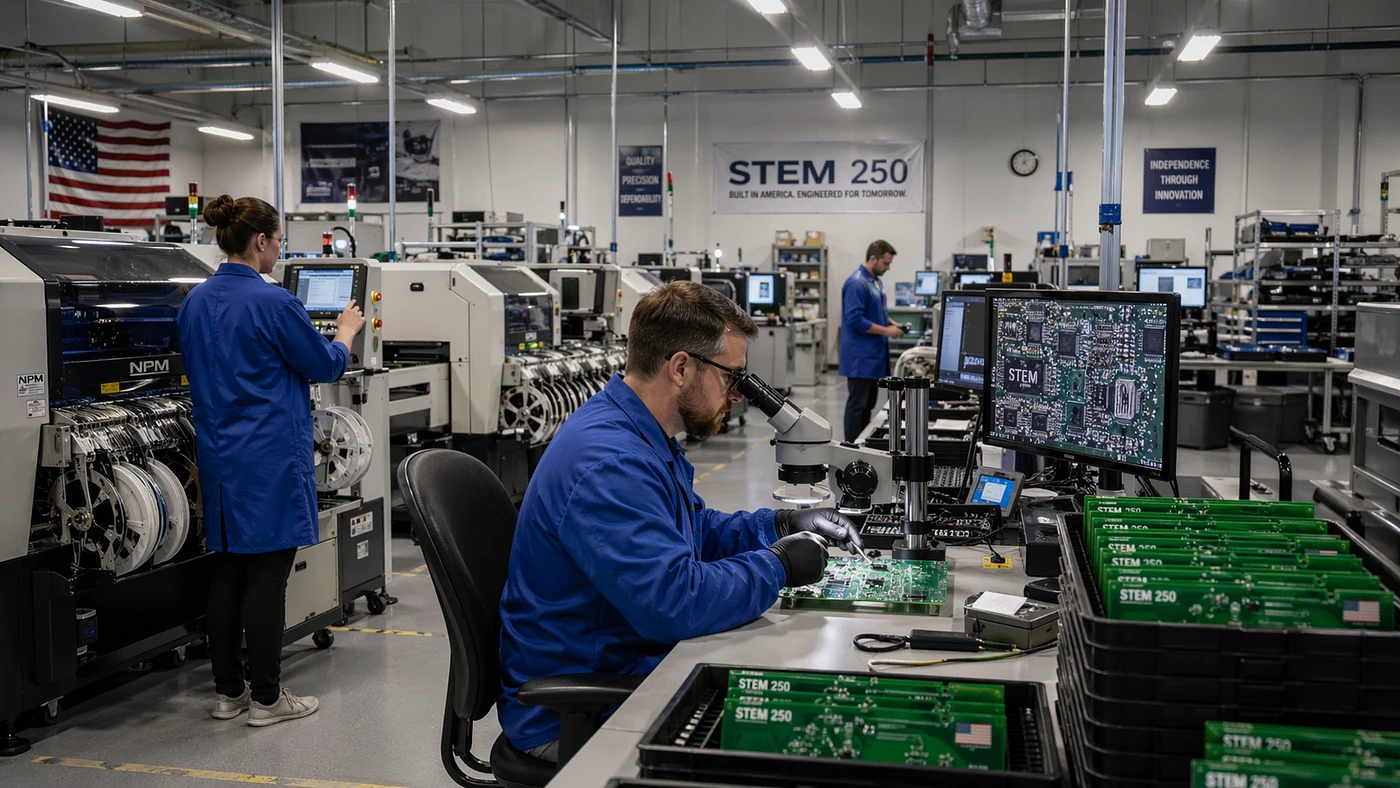
In that same spirit, STEM 250 is intended to help schools, companies, inventors, museums, training programs, and mission-driven organizations turn ideas into working technology. From system architecture and schematic design to PCB layout, prototyping, firmware development, assembly, testing, and production preparation, the initiative offers a practical path forward for organizations seeking to build specialized electronics with greater confidence, greater clarity, and stronger domestic alignment.
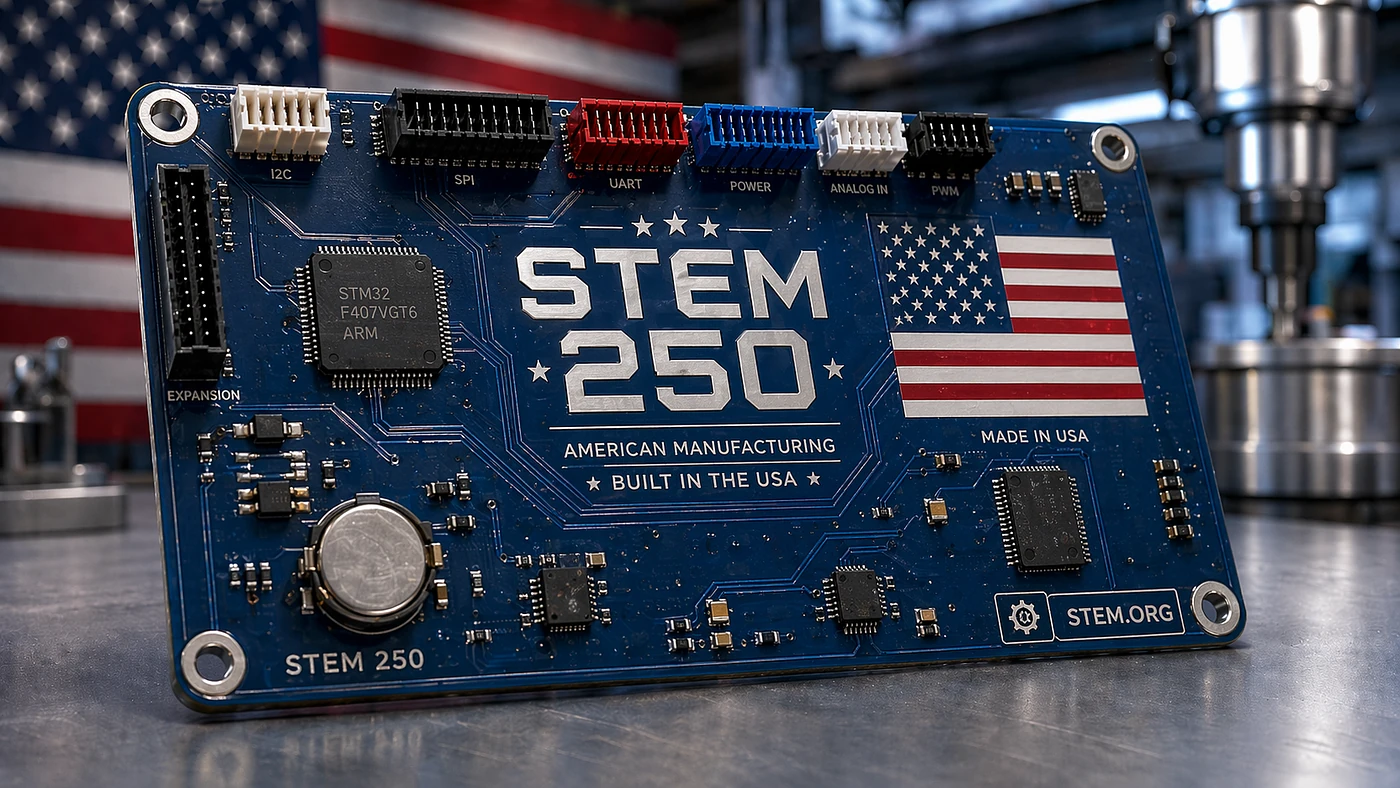
The initiative reflects STEM.org’s long-standing commitment to preserving STEM as a field rooted in evidence, applied skill, human capability, and real-world production. At a time when supply chains, technical literacy, and institutional independence have become matters of national and educational importance, STEM 250 provides a constructive pathway for organizations that need more than abstract encouragement. It offers access to practical engineering support capable of moving concepts from early design into functional prototypes and, where appropriate, production-ready systems.
“STEM 250 is about more than circuit boards,” said Andrew B. Raupp, Founder of STEM.org | Educational Research. “It is about rebuilding the habits of invention, production, and technical self-reliance that allow free institutions to endure. At a time when STEM education is too often reduced to slogans, software, or outside dependency, this initiative creates a real-world pathway for organizations to design, build, test, and manufacture technology.”
STEM 250: Championing Liberty in the Battlefield of Ideas
Proceeds from STEM 250 projects will support STEM.org’s continuing independent research work, helping protect the integrity, independence, and future of STEM education at a time when the field must remain grounded in evidence, human capability, and productive skill. Through this model, STEM 250 connects practical electronics development with a broader educational mission: strengthening the conditions under which authentic STEM learning, research, and innovation can continue to grow.
Organizations interested in custom circuit design, electronics development, embedded systems, prototyping, or specialized STEM-related manufacturing support may contact: Info(at)STEM.org.
Serious inquiries only.
Andrew B. Raupp is the Founder / Executive Director @stemdotorg. “Resolutely preserving the rights and freedoms of the STEM education community through sound policy & practice…”
Keywords
First published April 23, 2026. Original publication