Approaching National STEM Day: Beyond the Celebration
Exploring Legacy and #NOV8-tive Pursuits This November 8th
In this essay +
Unearthing the Historical Roots of the STEM Education Movement
At the confluence of vision and innovation, the “STEM” narrative began, not as a mere educational framework but as a grassroots effort that would redefine the contours of teaching and learning. This seismic shift in educational thought didn’t just happen — it was sculpted by foresight, dedication, and the extraordinary contributions of pioneers like Dr. Charles E. Vela and Congressman Vernon Ehlers.
STEM Education’s Lost Decade And Tenor
Dr. Vela, with an unyielding spirit, illuminated the path during the early 1990s, establishing himself as a beacon of progressive thought and inclusivity. Through the Center for the Advancement of Hispanics in Science and Engineering Education (CAHSEE), he shattered conventional boundaries, offering a launchpad for dreams in communities often overshadowed. With NASA and other tech giants as collaborators, his “STEM Institute” became synonymous with avant-garde educational practices, providing high school minds exposure to realms usually reserved for their college counterparts.

In the wake of Vela’s foundational strides, Congressman Vernon Ehlers’ strategic legislative acumen provided a robust scaffold for the burgeoning STEM ideology. His instrumental role in establishing the STEM Education Caucus in 2005 galvanized the adoption of the STEM acronym, a term now ensconced in the global lexicon. Ehlers advocated for holistic transformation in education, championing experiential, hands-on learning, and tirelessly debunking antiquated myths limiting access based on gender or ethnic background.
Column: STEM has deep roots in Michigan
The harmonious synergy between Vela’s grassroots advocacy and Ehlers’ legislative prowess created an indomitable force that propelled the STEM crusade from the peripheries of educational reform to its pulsating heart. This journey inspired STEM.org Educational Research™ and other organizations, providing a blueprint for fostering an environment where curious minds could thrive unrestricted, exploring the realms of science, technology, engineering, and mathematics without bounds.
National STEM Day: The Mission Beyond the Marketing Buzz
Out of this milieu emerged National STEM Day in 2015, a symbolic celebration that emphasizes the importance of consolidating these fields into a unified, strategic approach to education. Celebrated on November 8th, this day may have whimsical origins, springing from a toy company’s branding strategy — MGA Entertainment’s ‘Project Mc2’ series — with the NOV8 (pronounced “innovate”) initiative.
Yet, it resonates with profound significance in the educational community and beyond. What started as a clever nod to a group of fictitious, smart, science-savvy girls has transformed into a national call to action, emphasizing the necessity of nurturing a new generation of thinkers, innovators, and problem-solvers.
Project Mc² | National S.T.E.M/S.T.E.A.M. Day | Smart Is The New Cool
Video: Project Mc² YouTube National S.T.E.M/S.T.E.A.M. Day “Smart Is The New Cool” (November 5th, 2015)
National STEM Day, therefore, is more than an annual event; it is a reminder of our ongoing commitment to empowering future generations through robust, interdisciplinary education. Recognizing the importance of this day involves not only reflecting on the historical trajectory of STEM but also actively participating in a multitude of activities and programs that underscore the collective endeavor of education, industry, and government sectors.
STEM Toys Inspire Their Way Into Popular Culture
Celebrations on November 8th, and the practices extending throughout the year, represent our sustained effort to cultivate an environment where curiosity and inquiry are not just encouraged but are seen as vital components of growth and development. The focus is not solely on producing competent professionals but on fostering visionary innovators who are equipped to tackle the complex challenges of the future.
Recognizing this day is essential, but it’s equally important to consider how we can extend its impact throughout the year.
Celebrating National STEM Day:
- Starry Night of Learning: Transform the schoolyard into an astronomical observatory, offering everyone the opportunity to gaze at celestial bodies through telescopes. This experience is heightened by inviting astronomers to narrate fascinating stellar stories and facts, making the cosmos feel almost within reach.
- One-Day Engineering Quest: Imagine dedicating spaces within the school where students become young engineers for a day. In these zones, they collaborate, conceptualize, and construct various projects, addressing real-world challenges. This quest culminates in an evening showcase where these young innovators present their functional models.
- Math Mania: Picture a spirited environment where students immerse themselves in numbers through games, puzzles, and competitions. The air buzzes with excitement, challenge, and intellectual stimulation, concluding with a ceremony that applauds mathematical prowess.
- Bio-Blitz Expedition: Envision a day of adventure and discovery in the great outdoors. Guided by biologists or trained educators, students engage in a comprehensive exploration of local biodiversity, cataloging species and understanding their ecosystems, contributing to real-world scientific studies.
- Culinary Chemistry: Set the stage for a fusion of science and culinary arts where the kitchen becomes a laboratory. Students explore and witness the transformative reactions of ingredients, understanding the delicious science behind their favorite foods.
- High-Tech Scavenger Hunt: A digital-age treasure hunt that takes students on a thrilling journey. They navigate clues using the latest technology, solving problems, and uncovering mysteries hidden within the school campus, combining physical activity with intellectual challenge.
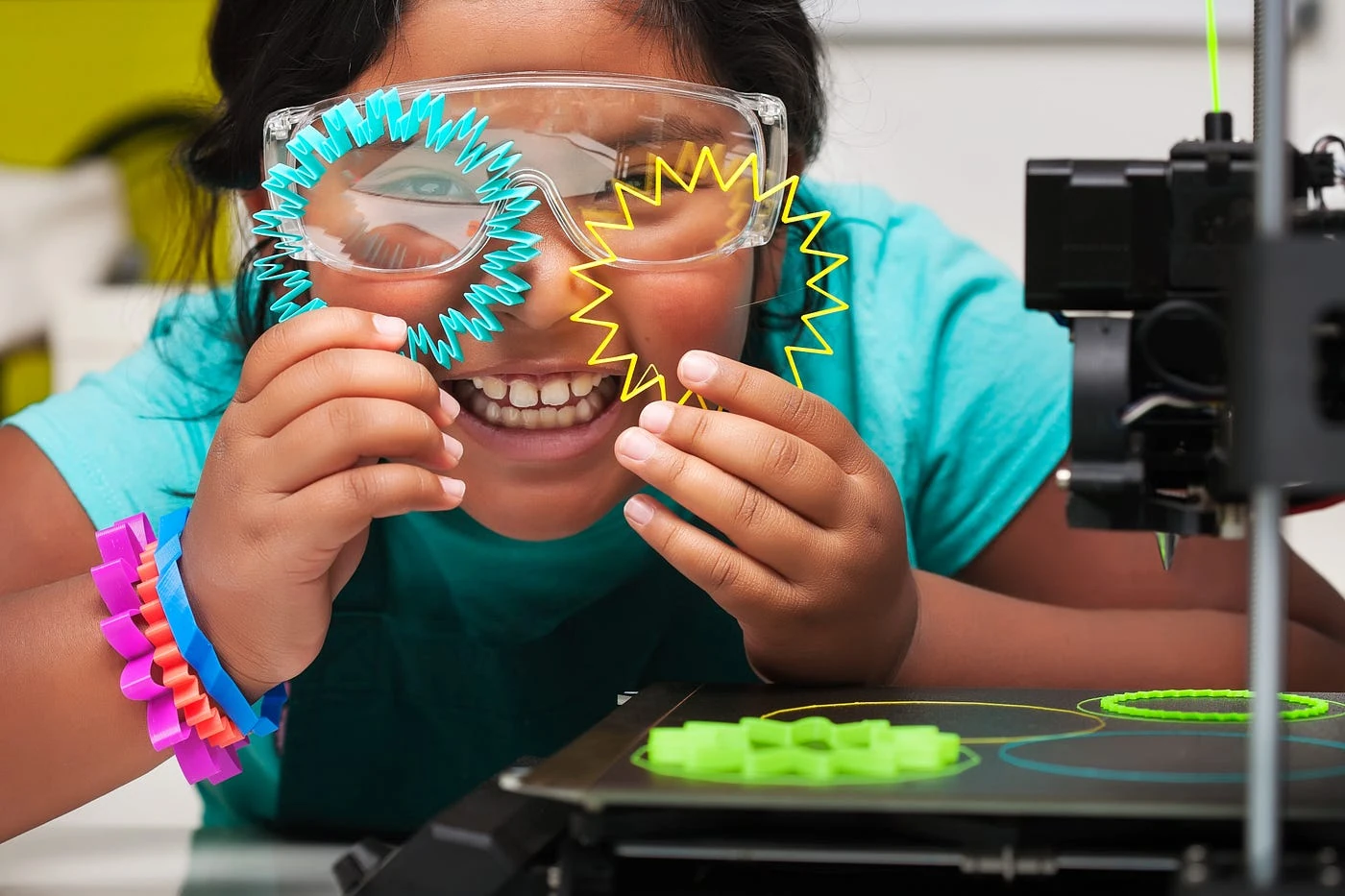
- Print the Future: Create an immersive experience with 3D printing technology. Students spend the day designing and watching their creations come to life, offering a tactile and visual representation of their imaginative capabilities, possibly even solving practical problems within the school environment.
- Physics at Play: Establish interactive stations illustrating physics principles. Here, students manipulate everyday objects to observe scientific theories in motion. The playful approach demystifies complex concepts, making them accessible and relatable.
- Eco-Innovators Exhibition: Transform the school into a sustainability showcase, where students present ingenious solutions to environmental challenges. They engage in thoughtful discussions with peers and professionals, providing insight into the importance of each small step toward a greener future.
- Walk in a Scientist’s Shoes: Facilitate an environment where students step into the roles of various STEM professionals. They tackle engaging, job-related scenarios that offer a deeper understanding of numerous career paths, helping them envision potential futures in these fields.
Extending the Celebration Year-Round:
- Parent-Child Interactive Open House: Organize special days where parents participate in various STEM activities alongside their children at school. These interactive sessions allow parents to understand the intricacies of STEM education, witness their child’s progress, and learn ways to support these interests at home.
- Future Thinkers’ Speaker Series: Host a series of talks by professionals from emerging fields like biotechnology, sustainable energy, or artificial intelligence. Such interactions can expose students to cutting-edge developments and inspire them to consider unconventional career paths.
- Engineering for the Community: Encourage students to undertake projects aimed at solving community issues, guided by engineering principles. For example, they might design simple devices for elderly assistance or environmentally friendly solutions for waste management. This ongoing activity fosters a sense of social responsibility and application of STEM learning.
- Aquatic Exploration Program: Establish a program centered around marine sciences that could involve field trips to local water bodies, studies of aquatic life, and water testing. It enhances understanding of biology, ecology, and environmental science, and could be integrated with community awareness on water conservation.
- Art in STEM (STEAM) Projects: Introduce ongoing projects that blend art with traditional STEM fields, emphasizing the role of creativity. Activities might include designing geometric art, creating science infographics, or engaging in photography that captures scientific phenomena.
- Mind and Brain Club: A neuroscience-focused club could offer activities related to brain health, cognitive sciences, and psychology. Students might engage in memory challenges, learning about neural pathways, or understanding human behavior, thus exploring science’s human side.
- Fitness through Science: Incorporate science into physical education by analyzing human anatomy, the physics of movement, or the chemistry of nutrition. Regular sessions could involve practical assessments like checking pulse rates, understanding muscle functions during exercise, or the role of diet in physical performance.
- Historical Science Expeditions: Create a history-meets-science exploration series where students learn about great scientists, historic inventions, or the evolution of scientific thought. It could involve field trips to science museums, in-depth studies of specific scientific revolutions, or re-creating historic experiments.
- Global Science Virtual Tours: With the aid of technology, schedule virtual tours to international science centers, research institutions, or natural world wonders. These regular virtual excursions can broaden students’ horizons, showing them the universal nature of STEM.
- Family Science Blog/Newsletter: Launch a digital platform where students, with their families, contribute articles, project summaries, or interesting scientific observations. This ongoing effort strengthens community engagement, allowing sharing and celebrating students’ STEM discoveries.
Final Thoughts
Honoring National STEM Day and maintaining the enthusiasm all year round necessitates a unified endeavor, calling for the active participation of educational bodies, local communities, and experts in the field.
Celebrating STEM: An Annual Almanac of Holidays & Special Events
By engaging students in a variety of ways, we nurture their innate curiosity and creativity, shaping them into the problem-solvers, innovators, and leaders of tomorrow. This ongoing commitment ensures that the significance of November 8th is not confined to a single day, but becomes a living, evolving movement driving us toward a brighter future.
Andrew B. Raupp is the Founder / Executive Director @stemdotorg. “Democratizing science, technology, engineering and math (STEM) education through sound policy & practice…
Have a unique story to share? Submit to DDIntel here.
DDIntel captures the more notable pieces from our main site and our popular DDI Medium publication. Check us out for more insightful work from our community.
Keywords
First published October 24, 2023. Original publication